
Free Dallas apartment locating from Alexander. 200+ 5-star Google reviews.
Start My Free Dallas Apartment Search
What happens next: fill out the short form, Alexander personally reviews your answers and sends you options, and it costs you nothing.
Looking to rent in North Texas? Allen, McKinney, and Frisco are three top contenders, each offering distinct lifestyles and housing options. Here’s what you need to know:
- McKinney: Known for its mix of historic charm and modern growth, McKinney was ranked the #1 city for renters in the U.S. in 2025. It offers spacious apartments at competitive prices, with a median rent of $1,653/month and an average unit size of 948 sq. ft. However, its 35-mile commute to Dallas may be a drawback for some.
- Allen: With a focus on established neighborhoods and quality of life, Allen is perfect for families and remote workers. It boasts excellent park access and walkable areas but has higher average rents ($1,933/month) and lower walkability, making a car essential.
- Frisco: A hub of modern luxury and entertainment, Frisco has seen rapid development, with 92.9% of new apartments in prime locations. It offers upscale living with a median rent of $1,957/month, though its high demand (95.1% occupancy) makes finding a unit challenging.
Updated by Alexander Concepcion, Taco Street Locating. Checked Oct 7, 2026 against each property’s own website.
Allen vs McKinney vs Frisco: on Oct 7, 2026, Allen’s Alleia and Axis at Watters Creek list saltwater pools near Watters Creek Village; McKinney’s Jefferson North Ranch and The Dalton list townhomes or private yards; and Frisco’s Jefferson Parkhouse and Fairway North Fields list fenced yards, golf simulators and a $75 application fee.
Allen vs McKinney vs Frisco: six communities compared (checked Oct 7, 2026)
| Community | City | Address | What the property site lists |
|---|---|---|---|
| Alleia Watters Creek | Allen | 1165 Montgomery Blvd, Allen, TX 75013 | Rooftop saltwater pool and lounge, golf simulator, movie theater, pet spa, private offices |
| Axis at Watters Creek | Allen | 270 S Watters Rd, Allen, TX 75013 | Saltwater pool, two-story fitness center, private movie theater, rentable clubhouse |
| Jefferson North Ranch | McKinney | 8589 Stacy Rd, McKinney, TX 75070 | Apartments and 2- and 3-bedroom townhomes, fenced yards in select homes, coworking; $75 application and $150 admin fee |
| The Dalton | McKinney | 3549 Medical Center Dr, McKinney, TX 75069 | Large private yards in select residences, resort-style pool, golf simulator |
| Jefferson Parkhouse | Frisco | 10450 Whistle Stop Ln, Frisco, TX 75033 | Fenced yards in select homes, reserved garage parking $50/mo; $75 application and $150 admin fee |
| Fairway North Fields | Frisco | 3900 PGA Pkwy, Frisco, TX 75033 | Two pools, two golf simulators, putting green, sky lounge, private yards in select homes |
Amenities and fees change, so confirm them on each property’s own site. For more Frisco buildings with prices, see the Frisco apartments guide.
Start My Free Dallas Apartment Search
Free for renters. I’m personally involved in every search. What happens next: fill out the short form, I review your answers and send you options, and it costs you nothing.
Allen vs McKinney vs Frisco apartments: quick answers
Which Allen apartments have a saltwater pool?
Alleia Watters Creek lists a rooftop saltwater pool, and Axis at Watters Creek lists a saltwater pool with peninsular lounges.
Are there townhome rentals in McKinney?
Jefferson North Ranch lists 2- and 3-bedroom townhomes alongside its apartments.
Which Frisco apartments have golf simulators?
Fairway North Fields lists two golf simulators and a putting green near the PGA District.
What move-in fees do these communities publish?
Jefferson North Ranch and Jefferson Parkhouse each list a $75 application fee and a $150 administration fee.
Which communities list private or fenced yards?
The Dalton, Fairway North Fields, Jefferson Parkhouse and Jefferson North Ranch list yards in select homes.
Can you help me compare Allen, McKinney and Frisco for free?
Yes. Fill out the free Dallas search form and I will send current options in all three cities with pricing from each property.
Quick Comparison
| City | Avg. Rent | Distance to Dallas | Avg. Apt. Size | Key Advantage | Main Drawback |
|---|---|---|---|---|---|
| McKinney | $1,653 | ~35 miles | 948 sq. ft. | Affordable, spacious | Long commute |
| Allen | $1,933 | ~25 miles | 755–1,122 sq. ft. | Quality of life | Construction, low walkability |
| Frisco | $1,957 | ~30 miles | 933 sq. ft. | Modern, luxury living | Limited availability |
Each city caters to different lifestyles. If affordability and space matter, McKinney is a solid choice. Frisco is ideal for those who prioritize modern amenities and entertainment. Recent rent drops in the area might also give you room to negotiate a better deal.
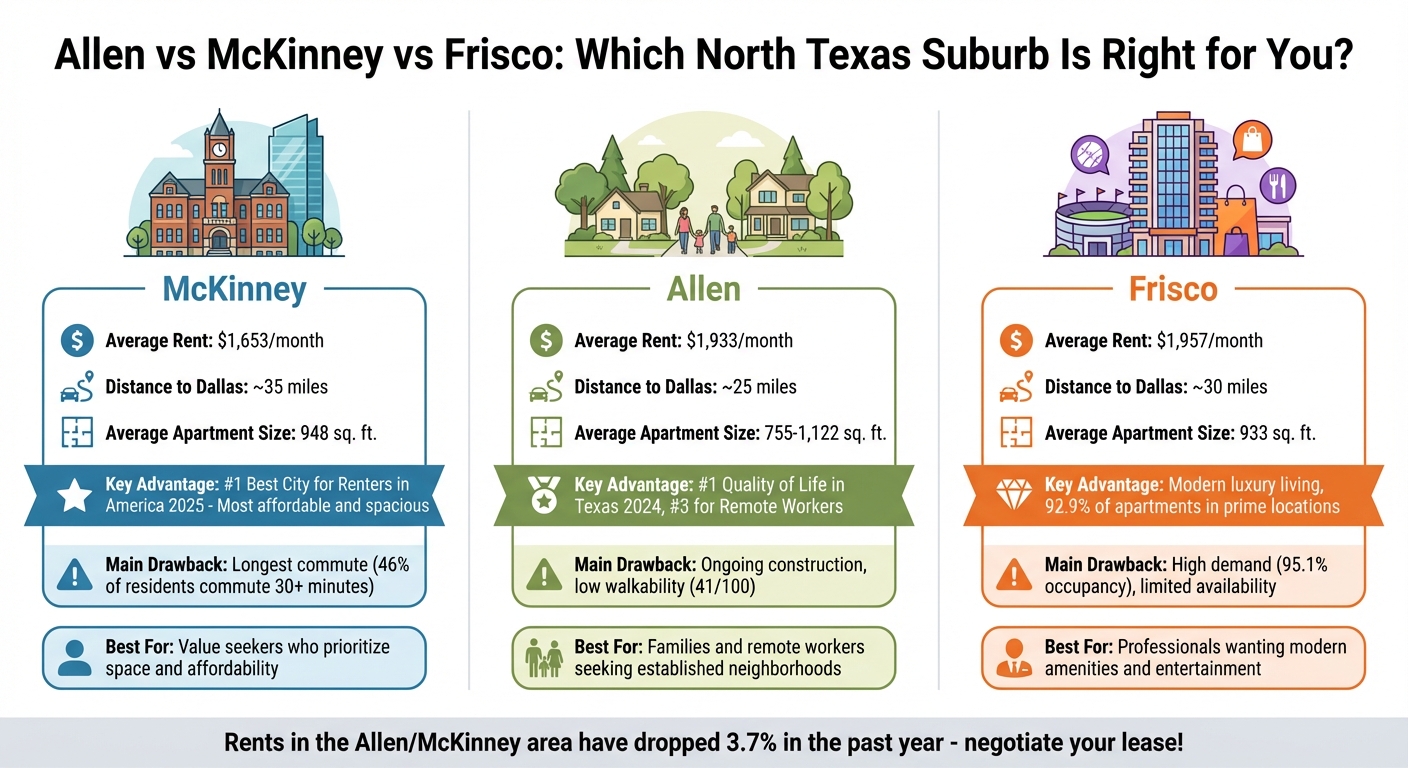
Allen vs McKinney vs Frisco: Rent Prices, Commute Times, and Key Features Comparison
1. Allen
Development Patterns
Since its incorporation in 1953, Allen has focused on improving its existing amenities rather than building large new districts. With a population of 109,039 and over 30,945 single-family homes, the city prioritizes upgrading parks and entertainment options instead of pursuing widespread new developments. New neighborhoods in West Allen, such as Cypress Meadows and Walnut Springs, tend to fill up quickly – often within 12 to 18 months – reflecting a pattern of infill growth rather than outward sprawl. This approach sets Allen apart from neighboring cities that are expanding at a faster pace.
Commute Access
Allen’s steady growth has contributed to maintaining reliable infrastructure and convenient commuting options. Located along US 75, about 25 miles north of downtown Dallas, the city serves as a key commuting hub for residents traveling to North Dallas and Plano. Outside of rush hour, major employment centers are just a 30-minute drive away. However, for those living in West Allen, commuting to areas like the 75/635 corridor during peak hours can take 30–45 minutes. Leaving before 7:15 AM is recommended to avoid heavy traffic. US-75 and Custer Road provide efficient connections to job centers across the Dallas–Fort Worth area.
Shopping and Entertainment
Allen’s retail and dining options reflect its established community vibe, offering a broad selection of choices. The city is also home to the world’s largest high school football stadium, highlighting its commitment to community-focused amenities and entertainment. From everyday conveniences to family-friendly attractions, Allen has cultivated a well-rounded mix of offerings for residents and visitors alike.
Apartment Market Trends
Allen’s strong local economy supports a thriving rental market. With a median household income of $112,603 and 59% of adults holding bachelor’s degrees, demand for apartments remains steady.
Community Character
In 2024, Allen earned the title of Texas’s #1 city for quality of life, thanks to its excellent park access and walkable neighborhoods. The city also ranked 3rd in Texas for remote workers, making it an attractive choice for tech professionals and telecommuters. With a median age of 35.5, Allen appeals to young professionals and families looking for a blend of suburban comfort and modern connectivity.
sbb-itb-b58f532
2. McKinney
Development Patterns
McKinney strikes a unique balance between preserving its historic charm and embracing modern expansion. As of January 1, 2025, the city’s population reached 224,043 – an impressive growth of over 16% since 2020. Between 2012 and 2021, the number of apartments in McKinney doubled, reflecting its rapid development. Unlike Frisco, which leans heavily on its contemporary vibe, or Allen, known for its established residential feel, McKinney seamlessly bridges two worlds. Its historic downtown serves as a nostalgic centerpiece, while modern neighborhoods continue to thrive on its outskirts. Key infrastructure projects, like an inverted deck park over State Highway 5, aim to link the historic downtown with East McKinney, enhancing connectivity and accessibility. This thoughtful approach to growth ensures the city remains both rooted in its past and open to the future.
Commute Access
McKinney’s location makes it a practical choice for commuters heading to major North Texas employment hubs. State Highway 5 and other well-established routes provide direct access to cities like Richardson, Addison, and Plano. While McKinney doesn’t have direct light rail service to Dallas, residents can still utilize the Denton County Transportation Authority (DCTA) A-train through Trinity Mills Station in Carrollton for regional travel. Rideshare services are popular for trips to nearby cities such as Allen, Frisco, and Richardson, as well as to Dallas Love Field. However, McKinney remains largely car-dependent, with a WalkScore of 41, underscoring the importance of personal vehicles for navigating the area.
Shopping and Entertainment
McKinney’s thriving economy – bolstered by industries like technology, manufacturing, oil, and defense – supports a vibrant retail and dining scene. RentCafe describes McKinney as offering a "small-town atmosphere without sacrificing the perks of a larger urban center". This blend of suburban comfort and city-style amenities has made McKinney particularly appealing to renters, especially those drawn to its upscale apartment communities. The city’s lively shopping and entertainment options perfectly complement its competitive housing market, creating a well-rounded living experience.
Apartment Market Trends
In 2025, McKinney was crowned #1 best city for renters in America by RentCafe, thanks to its winning combination of affordability and quality. As of January 2026, rental prices are competitive: studios average $1,161/month for 531 sq ft, one-bedroom apartments cost $1,378/month for 755 sq ft, two-bedrooms are $1,766/month for 1,122 sq ft, and three-bedroom units average $2,300/month for 1,460 sq ft. With an occupancy rate of 92.8% and an average unit size of 948 sq ft, McKinney boasts the second-largest apartment sizes among top rental markets in the country. High-end apartments dominate the market, making up 83% of the housing stock, with 33.5% of the inventory classified as new.
Community Character
McKinney attracts a well-educated and affluent population, with a median household income of $120,273 and 52.6% of residents holding bachelor’s degrees. In 2025, the city ranked #4 nationally for rental affordability, with a cost of living 2.5% below the national average. Nearly 90.5% of new apartments built between 2012 and 2021 are situated in desirable locations known for their safety, accessibility, and strong sense of community. McKinney’s extensive park system and close-knit neighborhoods provide an inviting atmosphere for renters transitioning from urban environments. These features, combined with modern amenities, highlight why McKinney continues to attract those seeking a mix of tradition and contemporary living.
3. Frisco
Development Patterns
Frisco stands out for its rapid growth and modern development. Between 2012 and 2021, the city’s apartment inventory skyrocketed by 197.4%, effectively tripling during that time. This incredible expansion has made Frisco the #4 city in the U.S. for renters seeking brand-new apartments. Unlike Allen’s established neighborhoods or McKinney’s historic charm, Frisco offers a fresh, contemporary alternative. A prime example of this shift is the 230-acre Firefly Park, designed by Amsterdam-based UNStudio and Sasaki Associates. This entertainment-focused development is set to bring a unique energy to the city. As Mayor Jeff Cheney put it, Firefly Park will add "a significantly different, cool vibe to Frisco". The city is also making waves in entertainment, with major projects like the 97-acre Universal Parks & Resorts kids’ theme park, announced in early 2023, solidifying its position as a regional entertainment hub.
Commute Access
Frisco has become a key commuter hub for professionals working in Plano and North Dallas. From 2018 to 2023, over 10,200 new renter households moved to Frisco, marking the highest net growth among Dallas metro suburbs. The city has adapted to hybrid work trends with widespread commercial-grade fiber internet, catering to the 47% of North Texas professionals who work remotely at least part of the time. This connectivity not only supports remote work but also enhances Frisco’s appeal as a well-connected, lifestyle-driven community.
Shopping and Entertainment
Frisco’s thriving economy has fueled a robust retail and entertainment scene. The city boasts a dynamic mix of sports venues, entertainment options, and access to outdoor activities, creating a lifestyle-focused environment. RentCafe highlights Frisco as "one of the fastest-growing cities in the entire U.S. thanks to its booming economy, amazing sports scene, countless entertainment options, proximity to the great outdoors and high safety rating". Developments like Frisco Square blend urban-style amenities with suburban convenience, offering walkable access to dining, shopping, and entertainment. These attractions directly impact rental demand and pricing trends in the area.
Apartment Market Trends
Frisco’s rental market caters to affluent renters, with a focus on luxury apartments. The average rent for these high-end units is about $1,487 per month, spread across over 2,774 units. Rental prices vary by unit type: studios start at $940, one-bedrooms at $1,062, and two-bedrooms at $1,459, with upscale units commanding even higher rates. New apartments average 933 sq ft, and 92.9% of these are located in prime areas near major employment and entertainment hubs. Despite the increase in supply, demand remains strong, with a 95.1% occupancy rate. To attract tenants in this competitive market, many communities offer move-in specials, including one to three months of free rent.
Community Character
Frisco appeals to affluent professionals who prioritize modern construction and luxury amenities, setting it apart from McKinney’s historic charm and Allen’s established suburban feel. Upscale developments like The Remy at Frisco Square, which opened in early 2024, reflect this demand for high-end living. These properties feature resort-style pools, smart home technology, stainless steel appliances, and concierge services. Frisco’s evolution from a quiet suburban area to a vibrant entertainment destination continues to shape its reputation as the most forward-thinking option among the three cities.
Pros and Cons
Building on the features discussed earlier, Allen, McKinney, and Frisco each bring their own rental pros and cons to the table.
McKinney offers the best overall value, earning the title of the #1 city for renters in America for 2025. Apartments here average 948 sq. ft. and cost about $1,653 per month. Many of the rental options are high-end, providing quality living at competitive prices. However, the commute to Dallas is a drawback – averaging 35 miles – and 46% of residents endure daily commutes longer than 30 minutes.
Allen strikes a balance, with average rents at $1,933 per month. Ranked as the 3rd best city in Texas for remote workers in 2024, Allen boasts established neighborhoods with mature landscaping and a small-town feel. That said, ongoing construction can lead to noise and visual disruptions, and with a walkability score of just 41/100, owning a car is almost a necessity.
Frisco, on the other hand, leans into modern luxury with an average rent of $1,957. Its apartment inventory has tripled between 2012 and 2021, with 92.9% of new units located in prime spots. However, high demand is a challenge – reflected in a 95.1% occupancy rate – which makes finding available units tough. Commutes to Dallas average around 30 miles.
Here’s a quick side-by-side comparison:
| City | Avg. Rent | Distance to Dallas | Apartment Size | Key Advantage | Main Drawback |
|---|---|---|---|---|---|
| McKinney | $1,653 | ~35 miles | 948 sq. ft. | Best value for renters | Longest commute |
| Allen | $1,933 | ~25 miles | 755–1,122 sq. ft. | Balanced lifestyle | Construction and low walkability |
| Frisco | $1,957 | ~30 miles | 933 sq. ft. | Modern developments | Limited availability (95.1% occupancy) |
Interestingly, rents across the Allen/McKinney area have dropped by 3.7% over the past year, offering renters a chance to negotiate better deals.
Conclusion
Choosing between these three North Dallas suburbs ultimately comes down to your lifestyle and daily priorities. Each city offers something distinct, making it easier to decide based on what fits your needs best.
McKinney stands out for offering spacious living at a reasonable cost. If having a comfortable, affordable apartment is more important to you than a shorter commute, McKinney strikes a great balance between price and quality.
Frisco is ideal for those drawn to modern developments and vibrant entertainment options. While the rental market can be competitive, the upscale amenities and contemporary feel make the effort worthwhile.
Allen appeals to families and remote workers looking for a quieter, more established suburban vibe. With its mature neighborhoods and strong community feel, Allen provides a sense of stability and a welcoming environment.
With recent rent drops opening up room for negotiation, now might be the perfect time to lock in a lease. Think about your commute, budget, and lifestyle preferences to pick the suburb that feels like home.
FAQs
What should I consider when deciding to rent in Allen, McKinney, or Frisco?
When choosing between Allen, McKinney, and Frisco, it’s important to weigh factors like apartment availability, commute times, and lifestyle preferences. McKinney offers a more affordable option with a charming small-town atmosphere, featuring modern apartments at competitive prices. Allen strikes a balance with its suburban feel, convenient location, community vibe, and access to parks and shopping. On the other hand, Frisco is known for its upscale living, luxury developments, and extensive new construction – though these perks come with higher rental costs.
You’ll also want to think about commute times to areas like North Dallas or Plano, as well as the pace of growth and potential noise levels. Frisco’s rapid development could lead to more congestion, while Allen and McKinney provide a quieter, more settled environment that’s still growing. Ultimately, your decision will hinge on your budget, lifestyle preferences, and how close you need to be to work or other key locations.
How do commute times from Allen, McKinney, and Frisco to Dallas affect daily life for renters?
Commute times from Allen, McKinney, and Frisco to Dallas can play a big role in shaping daily life, particularly for those who work in the city. Frisco and McKinney are both situated about 25–30 miles from downtown Dallas. During rush hours, this distance often translates to extended travel times, which can mean more hours on the road and less flexibility for other activities.
Allen, also roughly 25 miles from Dallas, tends to offer a slightly shorter or comparable commute. Its location makes it a practical choice for those juggling a job in Dallas or Plano with the perks of suburban living. When deciding where to rent, think about how the commute fits into your lifestyle and priorities. Longer drives can eat into your time and impact your work-life balance.
Why is Frisco’s rental market more competitive than Allen and McKinney?
Frisco has become a standout in the rental market, thanks to its rapid growth, high demand for apartments, and its reputation as one of the top real estate markets in the U.S. With a booming economy and a steadily rising population, the city has seen a surge in new developments, turning it into a prime destination for modern apartment living.
Many of the newly built apartment communities in Frisco feature cutting-edge amenities, spacious layouts, and attractive pricing, drawing in renters who value contemporary lifestyles. Unlike the more traditional suburban vibe of Allen and McKinney, Frisco’s dynamic growth and lively atmosphere drive demand, making competition fierce for the newest and most sought-after units.
Want help finding your Dallas apartment? It’s free.
Taco Street Locating is a free apartment locating service in Dallas. We’ve helped hundreds of renters find a home, and we have 200+ 5-star Google reviews. I’m personally involved in every apartment search: I’ll learn what you need, build your shortlist, and tour with you. Prefer to talk it through? I’m available for phone calls and in-person meet ups. I’m Alexander Concepcion, and I’ll be your point of contact. Free for renters. Apartment communities pay us, so it doesn’t change your lease or your specials. You can also search with AI and hand the shortlist to Alexander.
Start My Free Dallas Apartment Search Call or meet up with Alexander
What happens next: fill out the short form, Alexander personally reviews your answers and sends you options, and it costs you nothing.