
Choosing between Bishop Arts and Downtown Dallas depends on your lifestyle priorities. Bishop Arts offers a small-town feel with tree-lined streets, indie shops, and a tight-knit community, while Downtown Dallas is the city’s fast-paced hub, packed with skyscrapers, luxury amenities, and unmatched convenience. Here’s a quick breakdown:
- Bishop Arts: Known for its local charm, historic architecture, and artistic vibe. Rent averages $1,677 for a 1-bedroom. It’s perfect for those who value character, community events, and a slower pace. Downsides? Limited grocery options and higher crime rates.
- Downtown Dallas: Offers sleek high-rises, proximity to corporate jobs, and excellent transit. Rent ranges from $1,950–$2,400 for a 1-bedroom. Ideal for professionals and urban dwellers who thrive on energy and convenience. Downsides? Noise, higher costs, and a corporate feel.
Quick Comparison
| Feature | Bishop Arts District | Downtown Dallas |
|---|---|---|
| Rent (1BR) | $1,677 | $1,950–$2,400 |
| Walkability | 76–79 | 90 |
| Transit Score | 47 | 85 |
| Vibe | Artsy, community-focused | Fast-paced, urban |
| Noise Levels | Quiet weekdays, lively weekends | Constant activity, sirens |
| Best For | Artists, families, pet owners | Professionals, singles, commuters |
Both neighborhoods shine in their own way. If you love a laid-back, artsy atmosphere, Bishop Arts is your spot. But if you crave the hustle and bustle of city life with luxury perks, Downtown Dallas is hard to beat.
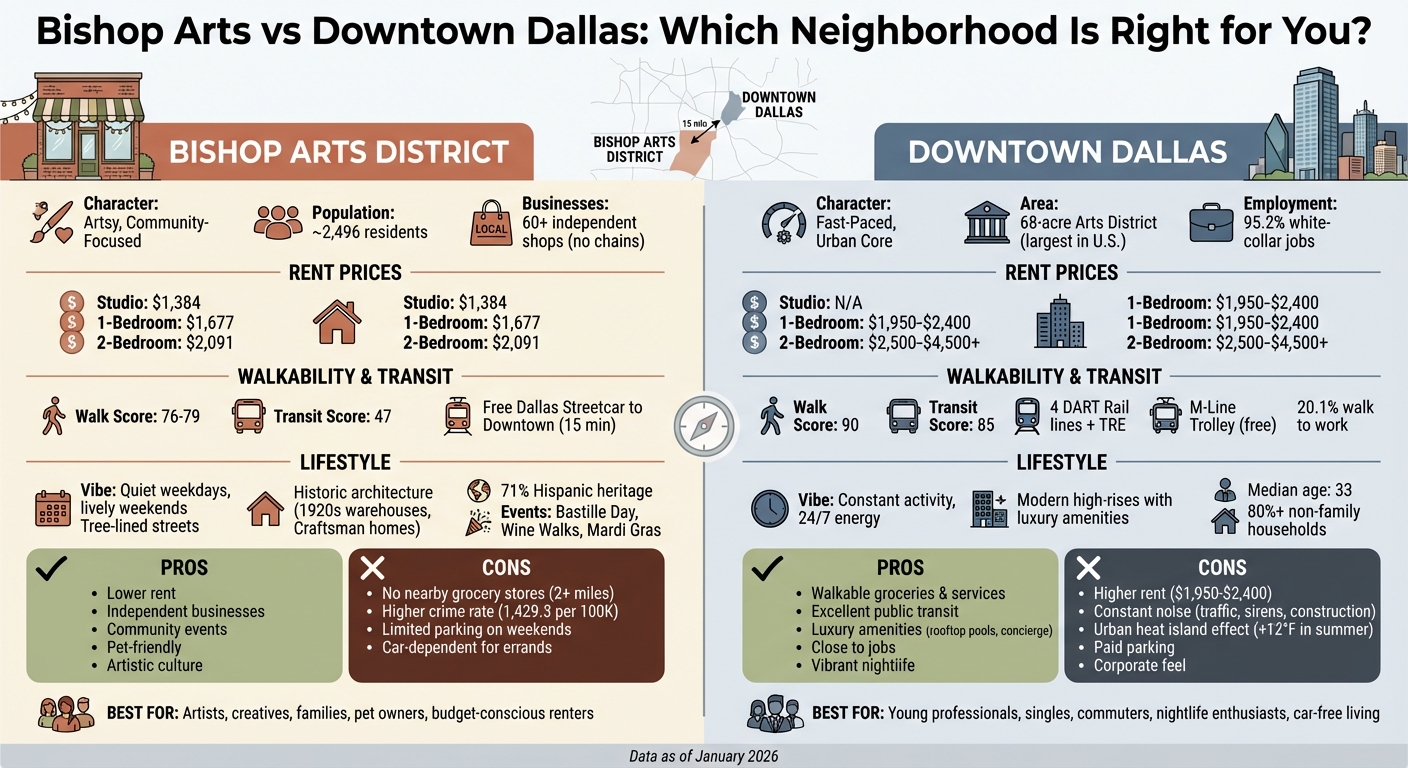
Bishop Arts vs Downtown Dallas: Neighborhood Comparison Guide
sbb-itb-b58f532
Neighborhood Character & Culture
Bishop Arts is all about local charm. With more than 60 independently owned businesses, you won’t spot a single chain store here. The neighborhood has an eclectic, artsy vibe – imagine colorful street murals tucked into alleys, live jazz drifting out of venues like Revelers Hall, and quirky gems like The Wild Detectives, a cozy bookstore-bar combo. Dubbed "Dallas’ Most Independent Neighborhood", Bishop Arts has earned its reputation by staying true to its local roots.
"Bishop Arts is Dallas’ most vibrant, independent main street. Loaded with authenticity & charm it has over eighty restaurants, bars & boutiques within 5 city blocks." – Bishop Arts Overarching
Downtown Dallas, on the other hand, offers a polished, corporate atmosphere. Towering skyscrapers dominate the skyline, housing major business headquarters and historic hotels. The Arts District – spanning an impressive 68 acres and recognized as the largest urban arts district in the U.S. – is a cultural hub. It boasts world-class institutions like the Dallas Museum of Art, which showcases over 25,000 pieces. The pace here is fast, with professionals sealing deals over lunch and tourists flocking to iconic attractions.
The differences between these areas also play out in their daily rhythms. Bishop Arts is home to around 2,496 residents, 71% of whom are Hispanic, reflecting its strong Latino heritage. The community celebrates its history with events like Bastille Day, a nod to its 19th-century French colony roots. Downtown, by contrast, thrives on large-scale institutional events, from symphony performances at the Meyerson Symphony Center to exhibitions at major museums.
Bishop Arts scores high marks for its nightlife (A+) and diversity (A–) on Niche, embodying a relaxed, close-knit vibe. Downtown, meanwhile, caters to professionals and tourists with its bustling energy and immediate access to Dallas’s urban core.
Apartment Styles & Availability
Historic vs Modern Buildings
Bishop Arts is where the charm of history meets contemporary design. Picture beautifully renovated 1920s warehouses turned into loft apartments, nestled alongside Craftsman, Tudor, and ranch-style homes. Adding a modern twist, luxury developments with artistic touches also dot the area. Take Bishop Canopy at 509 W 10th St, for example – its French-Moroccan aesthetic features two courtyards adorned with handmade Moroccan tiles. This blend of old and new creates a neighborhood rich in character and variety.
Downtown Dallas, on the other hand, takes a sleek, modern approach. Think towering high-rises with floor-to-ceiling windows, stylish condos, and urban lofts packed with upscale amenities like rooftop pools and concierge services. While Bishop Arts preserves its early 20th-century roots, Downtown’s architecture leans into contemporary glass-and-steel designs, catering to professionals who value proximity to the city’s bustling core. These contrasting styles reflect the distinct vibes of each neighborhood.
Unit Sizes & Amenities
The differences don’t stop at architecture – unit sizes and amenities also set these areas apart. In Bishop Arts, studio apartments average around 500 sq ft, one-bedrooms come in at about 712 sq ft, and two-bedrooms offer 1,082 sq ft on average. Older units often feature exposed brick, cozy layouts, and unique details, while newer developments like UNITi Bishop Arts at 546 W 9th St offer co-living setups with bundled utilities and Wi-Fi starting at $792. Modern buildings in the area also boast creative amenities, such as podcast studios at The 212 Melba, co-working pods at Bishop Central, and tranquil meditation gardens at Oakhouse.
In Downtown, apartments tend to be larger, especially in high-rises, and come with luxury-focused amenities. Expect rooftop pools, expansive fitness centers, concierge services, and sky lounges. Of course, all these perks come at a premium – residents pay top dollar for those skyline views and high-end extras. While Downtown delivers a full-service urban lifestyle, Bishop Arts offers a more intimate, boutique experience with thoughtful touches.
"Bishop Arts District is home to a variety of different home styles, but the most popular include Craftsman, Tudor, and ranch homes… If you prefer something more modern, Bishop Arts District is also home to a plethora of chic lofts that offer stunning city views." – Live Dallas
Rent Pricing & Value
When it comes to rent, Bishop Arts and Downtown Dallas offer two distinct experiences. As of January 2026, the average rent for a one-bedroom apartment in Bishop Arts is $1,677 per month, while Downtown’s Main Street District shows a median rent of $1,522. However, that Downtown median doesn’t tell the whole story – luxury high-rises in the area often push one-bedroom rents into the $1,800 to $3,500 range, depending on amenities and views.
In Bishop Arts, you’re paying for charm and character. Think exposed brick, artistic touches, and a tight-knit community vibe – features you won’t typically find in Downtown’s sleek glass towers. Studio apartments in Bishop Arts start at $1,384, and two-bedroom units average $2,091. Some properties, like Bishop Flats and Treehaus, offer starting rents of $1,469 and $1,629, respectively. To sweeten the deal, some Bishop Arts units include bundled utilities and Wi-Fi, which can be a big plus considering that Dallas utilities average about $431 per month – roughly 15% higher than the national average.
Downtown, on the other hand, is all about convenience and upscale living. High-rise renters often enjoy perks like rooftop pools, concierge services, and proximity to corporate headquarters. But these luxuries come at a cost – less square footage for your money and higher upfront expenses for things like parking. The table below breaks down the rent and space differences between the two areas.
Pricing Comparison Table
| Unit Type | Bishop Arts Avg Rent (Jan 2026) | Bishop Arts Avg Sq Ft | Downtown Rent |
|---|---|---|---|
| Studio | $1,384 | 500 sq ft | N/A |
| 1 Bedroom | $1,677 | 712 sq ft | $1,522–$3,500 |
| 2 Bedroom | $2,091 | 1,082 sq ft | $2,500–$4,500+ |
These numbers highlight Bishop Arts as a blend of style and affordability, while Downtown caters to those seeking high-end amenities. Over the past year, rents in Bishop Arts have increased by 2.3%, showing its growing appeal as a walkable, artsy neighborhood. For renters looking for charm and practicality without the hefty price tag of Downtown’s luxury towers, Bishop Arts stands out as a compelling option.
Walkability & Daily Needs
Downtown Dallas shines with a Walk Score of 90, making it a haven for those who love having everything within reach. With hundreds of restaurants, coffee shops, and bars just steps away, it’s easy to see why. Need groceries? No problem – Downtown offers walkable access to grocery stores, urban markets, and professional services, all seamlessly woven into the neighborhood. This dense urban layout makes handling daily essentials on foot a breeze. But how does this compare to the vibe of Bishop Arts?
Bishop Arts, with its charming 49-square-block radius, is home to 60 to 80 independent businesses, including galleries, boutiques, coffee shops, and restaurants. Its historic, tree-lined streets offer a slower, more intimate pedestrian experience, almost like stepping into a small town rather than a bustling city district. However, there’s a catch – Bishop Arts doesn’t have a full-service grocery store nearby. The closest one is over two miles away, meaning car-free residents often rely on grocery delivery or hop on the streetcar for larger shopping trips.
The Walk Score numbers tell the story. Downtown scores an impressive 90, while Bishop Arts and its neighboring areas like Kidd Springs and Kings Highway fall in the 76 to 79 range. Transit options also differ significantly; Downtown boasts a Transit Score of 85, easily surpassing Bishop Arts’ 47. For those living without a car, Downtown offers considerably more convenience for daily errands.
That said, Bishop Arts excels in walkable leisure. Its collection of independent shops – like Lucky Dog Books and Green Pet Dallas – and its vibrant dining scene make it a delightful place to explore on foot. Events like First Thursday art walks bring even more life to the streets. However, for essentials like groceries, you’ll need to plan ahead, as they’re not readily available within the district.
If you prioritize car-free convenience, Downtown is the clear winner. But if you’re drawn to the charm of a slower-paced, artistic neighborhood – even if it means planning grocery trips – Bishop Arts might be your perfect fit. These differences in walkability highlight the distinct lifestyles each neighborhood offers, helping you decide which suits your daily needs best.
Commute & Accessibility
Downtown Dallas serves as the heart of the metroplex’s transit system, with four DART Rail lines and the TRE connecting residents to key destinations like DFW International Airport, Dallas Love Field, and the Medical District. The M-Line Trolley offers another convenient option, providing free rides between the Arts District and Uptown.
Bishop Arts, located about 10 minutes south of Downtown, is linked to EBJ Union Station via a 2.45-mile Dallas Streetcar route with six stops.
"In under 15 minutes, you can hop on the (free!) streetcar and get from Bishop Arts to Union Station in Downtown Dallas." – Julie Aiello, Zumper
However, traveling beyond Downtown often requires a transfer at Union Station to access the broader DART network. While public transit is a major factor in accessibility, driving presents a different set of considerations.
Drivers in Bishop Arts benefit from easier neighborhood parking and alternative routes like North Zang Boulevard. In contrast, Downtown drivers contend with heavier traffic and mostly paid parking options, including garages, meters, and valet services. Even in Bishop Arts, parking can be tricky during busy weekends, despite its more residential vibe.
When it comes to transit scores, Bishop Arts earns a modest 52/100, while Downtown’s central location and extensive transit network make it far more accessible. Downtown also offers micro-mobility options like Bird, Lime, and Superpedestrian electric scooters, available daily from 5:00 a.m. to 9:00 p.m.. For those commuting across the metroplex or traveling without a car, Downtown’s rail system often provides direct, one-seat rides to many destinations. On the other hand, Bishop Arts caters more to car-dependent residents or those who frequently visit Downtown.
The contrast in transit options and driving ease plays a big role in daily life. And beyond accessibility, factors like noise levels and crowd dynamics also shape the living experience in these neighborhoods.
Noise, Crowds & Comfort
Bishop Arts offers a peaceful, residential vibe that feels like a step back from the hustle and bustle. On weekdays, the tree-lined streets are calm and serene. However, come the weekend, the central blocks transform into a lively hotspot, buzzing with diners and social gatherings. The increase in foot traffic is especially noticeable during weekend events, making it a vibrant hub for those seeking a social atmosphere.
Downtown Dallas, on the other hand, is a whirlwind of constant activity. It’s a place where the energy never dips, whether it’s the weekday rush of business professionals, the hum of construction tied to $6 billion worth of development projects, or the weekend crowds drawn to landmarks like the American Airlines Center and the Arts District. Sirens, traffic jams, and the relentless pace of urban life define Downtown’s character.
| Feature | Bishop Arts District | Downtown Dallas |
|---|---|---|
| Weekday Vibe | Quiet and laid-back | Fast-paced and business-heavy |
| Primary Noise | Live music and weekend brunch crowds | Traffic, sirens, construction noise, nightlife |
| Peak Crowd Times | Weekends and art walks | Daily work hours and major event days |
For those sensitive to noise, Downtown renters might find some relief by opting for interior-facing units, higher floors, or buildings equipped with soundproof windows to buffer against event-day commotion and street closures. In Bishop Arts, renters looking for tranquility should consider homes on side streets, away from the busy Bishop/Davis intersection. With a population of just under 4,000 during off-peak hours, the district offers a quieter alternative for those who prefer a more relaxed pace.
Another key difference is the climate experience. Downtown Dallas often feels the effects of the urban heat island, with summer temperatures soaring up to 12°F higher than in less dense neighborhoods. In contrast, Bishop Arts enjoys the cooling shade of its tree-lined streets, adding to its laid-back charm. Whether you’re drawn to the constant energy of Downtown or the calm of Bishop Arts, these factors can help guide your decision.
Pros & Cons
Every neighborhood has its own personality, and with that comes a mix of benefits and drawbacks. Take Bishop Arts, for example. It’s home to over 60 independent businesses, boasts an impressive 91 Walk Score, and features charming tree-lined streets that come alive during weekend art walks. Plus, one-bedroom apartments here average $1,677 – significantly less than Downtown’s $1,950 to $2,400 price range.
But it’s not all sunshine and roses. Bishop Arts faces challenges like limited grocery options, tough parking on weekends, and a crime rate of 1,429.3 per 100,000 residents – more than ten times the national average. There’s also growing concern about gentrification pushing out long-time residents. While Niche gives the area an A+ for nightlife and an A for commute, its overall grade lands at a C+.
Downtown Dallas, on the other hand, offers unmatched convenience. Groceries, pharmacies, and urban infrastructure are right at your doorstep, and the transit connections are top-notch. Sleek high-rises come with premium amenities and stunning skyline views. But all this comes at a price – literally and figuratively. Expect higher rents, constant noise, and the fast-paced grind of city life. Here’s a quick breakdown of the pros and cons:
Pros/Cons Table
| Bishop Arts District | Downtown Dallas |
|---|---|
| Pros: Lower rent ($1,677 for 1BR), independent businesses, highly walkable (91/100), tree-lined streets, community events, free streetcar to Downtown | Pros: Convenience galore, easy access to groceries and pharmacies, luxury high-rise amenities, central job access, vibrant activity, excellent transit options |
| Cons: Limited grocery options, tough weekend parking, high crime rate (1,429.3 per 100K), fewer available units, car-dependent for errands | Cons: Higher rent ($1,950–$2,400 for 1BR), constant noise, fast-paced urban environment, corporate feel |
Who Bishop Arts Is Best For
Bishop Arts is a magnet for artists, creatives, and young professionals who prioritize local charm over big-box convenience. The neighborhood is brimming with personality, thanks to its more than 60 independent businesses, including boutiques, art galleries, and live music venues. For those in creative fields, the area offers excellent opportunities to showcase local craftsmanship, all while steering clear of national chains.
Families will find a unique blend of urban and suburban living here, with a small-town feel that’s hard to match. About 39% of households in the area include children, and there’s no shortage of family-friendly amenities. Kidd Springs Park, with its water park, pool, and serene Japanese garden, along with Lake Cliff Park, provides perfect spots for relaxing weekend outings. Plus, the neighborhood is served by some of Dallas’ top-rated magnet schools, such as the School for the Talented & Gifted and Booker T. Washington High School for the Performing and Visual Arts.
Pet owners are also well-catered to in Bishop Arts. Modern apartment complexes like The Dakota and Bishop Canopy feature dog parks and grooming stations, while local shops like Green Pet Dallas ensure your furry friends are well taken care of. The tree-lined streets are perfect for daily walks, and many restaurant patios welcome pets, making it easy to enjoy the neighborhood with your four-legged companions.
For renters on a budget, Bishop Arts offers a range of options. One-bedroom apartments typically cost between $1,285 and $1,800, and co-living spaces like UNITi Bishop Arts provide an affordable alternative with utilities included in the rent. The free Dallas Streetcar adds to the appeal, offering a quick 15-minute commute to Union Station and saving residents the hassle and cost of downtown parking.
This neighborhood is perfect for those willing to trade easy grocery access for a vibrant calendar of events. From Bastille Day celebrations to monthly Wine Walks and the colorful Mardi Gras Parade, there’s always something happening in Bishop Arts.
Next, discover who Downtown Dallas is best suited for.
Who Downtown Dallas Is Best For
While Bishop Arts offers a cozy, local vibe, Downtown Dallas caters to a more fast-paced, urban crowd.
Downtown Dallas is the ideal spot for high-income professionals who want to be close to their workplaces. With 95.2% of the workforce here employed in white-collar jobs like professional or administrative roles, it’s the core of Dallas’ business district. The rise of the "Y’all Street" trend has even attracted financial firms relocating from New York City.
The area is also a magnet for young singles and urban dwellers. With a median age of 33, over 80% of households are non-family units, meaning residents typically live alone or with roommates. A significant 56.9% of the population falls between the ages of 25 and 44, creating a lively, social atmosphere. Think rooftop pools, 24/7 concierge services, and luxury living. To maintain a comfortable lifestyle in the Dallas-Fort Worth area, a single adult needs an annual income of about $107,061 before taxes, making Downtown a hub for those who can afford its upscale conveniences.
For commuters and those who prefer a car-free lifestyle, Downtown is a dream. As the transit hub of the city, it offers four DART rail lines and the Trinity Railway Express. Impressively, 20.1% of residents walk to work – a number far above the metro average. This makes Downtown especially appealing for those who want to ditch the car.
Night owls and nightlife lovers will also feel right at home. The neighborhood is walking distance from the 68-acre Dallas Arts District, the vibrant live music scene in Deep Ellum, and chic cocktail bars like Midnight Rambler. For fitness enthusiasts, the 14-mile Trinity Levee Trail and high-end gyms like Cowboys Fit are just around the corner. Everyday needs are easily met with grocery options like BERKLEY’s Market and Tom Thumb.
With 86.7% of residents renting and a median gross rent of $1,973 per month, Downtown Dallas appeals to those who value luxury amenities and the convenience of living at the city’s center. It’s a prime choice for anyone seeking a sophisticated, active lifestyle.
Final Verdict & CTA
Bishop Arts and Downtown Dallas each offer their own distinct take on urban living. Bishop Arts brings a cozy, artistic vibe with its historic charm and independent spirit. Meanwhile, Downtown Dallas stands tall as the city’s bustling core, packed with skyscrapers, upscale amenities, and a fast-paced corporate energy.
When deciding between the two, think about what kind of lifestyle suits you best. If you’re drawn to a tight-knit, walkable community with a creative edge, Bishop Arts delivers. Its small-town feel, paired with the convenience of a free streetcar, makes it a standout choice. On the other hand, if you want to be in the heart of the action, close to major employers, luxury living, and excellent public transit via the DART hub, Downtown Dallas is hard to beat.
Both neighborhoods are highly walkable, but their vibes couldn’t be more different. Whether you lean toward artistic charm or the dynamic energy of a corporate hub, there’s a neighborhood here for you. This comparison highlights the key differences in culture, pricing, and transit to help you make an informed choice.
Finding the perfect Dallas neighborhood can feel overwhelming, but that’s where Taco Street Locating comes in. We offer free apartment locating services tailored to your needs. From personalized consultations and detailed research to apartment tours and application assistance, we handle it all. Our team knows Bishop Arts and Downtown Dallas inside and out, so we can help you find a place that fits your lifestyle and budget – without costing you a dime.
Ready to find your dream apartment in Dallas? Reach out to Taco Street Locating for a free consultation, and let us take care of the hard part.
FAQs
What’s the difference between living in Bishop Arts and Downtown Dallas?
Bishop Arts brings a delightful blend of charm and creativity, offering a neighborhood filled with unique boutiques, art galleries, and locally-owned restaurants. It feels like a cozy small-town retreat tucked within the city, featuring walkable streets and a relaxed, community-oriented vibe. Housing options here range from historic boutique apartments to modern mid-rise buildings with perks like rooftop lounges and co-working spaces. Rent typically starts around $795 for studios and can climb to $3,500+ for upscale units. This area is a great fit for creatives, young professionals, and families who appreciate character, walkable streets, and a more laid-back lifestyle.
Downtown Dallas, by contrast, is the city’s energetic urban center. It’s the go-to spot for business professionals, high-rise living, and a fast-paced, corporate vibe. While it may lack the neighborhood charm of Bishop Arts, Downtown excels in its direct access to offices, dining options, and public transit. It’s the perfect choice for those who thrive on the hustle and bustle of city life and want the convenience of being right in the middle of the action.
How do rent prices and amenities differ between Bishop Arts and Downtown Dallas?
Renting in the Bishop Arts District comes with plenty of options to suit different budgets and lifestyles. Prices for studios start at about $795 per month and can go beyond $3,500 per month for high-end luxury apartments. On average, you’re looking at approximately $1,329 for a studio, $1,650 for a one-bedroom, and $2,126 for a two-bedroom. Many of the newer complexes in the area come packed with perks like smart-home features, rooftop lounges, co-working spaces, dog parks, pools, and even serene meditation gardens.
If Downtown Dallas is more your speed, you’ll find it offers a mix of sleek, high-rise living with stunning city views and upscale touches. While prices can vary, expect premium amenities such as 24-hour concierge services, rooftop pools, state-of-the-art fitness centers, and close proximity to the city’s main attractions. The convenience and luxury of living in the heart of the city make it a great choice for those drawn to a vibrant, urban lifestyle.
Which neighborhood is better for someone living without a car?
If you’re living without a car, Downtown Dallas stands out as the ideal choice due to its excellent walkability and public transit options. Boasting a Walk Score of 90, Downtown is considered a “walker’s paradise.” You’ll find restaurants, grocery stores, coffee shops, workplaces, and entertainment all just a short walk away. Plus, the area is well-served by DART rail and bus lines, making it easy to handle longer commutes or errands without a car.
On the other hand, Bishop Arts offers charm and walkability within its own neighborhood, but it depends on the free Dallas Streetcar for trips to and from the city center. This can make getting around a bit more restrictive compared to Downtown. For a lifestyle that’s completely car-free, Downtown Dallas delivers the convenience and accessibility you’re looking for.