
If you’re deciding between Frisco, Plano, and McKinney for renting an apartment, here’s what you need to know:
- McKinney: Best for affordability and a small-town feel. Named the top U.S. city for renters in 2025, it offers lower costs (2.5% below the national average), modern apartments, and a growing job market. However, commutes are longer, and public transit options are limited.
- Plano: Ideal for professionals and families. Plano combines proximity to major employers like Legacy West, highly rated schools (7.8/10), and diverse neighborhoods. Rents are 10% below the national average, but living costs and utilities are higher, and many residents face long commutes.
- Frisco: Perfect for those seeking an active, upscale lifestyle. Known for its sports and entertainment hubs, luxury apartments, and walkable areas like Frisco Square, it caters to higher incomes. Rental prices are the highest, and traffic congestion can be an issue.
Quick Comparison
| Suburb | Average Rent (1-BR) | Cost of Living | Commute Convenience | School Rating | Key Features |
|---|---|---|---|---|---|
| McKinney | $1,538 | 2.5% below US avg | Longer commutes | 6.7/10 | Affordable, historic downtown charm |
| Plano | $1,460 | 9.9% above US avg | Close to employers | 7.8/10 | Corporate hubs, family-friendly |
| Frisco | $1,356 | Higher | Car-dependent | High | Sports culture, luxury living |
Your choice depends on your priorities: affordability (McKinney), proximity to work and schools (Plano), or upscale amenities and entertainment (Frisco).
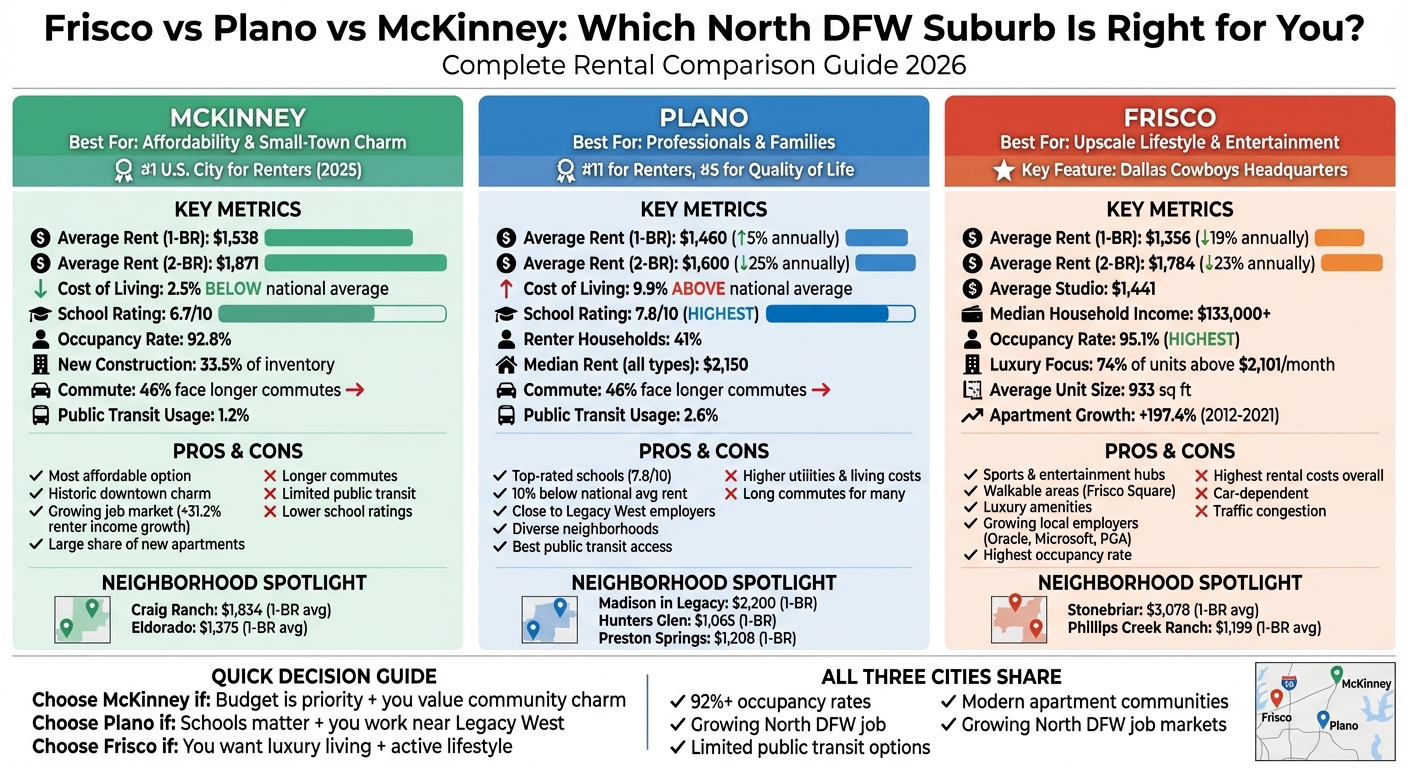
Frisco vs Plano vs McKinney: Complete Rental Comparison Guide for North DFW Suburbs
1. Frisco
Lifestyle and Neighborhood Feel
Frisco offers a polished rental experience, with a median household income surpassing $133,000. The city combines the charm of upscale urban districts like Frisco Square with neighborhoods such as Stonebriar and Phillips Creek Ranch, each providing a mix of dining, shopping, and green spaces. The rental market here is competitive, with a 95.1% occupancy rate – a testament to the area’s strong demand and thriving local economy.
Mayor Jeff Cheney highlighted Frisco’s growth when he spoke about the Firefly Park development, describing it as bringing "a significantly different, cool vibe to Frisco". This ambitious 230-acre project, designed by Amsterdam-based UNStudio, will include a Dream Hotel and pedestrian-friendly layouts surrounded by parks. Frisco also offers convenient commuting options for those working in major North Dallas-Fort Worth hubs.
Commute Patterns
Located about 28 miles from downtown Dallas, Frisco sits farther north than Plano. Most commuters rely on the Dallas North Tollway to reach areas like Legacy West or North Dallas, so factoring in monthly toll costs is wise. On the bright side, Frisco’s rapid growth in industries like tech and sports has attracted major employers, including Oracle, Microsoft, and the PGA, which could mean shorter commutes for those working locally.
Dining, Shopping, and Entertainment
Frisco boasts a lively sports and entertainment scene anchored by The Star and Toyota Stadium. These hubs are surrounded by high-end shopping and walkable dining options in areas like Stonebriar and Frisco Square. Adding to its appeal, the city is developing a Universal Kids Theme Park on 97 acres, a unique family-friendly attraction.
Apartment Pricing and Availability
As of January 2026, Frisco’s rental market has seen a sharp drop in prices. One-bedroom rents have fallen by 19% annually, while two-bedroom units have declined by 23%. Average rents are $1,356 for one-bedroom apartments, but prices vary significantly by neighborhood. For example, rents in Phillips Creek Ranch start at $1,199, while Stonebriar averages $3,078. Studio apartments generally cost around $1,441, and two-bedroom units average $1,784. However, about 74% of apartments in Frisco are priced above $2,101 per month, reflecting the city’s focus on luxury living.
Modern Apartment Communities
Frisco’s apartment inventory has grown dramatically, tripling between 2012 and 2021 – a 197.4% surge in new construction. Nearly 93% of these new developments are in highly sought-after areas. The average size of a newly built apartment is now 933 square feet.
Modern complexes like Bell Southstone Yards, Jefferson Railhead, Ayla Stonebriar, and Cortland Phillips Creek Ranch offer a range of units, from studios to two-bedroom apartments, with rents starting between $1,215 and $1,485. These communities come packed with amenities, including resort-style pools, coworking spaces, and high-end fitness centers .
sbb-itb-b58f532
2. Plano
Lifestyle and Neighborhood Feel
Plano strikes a balance between the charm of established suburban living and the vibrancy of modern urban developments. The city offers a variety of experiences, from the historic streets of Downtown Plano to the upscale, master-planned communities of Legacy West and Legacy North. With its mix of mature neighborhoods and bustling "live-work-play" hubs, Plano caters to renters at different life stages. Nationally, it ranks #11 for renters and holds the #5 spot for Quality of Life. Popular rental areas include Downtown Plano and Dallas North Estates. While luxury rentals dominate the market, neighborhoods like Preston Springs and Glen Meadows provide more budget-friendly options. Additionally, Plano’s layout is ideal for professionals working in the Platinum Corridor.
Commute Patterns
Plano is a prime location for professionals commuting to the Platinum Corridor, a hub for major employers near the Dallas North Tollway and Sam Rayburn Tollway. Developments like Legacy West make it convenient to live close to work, with corporate giants such as Toyota, JPMorgan Chase, and Liberty Mutual headquartered nearby. The Dallas North Tollway connects Plano to North Dallas and downtown, while the Sam Rayburn Tollway links the city to Frisco and DFW Airport. Although 46% of residents face longer commutes, only 2.6% use public transit or walk. For added convenience, some residential and hospitality areas near Legacy West offer shuttle services within a 5-mile radius, making local commutes to offices easier.
Dining, Shopping, and Entertainment
Plano’s social scene revolves around hotspots like Legacy West Box Garden, The Shops at Legacy, and Granite Park. These destinations are just a short drive or walk from many modern apartment complexes, adding to their appeal. Downtown Plano offers a more relaxed atmosphere with its local restaurants, breweries, and historic storefronts, creating a mix of casual and refined dining and shopping options. This variety contributes to the range of rental prices across Plano’s neighborhoods.
Apartment Pricing and Availability
As of January 2026, the average rent in Plano is $1,460 per month, which is 10% below the national average. The median rent across all property types stands at $2,150, reflecting a modest 2% annual increase, and about 41% of Plano households are renter-occupied. Rental trends vary by unit size: one-bedroom apartments average $1,680 (up 5% annually), while two-bedroom units have seen a notable drop to $1,600, with some reports indicating a 25% decrease. Studios rent for an average of $1,431, and three-bedroom units go for around $2,314. Approximately 53% of rental prices fall between $1,501 and $2,000. Renters should aim for an annual income of about $58K. Neighborhoods like Coit-Ridgeview and Madison in Legacy are among the most expensive, with one-bedroom units priced at $2,853 and $2,200, respectively. Meanwhile, more affordable options can be found in areas like Hunters Glen ($1,065) and Preston Springs ($1,208).
Modern Apartment Communities
Plano’s rental market offers a mix of garden-style apartments and sleek mid- to high-rise developments. Legacy North, located at 5765 Bozeman Dr, provides studios to two-bedroom units with rents ranging from $1,353 to $8,046. The Hathaway At Willow Bend, at 2525 Preston Rd, features one- to three-bedroom units priced from $1,190 to $2,800. For renters aged 55 and older, Overture Plano offers active adult living options starting at $1,399. Major property management firms like Greystar (16 communities), Willow Bridge (10 communities), and RPM (10 communities) dominate the area. Many modern complexes come equipped with resort-style pools, coworking spaces, and fitness centers, though amenities vary. These offerings reflect Plano’s focus on providing high-end living with convenient urban perks.
3. McKinney
Lifestyle and Neighborhood Feel
McKinney earned the top spot for U.S. renters in 2025, thanks to its balance of affordability and quality living. It combines the charm of a small town with the conveniences of a larger city. Neighborhoods like Craig Ranch and Stonebridge Ranch stand out, offering modern amenities and newly built homes that enhance the rental experience. The city boasts a 92.8% occupancy rate and an average property rating of 4.3 out of 5.
Commute Patterns
Located farther north than Plano or Frisco, McKinney residents often face longer commutes – 46% of them, to be exact. Only 1.2% rely on public transit or walking for their daily travel. However, the local job market is growing, and renter incomes have climbed by 31.2%, reflecting a shift toward remote work and economic growth. These factors contribute to McKinney’s laid-back, community-oriented vibe.
Dining, Shopping, and Entertainment
McKinney’s dining and shopping scene mirrors its small-town appeal. The downtown area offers a walkable mix of local restaurants and boutiques, while suburban neighborhoods provide convenient access to everyday services. While the city doesn’t have the abundance of retail and entertainment options found in larger urban areas, its slower pace appeals to those looking for a quieter lifestyle. This charm is also evident in the variety of rental options available.
Apartment Pricing and Availability
As of January 2026, McKinney’s average rent prices are $1,342 for studios, $1,538 for one-bedroom units, and $1,871 for two-bedroom units. Notably, one-bedroom rents have risen 3% annually, while two-bedroom rents have dropped by 7%. Pricing varies significantly by neighborhood – one-bedroom units in Craig Ranch average $1,834, while more affordable options in Eldorado are around $1,375. Approximately 63% of rentals are priced above $2,101, highlighting the city’s focus on high-end properties. Additionally, 33.5% of the apartment inventory consists of new constructions, with an average unit size of 948 square feet.
Modern Apartment Communities
McKinney’s rental market features a variety of modern, amenity-packed communities. For instance, Luxia Craig Ranch offers units starting at $1,123 with incentives like 10 weeks free. Davis at the Square provides urban living options starting at $1,070, while Cendana Craig Ranch features one-bedroom units starting at $1,479. Many of these communities include perks like fitness centers, EV charging stations, swimming pools, dog parks, and in-unit washer/dryers. With 68% of apartments situated in prime locations, renters enjoy convenient access to essential services and amenities.
Pros and Cons
This section provides a quick look at the key advantages and challenges of renting in North DFW suburbs, complementing the detailed profiles shared earlier. Each suburb stands out with its own mix of perks and drawbacks.
Frisco is known for its top-tier sports venues, excellent schools, and vibrant, walkable areas like Frisco Square. While it boasts upscale amenities, rapid growth has led to increased traffic and a reliance on cars for commuting.
Plano offers highly-rated schools and close proximity to major corporate hubs like Legacy West. It also has slightly better public transit options, with 2.6% of residents using alternatives like walking or public transportation. However, renters here face higher living expenses and utilities, and nearly half (46%) endure long commutes.
McKinney, ranked as the top city for renters, shines with its lower cost of living, a significant influx of new apartments, and a charming historic downtown. Despite these benefits, it comes with longer commutes, limited public transit options, and slightly lower school ratings (6.7 out of 10) compared to Plano.
| Suburb | Main Advantages | Main Disadvantages |
|---|---|---|
| Frisco | Home to the Dallas Cowboys headquarters; top-rated schools; over 8,500 luxury rental units; upscale Frisco Square | Highest rental costs ($2,754 for a 3-bedroom); car dependency; traffic congestion from rapid growth |
| Plano | High school rating of 7.8/10; rents 10% below the national average; diverse neighborhoods; close to Legacy West | Higher living costs and utilities; 46% of renters face long commutes |
| McKinney | Most affordable with a cost of living 2.5% below the national average; highest share of new apartments (33.5%); historic downtown charm | Longer commutes; limited public transit (1.2% usage); lower school ratings compared to Plano |
"Specifically, the city [McKinney] boasts a lower-than-average cost of living, a large share of high-end apartments, and consistent job growth, making it an ideal choice for renters seeking a small-town atmosphere without sacrificing the perks of a larger urban center." – RentCafe Report via Dallas Observer
These snapshots highlight the key trade-offs renters can expect in these North DFW suburbs.
Conclusion
Deciding between Frisco, Plano, and McKinney comes down to what matters most to you as a renter. If affordability tops your list, McKinney is a standout choice. Named the best U.S. city for renters in 2025, McKinney combines a cost of living 2.5% below the national average with a quaint small-town vibe and modern conveniences. It’s a great fit for those who want to save money while enjoying a tight-knit community atmosphere.
Plano, on the other hand, offers a well-rounded option for those who value proximity to major employers like Legacy West and highly rated schools (scoring 7.8 out of 10). With an average rent of $1,460 – 10% below the national average as of January 2026 – and a solid infrastructure, it’s ideal for professionals balancing corporate commutes and families focused on education. Plano’s diverse neighborhoods provide rental options for various budgets, making it a flexible choice.
For renters drawn to a lively, entertainment-driven lifestyle, Frisco is the way to go. Known for its sports-centric culture and home to the Dallas Cowboys headquarters at The Star, Frisco offers premium rentals and walkable areas like Frisco Square. With a median household income exceeding $133,000, the city caters to those who enjoy upscale living and modern amenities.
Commute preferences also play a role. Plano is a top pick for those working near Legacy West, while Frisco suits North Dallas commuters who want a vibrant, active lifestyle. McKinney, meanwhile, is perfect for renters prioritizing affordability and community charm over a shorter commute. All three suburbs maintain occupancy rates above 92%, reflecting their popularity.
If you’re ready to make your move, consider reaching out to a local apartment locator. They can help match you with the perfect community for your needs – at no cost to you.
FAQs
What are the key lifestyle differences for renters in Frisco, Plano, and McKinney?
Frisco, Plano, and McKinney each bring something unique to the table for renters, offering distinct lifestyles shaped by their character, amenities, and convenience.
Frisco caters to those who love a modern, family-friendly vibe. With its luxury apartments, sports venues, and plenty of entertainment options, it’s perfect for renters who thrive in an active, energetic environment packed with amenities.
Plano, on the other hand, offers a more urban experience. With its proximity to corporate offices, shopping hubs, and dining spots, it’s a great choice for professionals and families who want the perks of city living. Plus, it’s slightly more budget-friendly than Frisco, making it an attractive option for many.
McKinney charms with its small-town feel, complete with a historic downtown and a community-focused atmosphere. Renters here enjoy a quieter pace of life, surrounded by parks, local businesses, and affordable luxury apartments. It’s an excellent choice for those who want the perfect blend of modern conveniences and a welcoming, close-knit community.
How do Frisco, Plano, and McKinney compare in terms of apartment rental costs?
Apartment rental prices differ slightly between Frisco, Plano, and McKinney, with McKinney standing out as the more affordable choice. Rent in McKinney tends to fall below the national average, making it an appealing option for those looking to save on housing costs.
Frisco and Plano, on the other hand, come with higher price tags. Frisco often tops the list due to its newer developments and luxurious amenities. Plano’s rental rates are similar to Frisco’s but can fluctuate based on how close you are to shopping centers, dining spots, or major corporate offices. For renters prioritizing affordability, McKinney is a solid pick, while Frisco and Plano attract those willing to pay a bit more for a higher-end lifestyle.
Which North Dallas suburb has the most convenient commute for professionals?
If you’re a professional in North Dallas, Plano stands out as the top choice for a convenient commute. Its central location and closeness to major corporate hubs like Legacy West mean shorter travel times for many. Plus, Plano offers excellent access to key highways like U.S. 75 and the Dallas North Tollway, making trips to North Dallas and nearby areas smooth and efficient.
Although Frisco and McKinney are expanding quickly and improving their connectivity, Plano’s well-established infrastructure and prime location continue to make it the go-to option for professionals who value a hassle-free daily commute.