
When choosing between Westchase and the Energy Corridor in Houston, your decision will likely come down to work location, budget, and lifestyle preferences. Working with an apartment finder in Houston can help you navigate these differences. Here’s a quick summary:
- Commute: Westchase offers more flexible routes and shorter drives to diverse parts of Houston. The Energy Corridor is ideal for those working in the energy sector but relies heavily on I-10, which can get congested.
- Apartment Costs: Westchase is more affordable, with one-bedroom rents averaging $1,008 compared to $1,305 in the Energy Corridor. However, Energy Corridor apartments tend to offer larger spaces.
- Lifestyle: Westchase combines accessibility with a lively dining scene and urban parks. The Energy Corridor boasts proximity to extensive trails and parkland, appealing to outdoor enthusiasts.
Quick Comparison
| Feature | Westchase | Energy Corridor |
|---|---|---|
| Average 1-Bedroom Rent | $1,008 (715 sq ft) | $1,305 (759 sq ft) |
| Commute | Flexible routes, 30 min to most areas | Shorter for energy sector jobs |
| WalkScore | 62 (Somewhat Walkable) | 46 (Car-Dependent) |
| Outdoor Access | Urban parks | 26,000 acres, 50+ miles trails |
| Dining | Diverse and casual | Upscale and varied |
Your choice depends on whether you prioritize affordability and central access (Westchase) or nature and proximity to energy jobs (Energy Corridor).
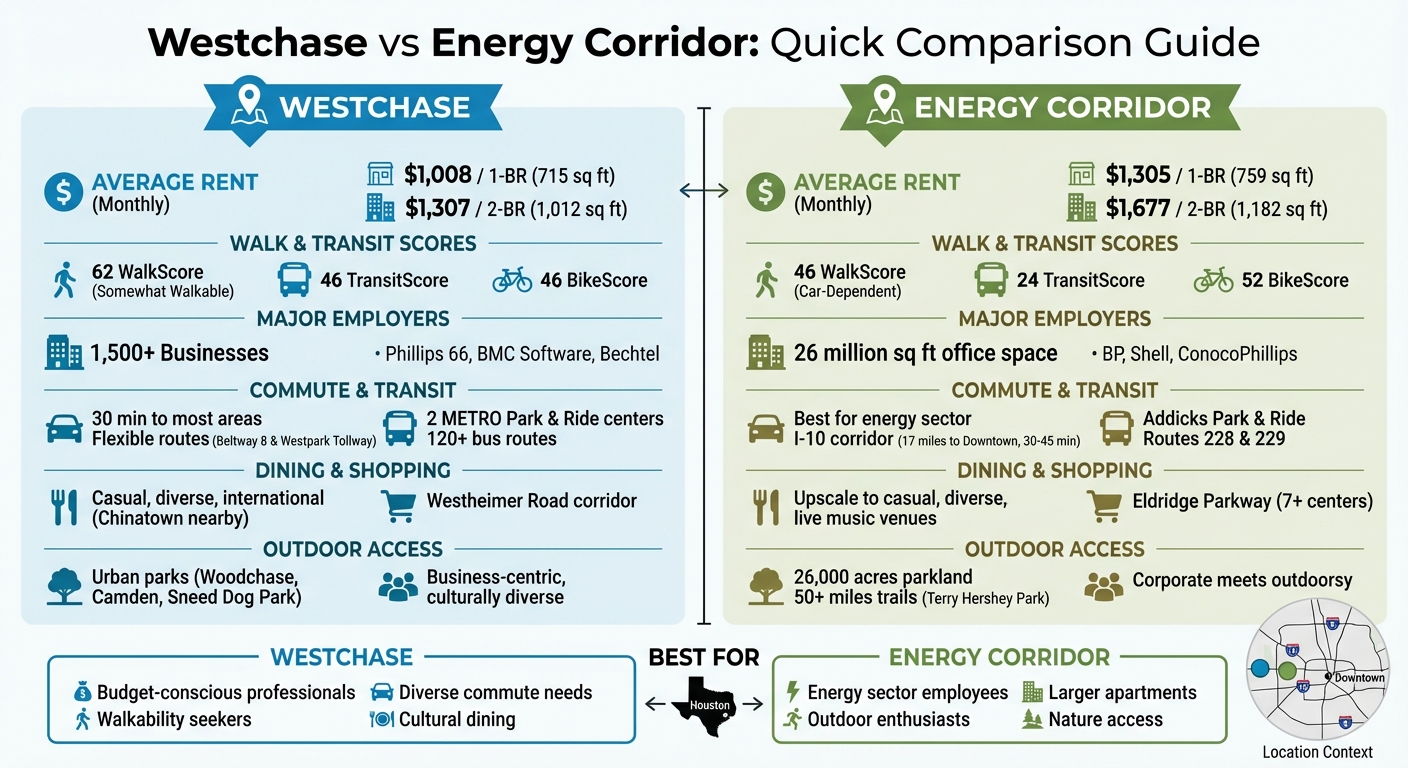
Westchase vs Energy Corridor Houston Comparison: Rent, Commute, and Lifestyle
Commute and Access
Distance to Major Employers
Both neighborhoods are conveniently located near major corporate hubs. Westchase is home to over 1,500 businesses, including big names like Phillips 66, BMC Software, and Bechtel.
Meanwhile, the Energy Corridor boasts over 26 million square feet of office space, housing major employers like BP, Shell, and ConocoPhillips along the I-10 corridor. If you work in the energy sector, living in the Energy Corridor puts you close to the action.
For those who live in one district and work in the other, the commute is manageable. Westchase sits at the crossroads of Beltway 8 and the Westpark Tollway, while the Energy Corridor runs along a 7-mile stretch of I-10 between Beltway 8 and the Grand Parkway. The two areas are connected via Eldridge Parkway or Beltway 8, ensuring a relatively short drive during off-peak hours.
These proximity factors set the stage for understanding how traffic and commute times might affect your daily routine.
Traffic and Drive Times
Westchase offers more alternative routes, which can be a lifesaver during heavy traffic. Streets like Richmond and Westheimer provide options to bypass congestion on major roads. This flexibility can make a big difference during peak hours.
"Wherever you need to go, you can get there easily from Westchase District. Whether you’re heading to the airports, Texas Medical Center, Katy, Memorial, River Oaks, Bellaire, Sugar Land, Downtown, the Galleria, City Centre, or Greenway Plaza, you’re rarely more than 30 minutes away from your destination."
On the other hand, the Energy Corridor relies heavily on I-10, which can mean longer commute times during rush hour. Downtown Houston is about 17 miles away, taking roughly 30 minutes in light traffic but stretching to over 45 minutes during peak periods. However, the Katy Managed Lanes can ease the burden for carpoolers or those willing to pay tolls.
Both neighborhoods offer comparable access to Houston’s airports. From the Energy Corridor, George Bush Intercontinental Airport (IAH) is about 35 minutes away (30 miles), while Hobby Airport (HOU) is a 45-minute drive (35 miles). Westchase, with its direct Beltway 8 access, offers a more straightforward north-south route to IAH.
Public Transit and Other Options
For those seeking alternatives to driving, public transit and other options vary between the two neighborhoods.
Westchase provides better public transit connectivity, featuring two METRO Park & Ride centers, access to over 120 bus routes, a TransitScore of 46, and a WalkScore of 62, making it "Somewhat Walkable".
In contrast, the Energy Corridor scores lower in transit accessibility, with a TransitScore of 24 and a WalkScore of 46, classifying it as "Car-Dependent". The Addicks Park & Ride services the area with routes like the 228 and 229 to Downtown, offering fares under $3 per trip. To encourage transit use, the district also runs "Free-Ride Fridays" on select routes, such as the 75 Eldridge line.
For cyclists, the Energy Corridor takes the lead with a BikeScore of 52, compared to Westchase’s 46. The area features over 50 miles of trails, including the scenic 11-mile Terry Hershey Park system, which winds through office campuses and offers a bike-friendly commute to companies like BP and Shell. Westchase, meanwhile, is developing the Brays Bayou Connector, a 1.92-mile grade-separated trail designed to improve pedestrian and bike access.
These commuting details provide valuable context as we delve into the apartment living experience in each district.
sbb-itb-b58f532
Apartment Options and Pricing
After examining commute options and accessibility, let’s dive into the apartment living experience, pricing, and community perks in both neighborhoods.
Building Types and Communities
Westchase offers a variety of housing styles, catering to its diverse population of corporate professionals. Choices range from efficient studio apartments to upscale luxury residences. Residents can opt for traditional garden-style complexes or sleek mid-rise buildings, many of which are conveniently located near Westheimer Road.
Meanwhile, the Energy Corridor takes a different approach with its mix of modern, upscale housing. Options include gated townhome communities, garden-style apartments, and contemporary mid-rise buildings. This neighborhood combines a corporate luxury feel with a touch of nature, creating a unique living environment.
These varied housing styles in both areas set the stage for a comparison of the amenities designed to enhance the professional lifestyle.
Amenities, Parking, and Outdoor Space
Westchase apartments are designed with practicality in mind, offering features like resort-style pools, fitness centers, social lounges, and business centers. Many complexes provide gated access for added security and standard surface parking. Plus, residents have easy access to green spaces like Woodchase Park, Camden Park, and Sneed Dog Park for outdoor activities.
On the other hand, the Energy Corridor steps things up with high-end amenities such as EV charging stations, spinning studios, Zen courtyards, coffee bars, and modern conveniences like LED lighting and electronic entry systems. Parking options include multi-level garages with assigned spaces and EV charging stations. Additionally, residents enjoy direct access to the scenic trails of Terry Hershey Park and George Bush Park.
Now, let’s take a closer look at how the two areas compare in terms of rent and apartment sizes.
Rent Costs and Unit Sizes
For those watching their budget, Westchase offers a more affordable option. As of January 2026, the average rent for a one-bedroom apartment is $1,008 for 715 square feet, while a two-bedroom unit averages $1,307 for 1,012 square feet. Notably, rents in this area have seen a slight 1.4% dip over the past year.
In contrast, the Energy Corridor comes with a higher price tag but also larger unit sizes. A one-bedroom apartment averages $1,305 for 759 square feet – approximately 23% more expensive than Westchase – while two-bedroom units average $1,677 for 1,182 square feet. Interestingly, rents here have also declined by 3.0% over the past year. Specific communities like Memorial at Six and Broadstone Energy Park offer a wide range of pricing, from $1,116 to $2,390 and $1,150 to $1,911, respectively.
Daily Life and Convenience
Living in Westchase and the Energy Corridor offers two distinct experiences when it comes to dining, shopping, and overall community vibe. These differences play a big role in shaping daily life and determining which neighborhood aligns best with your lifestyle.
Restaurants and Entertainment
Westchase’s dining scene, centered along Westheimer Road, is a mix of familiar national chains and local favorites. Its proximity to Chinatown/Asiatown adds an authentic Asian flair to the area, with standout spots like Main Bird Hot Chicken, The Original Marini’s Empanada House, and Frank’s Grill for breakfast. By night, the neighborhood’s casual bars and karaoke venues create a laid-back atmosphere.
The Energy Corridor, on the other hand, has its restaurants scattered along Eldridge Parkway, Dairy Ashford Road, and near the more upscale CityCentre development. The area’s diverse workforce has influenced a broad range of dining options, from affordable pizza joints to upscale French dining at Le Mistral. Local draft beers typically cost $8 to $9, with occasional seasonal specials offering a bit of variety. For entertainment, the Energy Corridor boasts spots like Topgolf, Watson’s House of Ales, and The Shakespeare Pub, which regularly features live blues and folk music.
"People from all walks of life and cultures have migrated to live and work in the Energy Corridor, and the impressive array of dining options reflects that diversity." – Apartments.com
Shopping and Errands
Westchase thrives as a commercial hub, with retail conveniently located along major highways. Grocery shopping is a breeze with options like H-E-B, Whole Foods, Target, Phoenicia Specialty Foods, and Sprouts Farmer’s Market all nearby. Alief, just next door, adds to the mix with international grocers, while unique stores like the Fit Japanese Store add a bit of flair to the shopping experience.
In contrast, the Energy Corridor leans more suburban, with shopping centers concentrated along Eldridge Parkway. Anchors like Parkway Village Plaza and the Enclave on Eldridge offer a combination of traditional retailers and specialty markets, including Hebert’s for Cajun meats and Leibman’s Wine & Fine Foods for gourmet items. With a WalkScore of 46, most errands here require a car, but key stores are clustered conveniently along the main roads.
Neighborhood Character
Westchase combines a business-focused environment with cultural diversity. Officially established in 1995, the district sees over 60,000 daily commuters and showcases its international flavor through dining options like Japanese-Peruvian fusion at Pacha Nikkei and authentic West African dishes. Community events such as "Wonderland in Westchase" during December and the annual Corporate Challenge highlight its lively atmosphere. It’s a neighborhood that balances city energy with suburban comfort, earning a 3.7 out of 5 rating on Niche.
"Westchase District combines the best of city and suburban living." – Westchase District
The Energy Corridor, meanwhile, blends its corporate roots with an appreciation for the outdoors. With over 60,000 daily commuters, the area offers access to 26,000 acres of parkland and more than 50 miles of hiking and biking trails. Community events like the annual Tree Lighting, "Trash Bash" waterway cleanup, and the BPA Bayou Adventure Race reflect its active and environmentally conscious spirit. The four-day Greek Festival at St. Basil’s Greek Orthodox Church adds a festive touch to the neighborhood’s calendar.
| Feature | Westchase | Energy Corridor |
|---|---|---|
| Primary Shopping Hub | Westheimer Road | Eldridge Parkway (7+ centers) |
| WalkScore | 62 (Somewhat Walkable) | 46 (Car-Dependent) |
| Dining Style | Casual, dive bars, global fusion | Upscale to casual, live music |
| Outdoor Access | Urban parks with amenities | 26,000 acres, 50+ miles of trails |
| Community Vibe | Business-centric, international | Corporate meets outdoorsy |
Up next, we’ll dive into how these neighborhoods compare in terms of commute times, apartment value, and overall lifestyle fit for professionals in West Houston.
Which Neighborhood Is Right for You?
Deciding between Westchase and the Energy Corridor depends on where you work, the kind of apartment you’re looking for, and the lifestyle you want to lead.
Better Commute Options
If you work in the energy sector at companies like BP, Shell, or ConocoPhillips, the Energy Corridor is a clear winner for shorter commutes, as it’s close to major corporate campuses. However, getting to other parts of Houston from here can be a challenge. The Katy Freeway is the main route, and during rush hour, a 17–19 mile drive to Downtown can stretch beyond 45 minutes.
Westchase, on the other hand, offers more flexibility. Located at the intersection of Beltway 8 and the Westpark Tollway, it provides access to multiple highways, keeping most parts of Houston within a 30-minute drive. Plus, with a WalkScore of 62, many residents can walk to work, avoiding Houston’s infamous traffic altogether. As Apartments.com puts it, “Westchase is largely known as a business district, and many of the local residents are corporate professionals seeking to avoid the long, traffic-laden commutes that Houston is known for”. These commute differences also play a role in the overall value of apartments in these areas.
Better Apartment Value
When it comes to rent, Westchase is the more budget-friendly option. One-bedroom apartments average $1,008 per month, compared to $1,305 in the Energy Corridor – a difference of about $300. Two-bedroom units follow a similar trend, with Westchase averaging $1,307 versus $1,677 in the Energy Corridor. Even studio apartments in Westchase are more affordable ($891) and larger (443 sq ft) than those in the Energy Corridor, where studios cost $904 for just 388 sq ft.
That said, the Energy Corridor offers more spacious layouts overall. One-bedroom apartments average 759 sq ft compared to 715 sq ft in Westchase, and two-bedroom units are 1,182 sq ft on average, versus 1,012 sq ft in Westchase. Essentially, the higher rent in the Energy Corridor – about 20–30% more – gets you extra living space. Beyond cost and size, though, your lifestyle needs will likely be the deciding factor.
Better Lifestyle Match
For outdoor enthusiasts, the Energy Corridor is hard to beat. With 26,000 acres of parkland and events like the annual 4-day Greek Festival in May, it’s a haven for nature lovers. However, its lower WalkScore of 46 means you’ll probably need a car for errands and day-to-day activities.
Westchase, on the other hand, shines for its walkability and cultural variety. Its central location, higher WalkScore, and proximity to international dining options create a dynamic mix of urban and suburban vibes. Events like "Wonderland in Westchase" and the Corporate Challenge highlight its business-focused yet lively atmosphere, making it a great fit for professionals who want efficient commutes paired with vibrant weekend activities.
FAQs
What should I consider when deciding between living in Westchase or the Energy Corridor?
When deciding between Westchase and the Energy Corridor, think about your commute, lifestyle needs, and budget. Westchase is a solid choice for professionals looking for a shorter drive to nearby offices, with one-bedroom apartments averaging $1,021. The area offers a mix of affordable and upscale living options. On the other hand, the Energy Corridor, with an average rent of $1,314, features newer luxury apartments, premium amenities, and is conveniently located near energy-sector employers.
For dining, shopping, and recreation, Westchase stands out with its proximity to lively areas like Chinatown and the Galleria. Meanwhile, the Energy Corridor shines with its abundant green spaces, such as Terry Hershey Park, and an expanding selection of upscale restaurants. If outdoor activities and high-end living appeal to you, the Energy Corridor might be your match. However, if you value affordability, convenience, and a multicultural atmosphere, Westchase could be the better fit.
What’s the difference between living in Westchase and the Energy Corridor?
Westchase offers an urban, lively atmosphere, filled with restaurants, coffee shops, and plenty of nightlife options. Its walkable retail spaces and nearby parks, like Arthur Storey Park, make it a favorite for young professionals and families alike. Plus, with its convenient access to Beltway 8 and the Westpark Tollway, residents can enjoy shorter commutes to downtown Houston and major employers – all while soaking in the buzz of city life.
The Energy Corridor, in contrast, leans into a suburban, family-focused vibe, centered around corporate hubs like BP and Shell. The area boasts large green spaces, including Terry Hershey Park and George Bush Park, perfect for outdoor activities. While it doesn’t have much nightlife, the Energy Corridor attracts those looking for quiet neighborhoods, strong schools, and more space. However, it’s more car-dependent, and commute times can be longer.
In essence, Westchase caters to those seeking a vibrant, city-like lifestyle with easy commutes, while the Energy Corridor appeals to families and professionals who value tranquility, outdoor spaces, and family-oriented amenities.
Which area offers better value for apartments in terms of cost and amenities?
For those looking to balance cost and lifestyle, Westchase delivers a compelling option with its lower rent prices and diverse amenities. Rent in Westchase remains budget-friendly, with studios starting at $885, one-bedroom apartments at $1,021, two-bedrooms at $1,336, and three-bedrooms at $1,611. In contrast, rents in the Energy Corridor are notably higher, ranging from $928 for studios to $1,919 for three-bedroom units.
Westchase doesn’t just offer savings – it also provides convenience and variety. Residents can enjoy modern apartments, golf courses, green spaces like Arthur Storey Park, and plenty of shopping options along Westheimer Road. On the other hand, the Energy Corridor is known for its high-end perks, including cutting-edge fitness centers, resort-style pools, and close proximity to corporate campuses. However, these luxuries come at a premium, with one-bedroom units starting at around $1,100 and larger apartments reaching over $4,700.
For professionals aiming to get the most out of their budget without sacrificing quality of life, Westchase strikes a better balance between affordability and amenities.
Related Blog Posts
- West Houston’s Top Luxury Apartments in the Energy Corridor Neighborhood
- West Houston’s Top Apartment Modern Complexes Near George Bush Park
- Affordable Apartments with Big City Access: A Guide to Living in Houston’s Westchase District
- Living in Houston’s Energy Corridor: Suburban Feel, Corporate Access & Apartment Options