

Inside this guide
- Why this matters
- At a glance
- Geographic reach: Apartments.com wins beyond the service area
- Research workflow: Personalized help wins for a complicated brief
- Standout feature: Apartments.com wins for hands-on browsing
- Neighborhood decisions: Human help wins when location is unresolved
- Renter control: Both leave the decision with you
- Pricing model: Compare the work, not just the search interface
- Final verification: Both require property-level checks
- Final verdict: Choose the process that fits your move
- FAQ
- One last thing
- Related guides
Choose Taco Street Locating if you want personalized apartment research in Austin, Dallas–Fort Worth, or Houston; choose Apartments.com if you want to browse rental listings independently across a broader geographic area. For your 2026 move, the deciding factor is whether you need help interpreting options or prefer to build the shortlist yourself.
- Taco Street Locating vs Apartments.com is a choice between personalized apartment locating and independent rental browsing.
- Choose Taco Street Locating for human help comparing apartments in Austin, Dallas–Fort Worth, and Houston.
- Choose Apartments.com for self-directed apartment searches, especially when comparing locations beyond those Texas markets.
- Both approaches still require you to confirm lease terms and inspect the apartment before committing.
Why this matters
An apartment listing answers what a property advertises. It does not settle whether the location, floor plan, and lease fit your daily life. That distinction matters when you are relocating and cannot easily visit every neighborhood.
Taco Street Locating provides a free apartment locating service in Austin, Dallas–Fort Worth, and Houston. Apartments.com is a rental listing platform built for browsing and researching properties yourself. The useful comparison is personalized help versus independent search—not which option guarantees a better apartment.
For an Austin move, start with the decisions that eliminate unsuitable apartments: your regular destinations, your housing budget, and your move date. A rooftop pool is pleasant. It cannot shorten a commute that already looks wrong on the map.
At a glance
| Dimension | Taco Street Locating | Apartments.com |
|---|---|---|
| Best for | Renters wanting personalized help in its Texas service markets | Renters wanting independent rental browsing |
| Geographic reach | Austin, Dallas–Fort Worth, and Houston | Rental searches across the United States |
| Research workflow | Explain your needs and get personalized apartment research | Browse listings and build your own shortlist |
| Standout feature | Human help informed by local neighborhood knowledge | Searchable listings with map-based browsing and filters |
| Neighborhood decisions | A service suited to discussing location trade-offs | A platform for inspecting locations and researching independently |
| Renter control | You make the final decision with assistance | You direct the research and make the final decision |
| Pricing model | Free apartment locating service for renters | Self-service listing-platform model |
| Final verification | Confirm the specific apartment and lease with the property | Confirm the specific apartment and lease with the property |
Geographic reach: Apartments.com wins beyond the service area
Apartments.com is the better starting point when your search extends beyond Austin, Dallas–Fort Worth, and Houston. Its nationwide rental listings suit a renter comparing different cities before choosing a destination. You can explore locations without first deciding that a Texas apartment locator fits your move.
That breadth is useful when your job location remains flexible or your household is weighing several destinations. The trade-off is that a wider search leaves you with more location research to do yourself. A listing map does not decide which city supports your routine.
The local service makes more sense once your destination falls within its stated markets. Its geographic focus is also a real limitation: do not choose a service for a city it does not say it covers. Match the search method to the destination before comparing individual properties.
Research workflow: Personalized help wins for a complicated brief
Taco Street Locating is best for renters who want personalized apartment research in Austin, Dallas–Fort Worth, or Houston. That is particularly relevant when you can describe your needs but do not know how to turn them into a useful shortlist. Local neighborhood knowledge gives the conversation a practical starting point.
A strong search brief separates requirements from preferences. Use these 3 priority groups:
- Must-haves: Your move date, housing budget, essential accessibility needs, and any nonnegotiable household requirements.
- Trade-offs: Space versus location, a shorter commute versus a preferred neighborhood, or a particular layout versus other amenities.
- Nice-to-haves: Features you would enjoy but would not reject an otherwise suitable apartment over.
Personalized help requires participation. You still need to communicate your constraints, review suggestions, and make decisions; the service is not a substitute for knowing what you can accept.
For a 2026 relocation, send the same brief to every property you seriously consider. Consistent questions make answers easier to compare and stop attractive photos from changing the rules halfway through your search.
Standout feature: Apartments.com wins for hands-on browsing
Apartments.com is the better fit if browsing is how you discover your preferences. Its listings, search filters, and map-based browsing let you explore properties directly. You can examine an area, adjust your criteria, and decide which listings deserve closer attention.
This suits a renter who already knows the destination and enjoys doing the research. It also works when you want to look around before explaining your preferences to another person. You control the sequence rather than starting with a service conversation.
The downside is the work attached to that control. You must distinguish an appealing listing from an apartment that actually meets your requirements, track your questions, and follow up with properties. Choose independent browsing because you want that responsibility, not because listing photos make the decision look finished.
Neighborhood decisions: Human help wins when location is unresolved
A neighborhood name is not a complete housing decision. In Austin, comparing Downtown Austin, the Domain area, and Hyde Park starts with where you need to go—not a general ranking of which area is best. Your actual destination and the apartment's exact address matter more than the neighborhood label alone.
Personalized local help is the better format when you need to discuss competing location priorities. A useful conversation connects the neighborhoods you are considering to your work, errands, transportation plans, and preferred surroundings. It should explain trade-offs rather than declare one area right for everyone.
The same approach applies in Dallas. Trinity Groves and Victory Park are specific places to investigate, not interchangeable labels for a modern apartment search. Ask what choosing each location would mean for your own destinations and routine.
For an Austin comparison, the Downtown Austin vs Domain guide gives you a focused next topic. Then test the exact addresses you shortlist. Neither a locator's recommendation nor a map pin replaces checking the trip you will actually make.
Renter control: Both leave the decision with you
Neither approach requires you to surrender the final choice. Independent browsing puts the research in your hands; personalized locating adds help to that research. You remain responsible for deciding whether the apartment and lease work for you.
The distinction is how you want to spend your attention. If you enjoy comparing listings and organizing property responses, a self-directed process fits. If you want help interpreting the options, a service-led process fits better.
You can also use both without maintaining 2 separate shortlists. Keep 1 working shortlist containing the exact property, floor plan, unanswered questions, and reason for considering it. This is an organizational recommendation, not a promised search result.
Ask yourself what each additional apartment contributes. If it does not solve a problem the current options leave unresolved, adding it creates more comparison work rather than a better decision.
Pricing model: Compare the work, not just the search interface
Taco Street Locating's stated offer is a free apartment locating service. Apartments.com provides a self-service rental search platform. The practical distinction is between receiving personalized research assistance and directing the listing search yourself.
For your 2026 move, keep the search arrangement separate from the apartment's financial terms. A search tool or locating service does not establish the terms of the lease you eventually sign. Request the property's written explanation of required charges, payment obligations, and applicable conditions before applying.
Compare both approaches on these questions:
- Who will organize the property research and follow-up questions?
- How much neighborhood interpretation do you want?
- Can you comfortably assess the remaining trade-offs yourself?
- What still needs confirmation directly from the property?
Free locating assistance is a stated service benefit, not evidence that every suggested apartment is the right fit. Likewise, finding an apartment yourself does not make its advertised terms sufficient for a decision. Read the documents either way.
Final verification: Both require property-level checks
Neither approach replaces checking the exact apartment and lease. A community can contain different floor plans, locations within the property, and apartment-specific conditions. Evaluate the home you would occupy rather than treating a general property description as the complete answer.
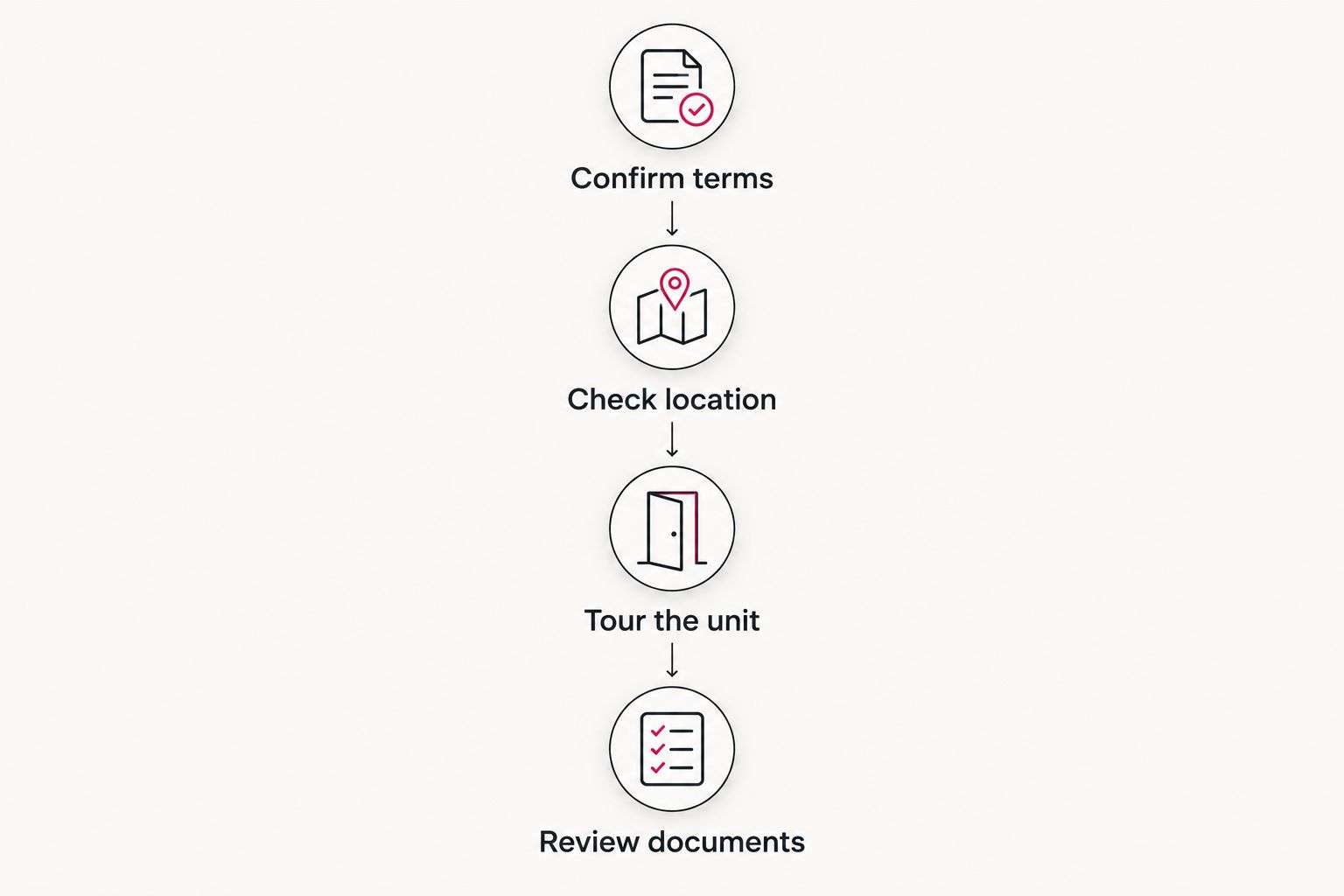
Before committing, follow this sequence:
- Confirm terms: Request the written lease terms and clarify anything you do not understand.
- Check location: Examine the exact address against the destinations that shape your routine.
- Tour the unit: Inspect the specific apartment, or clarify what a representative tour does not show.
- Review documents: Compare the paperwork with the details that informed your decision.
If you are arranging an Austin move from elsewhere, use the guide to touring an Austin apartment from another city to organize that stage. For a 2026 lease, keep written answers with the matching property and floor plan so details do not get mixed together.
Final verdict: Choose the process that fits your move
Choose Taco Street Locating if you want local human help
Best for: A renter relocating to Austin, Dallas–Fort Worth, or Houston who wants personalized research and neighborhood guidance. Choose this route when the difficult part is interpreting options, not finding another listing. Be ready to explain your priorities and respond to the trade-offs presented.
This service is not the right geographic match for every move. Its stated coverage matters more than a general preference for having assistance.
Choose Apartments.com if you want to run the search yourself
Best for: A self-directed renter who wants searchable listings, map-based exploration, and a broader geographic search. Choose Apartments.com when you know how to evaluate options and prefer to manage property research directly. Accept that the convenience of browsing still leaves verification and comparison work with you.
You do not need to make the two approaches exclusive. Browse to understand your preferences, then seek personalized help if the shortlist remains difficult to evaluate.
One-glance scorecard
| Dimension | Winner |
|---|---|
| Best for | Split: personalized help versus independent browsing |
| Geographic reach | Apartments.com |
| Research workflow | Taco Street Locating for a complicated brief |
| Standout feature | Apartments.com for hands-on listing exploration |
| Neighborhood decisions | Taco Street Locating for discussing local trade-offs |
| Renter control | Tie: you make the final choice |
| Pricing model | Different service models; choose by assistance needed |
| Final verification | Tie: property-level checks remain necessary |
FAQ
Is Taco Street Locating better than Apartments.com?
Taco Street Locating is the better fit for personalized apartment research in Austin, Dallas–Fort Worth, and Houston. Apartments.com is the better fit for independent browsing across a broader geographic area.
Can I use Apartments.com and an apartment locator together?
Yes, you can browse Apartments.com and use a locator for personalized help. Share the properties you are considering and keep one shortlist so you can compare answers consistently.
Which option should I use when moving to Austin?
Choose personalized locating help if you need neighborhood guidance and assistance comparing apartments. Choose Apartments.com if you prefer to research locations, shortlist properties, and manage the search yourself.
Does an apartment locator make the final decision for me?
No, you make the final apartment decision. Use research and neighborhood guidance as inputs, then check the exact apartment and review the lease before committing.
Is Apartments.com useful outside Texas?
Yes, Apartments.com supports rental searches across the United States. Its broader geographic reach makes it useful when your destination is outside the Texas markets covered by the locating service.
What should I tell a locator before starting an apartment search?
Provide your move date, housing budget, regular destinations, and nonnegotiable requirements. Separate essentials from preferences so the research reflects your actual priorities.
What should I verify before signing an apartment lease in 2026?
Verify the exact apartment, written lease terms, required charges, and conditions attached to anything you were offered. Resolve differences between listing details, conversations, and paperwork before signing.
One last thing
Before adding another apartment, write one sentence explaining why each current finalist belongs on your shortlist. If the reason is only that the photos look good, you have more research to do. A useful finalist solves a named housing need; attractive photos are not that need.
Related guides