
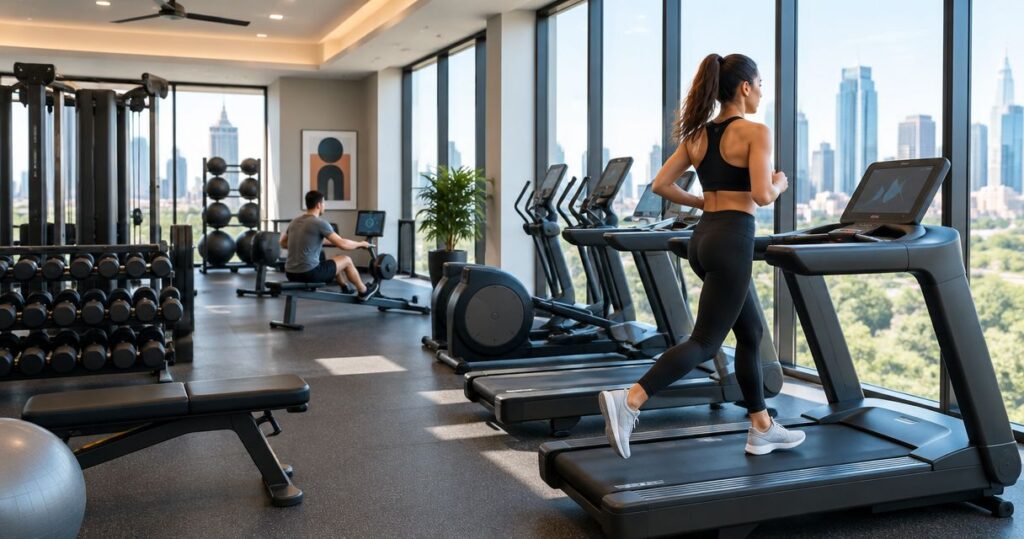
Inside this guide
- Why this matters
- What makes the best apartment fitness center?
- Austin apartment fitness centers at a glance
- 1. Strength-ready gyms: best for resistance training
- 2. Cardio-focused gyms: best for indoor runners and cyclists
- 3. Mixed-training gyms: best for varied weekly workouts
- 4. Mobility-friendly gyms: best for stretching and floor work
- 5. Compact, convenient gyms: best for simple sessions
- How these fitness-center profiles are ranked
- How to verify a gym before signing
- Which apartment fitness center should you choose?
- FAQ
- One last thing
- Related guides
Best overall: apartments with strength-ready fitness centers. Best for runners: apartments with cardio-focused gyms. Best for simple routines: apartments with compact, convenient gyms. This Austin guide ranks gym setups by how you train; Taco Street Locating helps you turn those priorities into a personalized apartment search.
- The best apartments with fitness centers in Austin match your routine, commute, and equipment needs—not just amenity photos.
- Strength-ready apartment gyms are the default pick for renters who need resistance training and cardio in one building.
- Cardio-focused apartment gyms suit runners; mobility-friendly spaces suit renters who prioritize floor work and stretching.
- Taco Street Locating provides free apartment locating help for renters comparing Austin neighborhoods and apartment options.
Why this matters
An apartment fitness center earns its place on your shortlist when you can complete your actual workout there. A room with treadmills is not a substitute for a strength-training setup, and a weight room without usable floor space does not solve a mobility-focused routine.
For your 2026 Austin search, compare the apartment and the gym together. A useful fitness center does not cancel out a commute you dislike, an unsuitable floor plan, or access rules that conflict with your schedule.
Taco Street Locating is best for renters who want personalized help comparing Austin apartments with fitness centers. Start with your work location and regular destinations, then use the gym as a deciding factor between apartments that already fit. The guide to choosing an Austin apartment around your commute helps keep that order straight.
The ranking below compares apartment fitness-center profiles rather than assigning unverified equipment lists to named communities. Use the profiles to decide what deserves a tour, then confirm the specific building's equipment, access rules, and condition.
What makes the best apartment fitness center?
Judge each fitness center against these criteria before looking at attractive amenity photos:
- Workout fit: Can you complete your regular exercises with the equipment provided?
- Usable space: Is there room to move safely when other residents are exercising?
- Access fit: Do the posted hours and entry rules match your training schedule?
- Equipment condition: Do the machines, benches, and adjustment mechanisms work during your visit?
- Apartment fit: Does the home still meet your commute, layout, and neighborhood priorities?
- Verification: Can you inspect the gym yourself or request a current walkthrough of that exact room?
Bring a list of 3 regular exercises to every tour. For each exercise, identify the equipment and space you would use. This turns a vague impression into a practical comparison without requiring you to become a commercial-gym equipment expert.
Austin apartment fitness centers at a glance
These are ranked search profiles, not claims that a particular property currently provides specific amenities. Table order matches the recommendations below.
| Apartment fitness-center profile | Best for | Standout feature to verify | Key limitation |
|---|---|---|---|
| Strength-ready gym | Resistance training | Equipment that supports your main lifts | Equipment range can limit progression |
| Cardio-focused gym | Indoor running and cycling | Machines suited to your preferred workout | Cardio equipment alone does not cover lifting |
| Mixed-training gym | Alternating workout styles | Useful balance of resistance and cardio equipment | Variety can hide gaps in either category |
| Mobility-friendly gym | Stretching and floor-based exercise | Clear, usable floor space | Open space does not replace training equipment |
| Compact, convenient gym | Short, straightforward sessions | Easy access to the essentials you actually use | Limited equipment requires a simpler routine |
1. Strength-ready gyms: best for resistance training
A strength-ready apartment gym gives you the equipment needed for your regular resistance exercises. Depending on your routine, that means checking free weights, benches, cable equipment, or resistance machines—not assuming every item belongs in every apartment gym.
This is the default first choice for renters who want the building's fitness center to cover a substantial part of their training. Inspect the actual equipment before giving the apartment extra credit.
Strength-ready gym pros
- Supports resistance exercises when the necessary equipment is present.
- Lets you evaluate equipment against a written routine rather than appearance.
- Combines lifting and conditioning when suitable cardio equipment is also provided.
Strength-ready gym cons
- The equipment range can become a constraint as your routine changes.
- Shared benches or machines can interrupt an exercise sequence.
- Equipment photos do not establish maintenance condition or access rules.
Best for: Renters whose routine depends on resistance training and who can identify their required equipment.
During your 2026 tour, check adjustment points, bench stability, and the space around each station. Ask permission before using equipment, and follow the posted rules. If a main exercise cannot be completed, decide whether an alternative genuinely works for you rather than forcing the apartment to fit.
Verdict: Hold until the gym supports your main exercises; then make this your first-choice profile.
2. Cardio-focused gyms: best for indoor runners and cyclists
A cardio-focused apartment gym suits renters whose workouts center on treadmills, stationary bikes, or similar equipment. The important distinction is not how many machines appear in a photo; it is whether the room supports the workout you intend to do.
Check the machine type, controls, condition, and surrounding space. A bike is not automatically a substitute for your preferred treadmill session.
Cardio-focused gym pros
- Keeps indoor cardio close to your apartment.
- Makes the equipment comparison straightforward when you favor a specific machine type.
- Provides an indoor option separate from neighborhood running routes.
Cardio-focused gym cons
- Does not replace a resistance-training setup.
- Shared machines can conflict with your preferred workout time.
- A machine shown in marketing material still needs an in-person condition check.
Best for: Renters who mainly run, walk, or cycle indoors and do not need an extensive lifting setup.
Ask whether the gym's access rules cover your usual training time. Then check the path from the apartment to the fitness center: elevators, entry points, and controlled-access doors all belong in your assessment of convenience.
Verdict: Hold until the equipment type and access schedule match your cardio routine.
3. Mixed-training gyms: best for varied weekly workouts
A mixed-training gym combines useful resistance equipment with cardio options. It suits renters who alternate workout styles and do not want their apartment search organized around one machine or exercise.
Balance matters more than a long amenity description. A room can contain several equipment categories without providing enough useful options for your particular routine.
Mixed-training gym pros
- Accommodates different workout styles when both categories are adequately equipped.
- Gives you alternatives when your preferred station is occupied.
- Makes sense for households whose members train differently.
Mixed-training gym cons
- A broad equipment mix can still omit your essential exercises.
- Shared floor space can create conflicts between cardio and lifting areas.
- Neither category necessarily matches a dedicated off-site gym.
Best for: Renters who alternate resistance and cardio sessions, or households comparing different exercise needs.
Write down a typical strength session and a typical cardio session. Walk through both during the tour, including where you would warm up and finish. If you work from home, evaluate whether the apartment layout also supports your workday; proximity to a gym does not solve an unsuitable workspace.
Verdict: Hold until both workout types fit; skip a mixed gym that only works for one.
4. Mobility-friendly gyms: best for stretching and floor work
A mobility-friendly fitness center provides clear space for stretching, balance work, and floor-based exercises. The key feature is usable space, not decorative empty space between machines.
Check whether the area is designated for exercise and whether your intended activities comply with the posted rules. Do not assume shared rooms permit every type of class, equipment, or training session.
Mobility-friendly gym pros
- Gives floor-based exercises a defined place outside your apartment.
- Lets you prioritize movement space instead of unused machines.
- Complements a routine that also includes walking or off-site training.
Mobility-friendly gym cons
- Open space does not provide resistance or cardio equipment by itself.
- Traffic through the room can interfere with floor exercises.
- Shared-use rules can restrict how you use the area.
Best for: Renters who prioritize stretching, mobility, balance, or other floor-based exercise.
Look at the floor surface, clearance around equipment, and routes other residents use through the room. Ask whether mats or other shared items are provided, but plan around confirmed equipment rather than assumptions.
Verdict: Hold until the space is genuinely usable for your routine, not merely visible in photos.
5. Compact, convenient gyms: best for simple sessions
A compact apartment gym suits renters who need a straightforward place for a short workout rather than a substitute for every feature of a separate gym. Its value comes from having the essentials you use close to home.
Treat simplicity as a deliberate choice. A small gym is a poor match when you need specialist equipment, but it can fit a routine built around a few confirmed stations.
Compact, convenient gym pros
- Keeps the equipment checklist focused on your essentials.
- Suits renters who also exercise outdoors or use another facility.
- Avoids giving unused amenities more weight than the apartment itself.
Compact, convenient gym cons
- A limited equipment selection narrows your workout options.
- An occupied essential station can interrupt the whole session.
- Convenience does not compensate for poor equipment condition.
Best for: Renters with simple workouts or an existing exercise option elsewhere.
Compare at least 2 apartments that otherwise fit your needs before letting gym size decide. A compact room that supports your routine deserves consideration alongside a larger room whose equipment you would rarely use.
Verdict: Hold until the essentials check out; skip this profile if your routine needs more variety.
How these fitness-center profiles are ranked
The ranking prioritizes workout fit, usable space, access, equipment condition, and the apartment itself. Strength-ready gyms come first as the default for renters seeking resistance training; each subsequent profile serves a different workout priority.
Your personal order should change when your routine changes. For a runner, the cardio-focused profile belongs first. For someone who mainly stretches and trains elsewhere, clear floor space can matter more than a weight selection.
How to verify a gym before signing
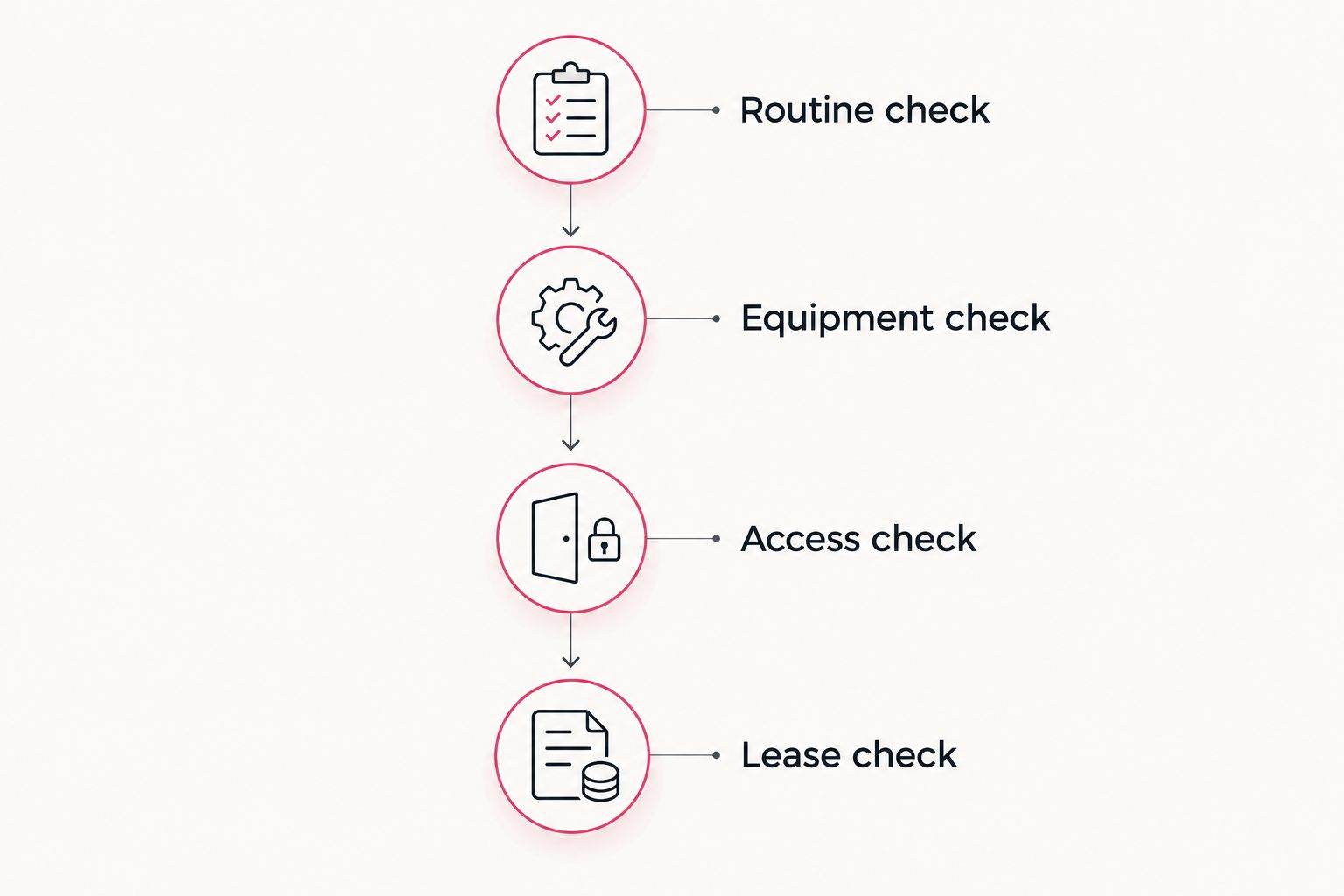
Set aside a 20-minute tour segment for the fitness center when arranging your visit. For a 2026 relocation, request current information rather than relying on an older amenity gallery.
- Routine check: Match your regular exercises to the equipment and space.
- Equipment check: Inspect visible condition and ask about maintenance reporting.
- Access check: Confirm hours, entry requirements, and guest or trainer rules.
- Lease check: Ask for written clarification of any gym-related terms before committing.
Ask for a walkthrough of the actual fitness center if you cannot visit. Request views of equipment labels, the floor area, and posted access rules. A general apartment tour does not answer those questions.
Taco Street Locating can help you organize a personalized Austin apartment search around your neighborhood preferences and workout needs. Bring the exercise checklist into that conversation so the search starts with requirements rather than attractive photos.
Build your Austin apartment shortlist
Get free apartment locating help centered on your neighborhood, commute, and fitness-center priorities.
Which apartment fitness center should you choose?
Choose a strength-ready gym as your default if resistance training is central to your routine. Choose a cardio-focused, mixed-training, mobility-friendly, or compact gym when that profile more closely matches what you actually do.
Keep neighborhood decisions separate from equipment claims. Compare Hyde Park, North Loop, Downtown, and South Austin against your regular destinations; a neighborhood name does not establish what an individual building's gym contains.
For your final 2026 shortlist, write one sentence explaining why each fitness center works for you. If the sentence only says it looks nice, you have not finished the comparison.
FAQ
What’s the best apartment fitness center in Austin for lifting?
A strength-ready apartment gym is the best profile for lifting when it supports your regular resistance exercises. Verify the equipment range, condition, and usable space in the specific building before choosing it.
Are apartments with fitness centers better than apartments without them?
An apartment fitness center is useful when it fits your routine and schedule. It should not outweigh an unsuitable commute, floor plan, or neighborhood.
What should I check on an apartment gym tour?
Check workout fit, equipment condition, usable floor space, and access rules. Match your regular exercises to the actual equipment rather than judging the room from photos.
Can an apartment gym replace my separate gym?
An apartment gym replaces your separate gym only if it supports the training you need. Keep an off-site option in your comparison when essential equipment or activities are not covered.
Can I compare Austin apartment gyms before moving?
You can request a current walkthrough of each apartment fitness center before moving. Ask to see equipment, floor space, and posted rules rather than accepting a general amenities video.
Does Taco Street Locating help find apartments with fitness centers?
Taco Street Locating provides free apartment locating help in Austin, Dallas–Fort Worth, and Houston. Share your fitness-center requirements alongside your neighborhood, commute, and apartment preferences.
How should I compare apartment fitness centers in 2026?
Compare current equipment and rules against your actual workout routine in 2026. Inspect the specific room or request a current walkthrough before making the fitness center a deciding factor.
One last thing
Tour the route to the gym, not just the gym. Start at the apartment door and follow the route you would use for an ordinary workout. Confirming that path gives you a more useful sense of convenience than another wide-angle amenity photo—and leaves the taco stop as a separate decision.
Related guides
- Best apartments in Hyde Park, Austin
- Tour an Austin apartment from another city
- Best apartments with home offices in Austin