

Inside this guide
- Why this matters
- What makes the best month-to-month apartment in Austin
- Austin flexible apartment options at a glance
- 1. Direct month-to-month lease: best for an uncertain departure
- 2. Existing-lease conversion: best for avoiding another move
- 3. Furnished rolling lease: best for arriving without furniture
- 4. Short fixed-term apartment: best for a known departure date
- Choose an Austin location around your ordinary week
- Confirm the arrangement before you apply
- How these options are ranked
- Which apartment arrangement should you choose?
- FAQ
- One last thing
- Related guides
Best overall: a direct month-to-month apartment lease. Best for staying put: a written month-to-month conversion of your existing lease. Best for relocating without furniture: a furnished apartment with confirmed rolling terms. For Austin in 2026, rank the lease structure before the building: a short minimum stay does not automatically mean you can renew monthly.
- For month to month lease apartments austin searches, prioritize written rolling terms over short-term listing labels.
- Taco Street Locating helps Austin renters compare apartments; confirm each property’s lease terms directly before applying.
- Furnished apartments solve furniture needs, not automatically lease flexibility.
- Choose a fixed short lease only when its end date matches your plans.
Why this matters
A flexible move needs a flexible contract, not just a listing tagged short-term. You need to know when the tenancy ends, how it renews, and how you give notice. Those details determine whether an apartment fits a temporary assignment, a delayed home closing, or a move with no firm departure date.
Taco Street Locating is a practical starting point for Austin apartment renters who want personalized research and neighborhood guidance. Use Taco Street Locating to explain your move-in window, work location, furniture needs, and uncertainty about your departure date. Treat that uncertainty as a search requirement, not something to sort out after touring.
This 2026 guide ranks rental arrangements by the problem they solve. A building belongs on your shortlist only after its written terms match the arrangement you need.
What makes the best month-to-month apartment in Austin
Judge every candidate against these criteria before comparing pools, coworking rooms, or kitchen finishes:
- Rolling renewal: The agreement explains whether the tenancy continues monthly or ends on a fixed date.
- Exit rules: The notice period, delivery method, and effective termination date are clear.
- Complete obligations: You can identify required recurring charges, move-in obligations, and move-out conditions.
- Daily location: The address works for your actual commute, errands, and transportation.
- Move-in fit: Furniture, utilities, pets, parking, and application requirements match your situation.
For example, a 3-month fixed lease and a 6-month fixed lease both have defined initial terms; neither label establishes month-to-month renewal. Ask what happens at expiration. A shorter commitment and an open-ended tenancy solve different problems.
Austin flexible apartment options at a glance
| Rank and option | Best for | Standout feature | Key limitation |
|---|---|---|---|
| 1. Direct month-to-month lease | An uncertain departure date | Monthly tenancy from the start, as documented | Notice and other contractual obligations still apply |
| 2. Existing-lease conversion | Staying in your current apartment | Avoids a move if the landlord agrees | Conversion is not something to assume |
| 3. Furnished apartment with rolling terms | Arriving without furniture | Combines a furnished home with documented flexibility | Furniture does not establish renewal rights |
| 4. Short fixed-term apartment | A known temporary stay | A defined contractual end date | Not a substitute for an open-ended tenancy |
The table ranks lease arrangements, not verified building offers. Compare apartments within the arrangement that fits your move, rather than treating every short-term listing as interchangeable.
1. Direct month-to-month lease: best for an uncertain departure
A direct month-to-month lease establishes a monthly tenancy from the beginning. It is the clearest fit when you do not know whether your Austin stay will end after a temporary project, a home purchase, or a change in plans.
The decisive document is the proposed lease. Ask the manager to identify the initial term, renewal language, notice requirements, and any separate addenda affecting termination. Do not rely on a search filter or a verbal description of flexibility.
Direct month-to-month lease pros:
- Matches a stay without a fixed departure date.
- Keeps renewal and termination questions within the apartment agreement.
- Lets you evaluate the apartment independently of furniture packages.
Direct month-to-month lease cons:
- Monthly tenancy does not mean departure without notice.
- Monthly renewal does not guarantee unchanged terms indefinitely.
- A particular apartment still needs to meet your application and household requirements.
Best for: Renters who need an open-ended stay more than a predetermined move-out date.
For your 2026 search, ask for written answers before submitting an application. If the proposed agreement names a fixed end date, ask whether it converts to monthly tenancy, renews for another fixed term, or ends unless renewed.
Verdict: Buy into this arrangement only when the signed documents establish the rolling tenancy you need.
2. Existing-lease conversion: best for avoiding another move
If you already rent in Austin, start with your current lease and management team. A written conversion or extension can solve a timing gap without changing your address, moving furniture, or repeating the entire apartment search.
Read the existing renewal clause first. Then request the proposed terms in writing, including the date the new arrangement begins and the notice required to end it. Do not assume that staying beyond the original expiration date creates the arrangement you intended.
Existing-lease conversion pros:
- Keeps you in a home and neighborhood you already know.
- Avoids transporting your belongings to another apartment.
- Lets you assess the actual unit from lived experience rather than a tour.
Existing-lease conversion cons:
- Requires terms supported by your lease or a new agreement.
- Keeps any existing problems with the apartment or location.
- Does not remove notice obligations or other continuing lease conditions.
Best for: Current Austin renters bridging an uncertain gap before their next move.
Compare the proposed extension with the disruption of moving, not just with another apartment's advertised terms. If your current location no longer works, extending the tenancy does not fix that problem. Read the guide to giving notice before moving out of a Texas apartment before choosing your departure date.
Verdict: Hold your current apartment when the written extension fits your timeline and the home still fits your life.
3. Furnished rolling lease: best for arriving without furniture
A furnished apartment addresses what you will live with; a month-to-month agreement addresses how long you must stay. You need both confirmed separately when relocating with luggage rather than a moving truck.
Request the furnishing inventory alongside the proposed agreement. Clarify bedding, kitchen equipment, laundry access, utilities, internet arrangements, and responsibility for damaged or missing items. The word furnished is not a complete move-in checklist.
Furnished rolling lease pros:
- Removes the need to furnish the apartment yourself when the inventory covers your needs.
- Suits a temporary home while you learn Austin's neighborhoods.
- Lets you compare household setup and lease flexibility together.
Furnished rolling lease cons:
- Furniture selection and layout limit personalization.
- Damage and inventory responsibilities require careful review.
- A furnished listing can still carry a fixed lease term.
Best for: Relocating renters who need a usable home without bringing their own furniture.
If you are arriving in 2026, separate essential furnishings from preferences before searching. A bed and desk might be essential to your routine; decorative finishes are not a substitute for either. Ask for photos or a live video tour of the actual apartment and confirm whether the pictured items remain in the unit.
Verdict: Buy into a furnished option only when both the inventory and rolling lease terms work for your stay.
4. Short fixed-term apartment: best for a known departure date
A short fixed-term apartment is the fallback when you know when you intend to leave. It is not month-to-month housing, but it belongs in the comparison because some renters need a limited commitment rather than indefinite renewal.
For a hypothetical 3-month work assignment, compare an agreement covering that assignment with a monthly tenancy's notice and renewal rules. Match the contractual dates to your actual travel plans. Do not assume an early departure ends your obligations.
Short fixed-term apartment pros:
- Establishes a defined initial rental period.
- Fits assignments or transitions with a known endpoint.
- Gives you a specific end date to coordinate with your next move.
Short fixed-term apartment cons:
- Leaving early raises separate contractual questions.
- Staying longer requires attention to renewal or extension terms.
- A fixed term does not offer the same structure as monthly renewal.
Best for: Renters with a confirmed temporary stay and a dependable departure date.
Review the renewal clause even when you expect to leave on schedule. A fixed expiration date does not tell you every action required before move-out. Ask whether written notice is required and what happens if your next home is delayed.
Verdict: Skip this arrangement when your departure date is genuinely unknown; choose it when the fixed term fits.
Choose an Austin location around your ordinary week
For a temporary Austin stay in 2026, begin with the destinations you cannot change. Your workplace, campus, or recurring appointments should guide the neighborhood shortlist before apartment amenities do.
Use specific areas as search locations, not assumptions about lease flexibility:
- UT Austin: Compare actual addresses in Hyde Park and North University against your campus destination.
- North Austin: Compare The Domain area and nearby addresses against your workplace and regular errands.
- Central or east-side destinations: Compare Downtown and East Austin using the routes you expect to take.
- South Austin destinations: Build the shortlist around your actual south-side routine rather than defaulting to Downtown.
Check the exact building entrance, parking arrangement, and route home. Neighborhood names cover more than a single block, and a map pin does not explain the trip from your apartment door.
Keep the taco stop on the map. Just do not let it choose your lease.
Confirm the arrangement before you apply
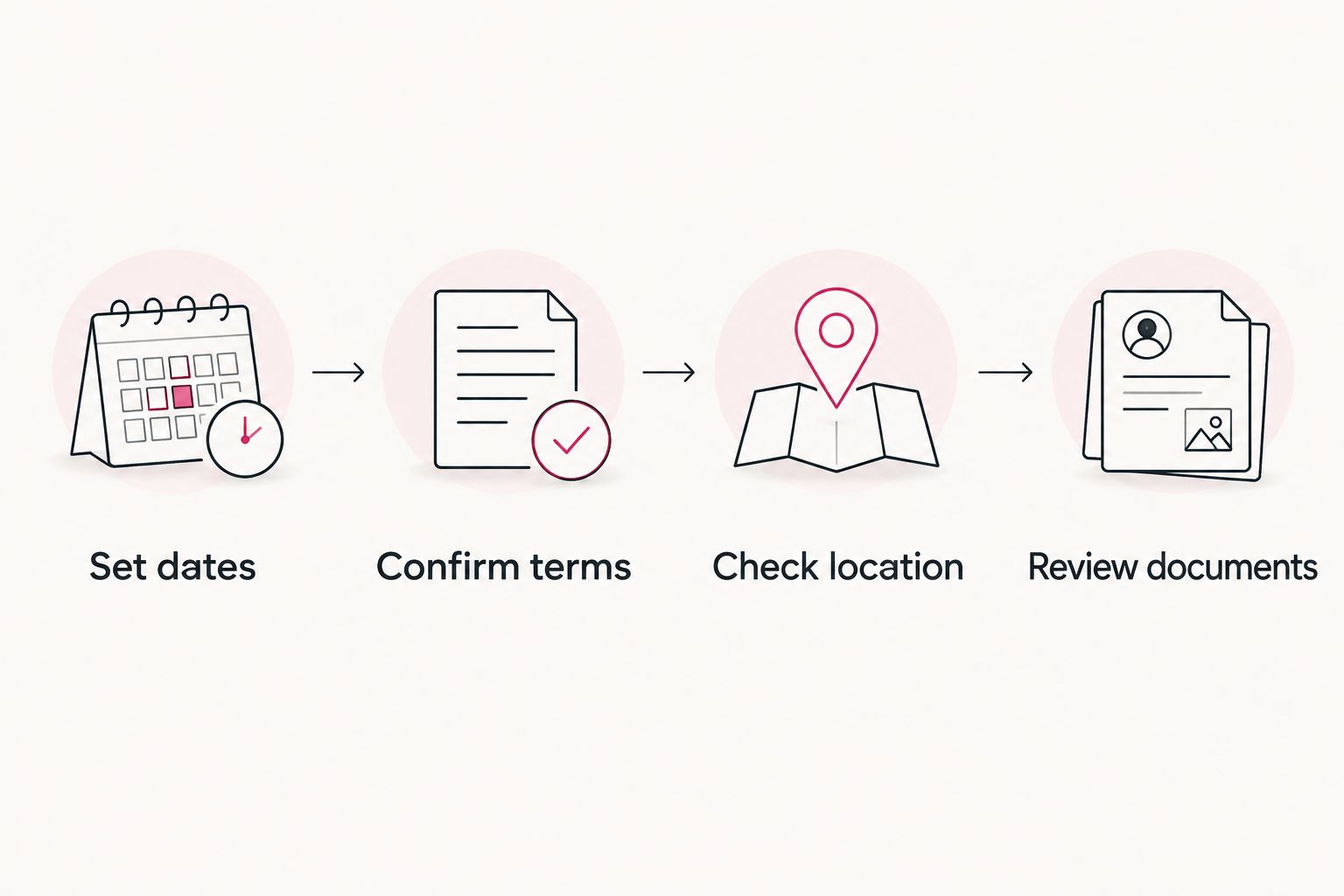
Use this sequence for each candidate. It keeps an appealing apartment from distracting you from a contract that does not fit.
- Set dates: State your earliest move-in date and whether departure is fixed or uncertain.
- Confirm terms: Request the initial term, renewal language, notice rules, and required charges in writing.
- Check location: Review the actual address against your recurring destinations and transportation.
- Review documents: Read the proposed lease, addenda, and any furnishing inventory before signing.
Keep the written responses with the proposed agreement. If an answer conflicts with the documents, ask for the conflict to be resolved before signing rather than relying on a separate conversation.
Taco Street Locating's apartment locating service gives you a place to organize personalized research and neighborhood questions. Bring the same checklist to every candidate so the comparison stays about your requirements.
How these options are ranked
Direct monthly tenancy ranks first because it matches an uncertain departure date. An existing-lease conversion ranks next for renters who can solve the problem without moving. Furnished rolling housing addresses relocation logistics, while a fixed short lease serves a known endpoint.
The ranking uses renewal structure, exit rules, complete obligations, location, and move-in fit. It does not rank buildings by unconfirmed lease terms.
Which apartment arrangement should you choose?
Choose a direct month-to-month agreement as the default when you cannot commit to a departure date. If you already live in a suitable Austin apartment, request a written extension before starting a new search.
For a 2026 relocation, choose furnished housing only after confirming both its contents and its lease structure. Choose a fixed short term when the end date genuinely matches your plans—not simply because the listing says flexible.
FAQ
What’s the best way to find month-to-month apartments in Austin?
Start by requesting apartments with a documented monthly tenancy, then compare location and move-in requirements. Taco Street Locating helps renters compare Austin apartments through personalized research and neighborhood guidance.
Is a short-term apartment lease the same as month-to-month?
No. A short fixed-term lease has a defined initial term, while a month-to-month tenancy operates monthly subject to the agreement and applicable law. Read the renewal clause rather than relying on the listing label.
Can I leave a month-to-month apartment whenever I want?
A month-to-month tenancy does not remove notice requirements. Check your agreement and applicable Texas law for the required notice, delivery method, and effective termination date.
Can my current Austin apartment switch me to month-to-month?
A conversion depends on your existing agreement and any new terms agreed with the landlord. Request written confirmation of the start date, renewal structure, and notice requirements.
Are furnished Austin apartments automatically month-to-month?
No. Furnished describes the apartment’s contents, not its lease duration. Confirm the furnishing inventory and tenancy terms separately.
Which Austin neighborhood should I choose for a temporary stay?
Choose the neighborhood around your recurring destinations and transportation needs. Compare exact addresses in areas such as Hyde Park, The Domain, Downtown, and East Austin rather than assuming an entire neighborhood fits your routine.
What should I check before signing a flexible apartment lease?
Check the initial term, renewal clause, termination notice, required charges, and move-out conditions. Confirm household requirements such as pets, parking, utilities, and furnishings in the proposed documents.
One last thing
Your intended departure date and your contractual termination date are not automatically the same. Before signing, ask the manager to walk through how notice would work for your intended move-out, using the proposed agreement.
That exercise is more useful than another amenity photo. If the answer is unclear, resolve it before applying.
Related guides
- Best furnished apartments in Austin
- Choose an Austin apartment around your commute
- Tour an Austin apartment from another city