
Looking for a place to live near Austin? Here’s a quick breakdown of three popular areas:
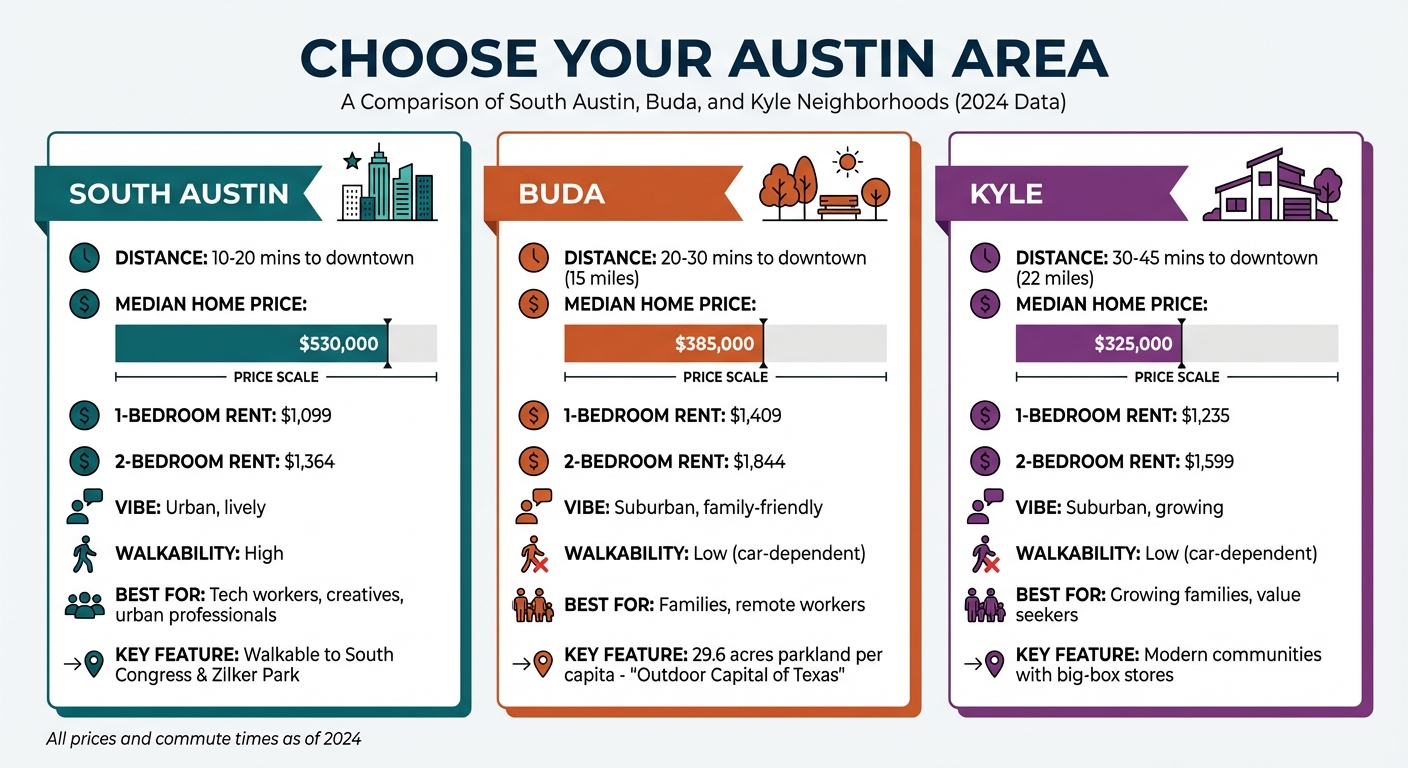
- South Austin: Close to downtown (10–20 min drive), walkable neighborhoods, and vibrant spots like South Congress and Zilker Park. Higher home prices ($530k median) and rents ($1,099 for a 1-bedroom), but ideal for urban professionals who value convenience and nightlife.
- Buda: A quieter, family-oriented suburb 15 miles from Austin. Median home price is $385k, and average rent for a 1-bedroom is $1,409. Known for its parks (29.6 acres per capita) and small-town charm. Commute takes 20–30 minutes, but traffic can be challenging.
- Kyle: More affordable (median home price $325k, 1-bedroom rent $1,235) and 22 miles south of Austin. Growing quickly with modern communities and big-box stores. Commute times are slightly longer (30–45 minutes), but it’s a solid choice for those seeking space and value.
Quick Comparison
| Feature | South Austin | Buda | Kyle |
|---|---|---|---|
| Commute to Austin | 10–20 mins | 20–30 mins | 30–45 mins |
| Median Home Price | $530,000 | $385,000 | $325,000 |
| 1-Bedroom Rent | $1,099 | $1,409 | $1,235 |
| Vibe | Urban, lively | Suburban, family-friendly | Suburban, growing |
| Walkability | High in some areas | Low (car-dependent) | Low (car-dependent) |
Each area has its perks. Choose South Austin for culture and nightlife, Buda for family-friendly green spaces, and Kyle for affordability and modern amenities. For a deeper look at expenses, check out our Austin cost of living guide.
Buda vs Kyle vs South Austin: Cost, Commute & Lifestyle Comparison
Neighborhood Profiles: Buda, Kyle, and South Austin
Buda: Quiet Suburban Living
Located just 15 miles southwest of Austin, Buda combines a historic downtown with plenty of outdoor spaces. Nicknamed the "Outdoor Capital of Texas", the city boasts an impressive 29.6 acres of parkland per capita. It’s a family-friendly area, with about 45% of households including children, and the median age of residents is 36.1.
The atmosphere here feels both traditional and green. Close to Main Street, you’ll find charming older homes, while newer developments like Sunfield offer modern amenities such as a lazy river and dog parks. Buda appeals to families, remote workers, and hybrid commuters who want more space without losing touch with Austin’s conveniences.
"Buda proudly embraces its nickname as the ‘Outdoor Capital of Texas,’ cultivating a unique identity around its charming historic downtown, an abundance of parks, and lush greenbelts." – 11 Oaks Realty
While Buda exudes laid-back suburban charm, Kyle offers a mix of small-town warmth and modern expansion.
Kyle: Small-Town Feel with New Growth
Kyle is growing quickly, with major retailers like Costco, Target, and Home Depot meeting the needs of its expanding population. Situated about 22 miles south of Austin, Kyle is known for its large master-planned communities and bustling retail hubs along I-35. The median family income here is $100,705.
Neighborhoods like Plum Creek stand out with features like an 18-hole golf course and ample green spaces, while newer communities such as 6 Creeks and Anthem offer contemporary homes with modern amenities. Kyle attracts young professionals, growing families, and essential workers – including teachers and paramedics – thanks to its suburban appeal and more affordable housing compared to Austin.
"Kyle feels like a rapidly expanding suburban hub. It’s characterized by large, modern master-planned communities, a sprawling and ever-growing retail corridor along I-35, and an energetic, ‘booming’ atmosphere." – 11 Oaks Realty
In contrast to Buda and Kyle’s suburban vibes, South Austin thrives on urban energy and a well-rooted character.
South Austin: City Living with Local Character
South Austin delivers a vibrant city lifestyle, offering high walkability and quick access to downtown hotspots. Located just 10–20 minutes from downtown, it’s home to iconic destinations like South Congress (SoCo) and Zilker Park. Neighborhoods such as Barton Hills, Zilker, and Bouldin Creek feature older homes with unique charm.
Unlike the newer developments in Buda and Kyle, South Austin is defined by established neighborhoods filled with bungalows and condos. However, new construction is relatively scarce. The convenience of living so close to Austin’s cultural and nightlife scenes comes with a higher price tag – median home prices here reach $530,000, significantly higher than in the suburbs. South Austin is ideal for tech workers, creatives, and urban professionals who value proximity to local coffee shops, nightlife, and cultural landmarks.
sbb-itb-b58f532
Apartment Costs and Availability
Rent Prices by Bedroom Count
South Austin stands out as the most budget-friendly option among the three areas. On average, a one-bedroom apartment in South Austin costs $1,099, while two-bedroom units are around $1,364. Kyle comes next, with one-bedroom apartments averaging $1,235 and two-bedroom options priced at $1,599. Buda, on the other hand, takes the top spot for the highest rents, with one-bedroom units averaging $1,409 and two-bedroom apartments at $1,844.
Over the past year, rental prices have dropped across all three locations. Two-bedroom rents fell by 9% in Kyle, 8% in Buda, and a striking 25% in South Austin. This downward trend has created opportunities for renters to negotiate better deals. Luxury properties in Buda, for instance, are offering enticing move-in specials, such as 12 weeks free at Prose Buda and 10 weeks free at Luxe of Buda and Mansions of Buda.
| Location | 1-Bedroom Average | 2-Bedroom Average | Annual Change |
|---|---|---|---|
| South Austin | $1,099 | $1,364 | -25% |
| Kyle | $1,235 | $1,599 | -9% |
| Buda | $1,409 | $1,844 | -8% |
Beyond rental prices, factors like space and amenities further shape the appeal of each area.
Apartment Amenities and Space
When it comes to space, Buda offers the most bang for your buck. The average apartment in Buda measures 947 square feet, significantly larger than South Austin’s average of 705 square feet. Some Buda properties even boast floor plans as large as 2,739 square feet, including spacious four-bedroom units.
Each area brings something unique to the table in terms of amenities. Kyle’s master-planned communities cater to families with features like community centers and outdoor recreation areas. On the other hand, South Austin apartments emphasize urban conveniences, offering perks such as rooftop decks, EV charging stations, and controlled-access elevators. Kyle’s properties are largely managed by national firms like Greystar and Westdale, ensuring consistent quality but often lacking a personal touch.
Buda, however, leans into luxury. Many newer developments include resort-style amenities, like pools and lazy rivers, particularly in communities such as Sunfield. Meanwhile, South Austin’s older buildings charm with a blend of historic character and modern updates, though new construction remains relatively limited.
Getting to Downtown Austin
Drive Times and Traffic
If you’re in South Austin, getting to downtown is relatively quick, taking just 10–20 minutes under normal traffic conditions via major highways.
For residents of Buda, the commute is longer. Located about 15 to 16 miles from downtown, the drive typically takes 30–45 minutes or more on I-35. To avoid the notoriously congested I-35, many Buda commuters opt for toll roads like SH 45 and SH 130, especially when heading toward the airport or eastern parts of Austin. However, as local resident Kutter puts it, "The commute can be challenging, with bumper-to-bumper traffic during peak hours".
Kyle, slightly farther out at 20 to 22 miles from downtown, faces similar challenges. The drive during peak hours can stretch to 30–45 minutes or longer, with I-35 traffic often compounding delays. Adding to the frustration is ongoing construction along I-35, which frequently causes further slowdowns. As noted by the Austin Real Estate Homes Blog, "If your work is primarily in Austin, Buda offers a modest but meaningful time savings [over Kyle]".
These drive times highlight the differences in convenience between South Austin and the outer suburbs, especially when compared to other commuting options.
Public Transit Options
Public transit plays a key role in shaping daily life for many Austin residents. In South Austin, robust transit options make car-free living a practical choice. CapMetro buses and rail lines run frequently, offering reliable alternatives to driving.
The picture is quite different in Buda and Kyle, where public transit options are sparse. Buda, for example, has a transit accessibility score of 0 out of 100, making a car almost essential. Residents in these areas primarily rely on the Capital Area Rural Transportation System (CARTS) and a few private bus services. A CARTS Interurban Coach trip from Buda to Austin costs around $4 and takes about 45 minutes. Private bus services, on the other hand, offer a faster 30-minute ride but charge closer to $10.
For many suburban commuters, driving to the South Park Meadows Park & Ride in South Austin is a common workaround. From there, they can access more frequent CapMetro services into downtown. However, this added step can make commuting more time-consuming and less convenient overall.
Daily Life and Local Conveniences
After looking at commute times and amenities, let’s dive into the everyday experience, focusing on walkability, noise levels, and neighborhood comforts.
Walking Distance to Shops and Restaurants
South Austin is home to several walkable neighborhoods filled with restaurants, bars, coffee shops, and parks. If you’re aiming for a car-free lifestyle or enjoy strolling to nearby spots, areas like Cherry Creek or South Congress offer that urban convenience.
In contrast, Buda is largely car-dependent, with a Walk Score of 20, except for its charming historic downtown. This area features a cluster of shops, breweries, and eateries, creating a small but walkable hub. Highlights include Taste on Main and Main St. Pizzeria & Beer Garden. Realtor Alisha Wilson describes Buda as offering “a laid-back lifestyle with modern conveniences close to home”.
Kyle also leans heavily on cars for getting around but provides easy access to major retailers like Costco, Target, and HEB. While local eateries add some character, they’re generally more accessible by car.
Beyond walkability, each location brings its own vibe when it comes to noise and overall comfort.
Noise and Comfort Levels
If peace and quiet are priorities, Buda and Kyle offer a slower, more relaxed pace compared to South Austin’s lively urban energy. Buda, often referred to as an “oasis of country serenity,” provides a tranquil lifestyle that feels far removed from city noise. Similarly, Kyle has a small-town charm, attracting residents who want to escape Austin’s congestion and busyness.
Susan Mendez, an Austin native who relocated to Buda, shares her perspective: “I didn’t want to be too far from Austin because I like Austin, but it was just everything was just so crowded”. South Austin, while maintaining a neighborhood feel, is undeniably busier. Its proximity to downtown, nightlife, and cultural spots brings more activity and ambient noise.
For those seeking peace and outdoor space, Buda stands out with its 29.6 acres of parkland per capita and its title as the “Outdoor Capital of Texas,” making it a haven for nature lovers.
| Feature | South Austin | Buda | Kyle |
|---|---|---|---|
| Walkability | High (in specific areas) | Low (Score: 20) | Low (Car-dependent) |
| Noise Level | Higher (urban/nightlife) | Quiet (suburban/rural) | Quiet (suburban/rural) |
| Top Convenience | Local bars & coffee shops | Historic downtown & parks | Big-box stores (Costco/Target) |
| Transit Access | Moderate (buses/highways) | Minimal (Score: 0) | Minimal |
Which Area Fits Your Needs?
Choosing the right place to rent depends on your commute, budget, and lifestyle preferences. Let’s break it down:
Who Should Rent in Buda
Buda is a great option for families and remote workers looking for more room without sacrificing connectivity. The average rent for a two-bedroom apartment here is $1,414, and the commute to downtown Austin takes about 20–30 minutes. Known as the "Outdoor Capital of Texas", Buda boasts an impressive 29.6 acres of parkland per capita, making it perfect for those who love outdoor activities.
If you work remotely and crave a peaceful setting with access to nature trails and community events, Buda strikes the right balance. Its historic downtown offers a charming, walkable area, though you’ll still need a car for most errands.
Who Should Rent in Kyle
Kyle appeals to renters seeking modern homes and more space, albeit at a slightly higher cost. The average rent for a two-bedroom is $1,479, a bit more than Buda. However, Kyle’s lower property tax rate of 1.83% (compared to Buda’s 2.19%) could be an advantage if homeownership is in your future plans. The downside? A longer commute – over 30 minutes to downtown Austin during peak hours.
For those working in South Austin or with flexible schedules, Kyle’s master-planned communities, like Plum Creek, offer resort-style amenities and proximity to big-box stores like Costco and Target. It’s a solid choice for renters who prioritize convenience and modern living.
Who Should Rent in South Austin
South Austin is a fit for tech professionals, creatives, and anyone who values culture and urban perks over spacious living. With an average two-bedroom rent of $1,643, South Austin is the priciest of the three areas, but it comes with unbeatable benefits. A 10–20 minute commute to downtown Austin and walkable access to hotspots like South Congress, Zilker Park, trendy coffee shops, and nightlife make it worth the cost.
If you work downtown or enjoy the convenience of stepping out for dinner or drinks without driving, South Austin delivers. Neighborhoods like Cherry Creek and Shady Hollow bring a unique blend of urban and suburban vibes.
Comparing Your Priorities
To help you decide, here’s a quick comparison of what each area offers:
| Priority | Best Fit | Key Advantage |
|---|---|---|
| Outdoor lifestyle + family-friendly | Buda | 29.6 acres of parkland per capita, Hays CISD schools |
| Balanced space & modern design | Kyle | Master-planned amenities, average rent of $1,479 |
| Short commute + walkability | South Austin | 10–20 minutes to downtown, vibrant urban amenities |
Final Recommendation
Deciding between Buda, Kyle, and South Austin comes down to weighing commute times, living space, and budget. Each area has its own perks that cater to different renter preferences.
South Austin offers the shortest commute and walkable access to vibrant attractions, perfect for those who want to be in the middle of the action. Buda strikes a balance with a reasonable drive, outdoor amenities – including about 29.6 acres of parkland per capita – and affordable rental options. Meanwhile, Kyle stands out for offering the most space for your money, with rental rates dropping by 6.2% over the past year. These stats can help you decide whether renting an apartment or a private house aligns best with your lifestyle.
For those working remotely or with a hybrid schedule, Buda and Kyle could be ideal choices. But if you’re commuting daily or crave the downtown nightlife, South Austin might be worth the higher price tag. These trade-offs highlight how important it is to have local expertise when making your decision.
Kyle’s rapid expansion – from just 5,000 residents in 2000 to over 45,000 by 2020 – means the apartment market there is constantly changing. Taco Street Locating’s free, personalized service can help you navigate these shifts, find the best deals, and match you with an apartment that suits your commute and lifestyle. With expert help, you can focus on finding a place that truly feels like home.
FAQs
What are the key differences in lifestyle and housing between Buda, Kyle, and South Austin?
Buda is a charming option for those seeking a quieter lifestyle. With spacious apartments, peaceful streets, and a family-friendly vibe, it’s a great spot for families or remote workers who need room to spread out. Rent here typically falls between $1,200 and $1,500 per month, and the town’s close proximity to Austin – just a 15–20 minute drive – makes it easy to stay connected to the city while enjoying some extra breathing room.
Kyle, on the other hand, is a growing suburb that offers more budget-friendly rental options. Prices here start around $960 to $1,200 per month, making it a popular choice for young families and renters looking for suburban comfort without breaking the bank. The area has a relaxed atmosphere, though it’s quickly evolving with new developments popping up.
For those who thrive on energy and convenience, South Austin is the place to be. This area combines a vibrant urban lifestyle with walkable neighborhoods, plenty of nightlife, and cultural hotspots. Apartments here are smaller and come at a premium, reflecting its close proximity to downtown Austin – often just a 10-minute commute. It’s an ideal choice for anyone who values city living over extra square footage.
In short: If you’re after space and quiet, Buda could be your match. Looking for affordability and a suburban feel? Kyle might be the answer. Prefer the buzz and convenience of city life? South Austin has you covered.
How do commute times and transportation options compare between Buda, Kyle, and South Austin?
If you’re planning to commute to Austin, it’s important to understand the differences between these nearby areas. Buda and Kyle are situated along I-35, making driving the go-to option for most people. A typical drive to downtown Austin takes about 15–20 minutes, though traffic can easily stretch that time. Public transit options in these areas are pretty limited – there are a few Capital Metro bus routes along I-35, but no rail service.
On the other hand, South Austin, located within the city limits, offers more commuting flexibility. The drive to downtown is shorter, and the area benefits from a more developed public transit network. This includes regular bus routes and access to light rail stations nearby. For renters who rely on public transit or want a quicker commute, South Austin tends to be the more practical and convenient option.
Which area is the best for families looking for affordable rent and good amenities near Austin?
If you’re searching for a mix of affordability, space, and family-friendly features near Austin, Buda is hard to beat. Apartment communities like Prose Buda and Junewood provide roomy floor plans and upscale perks, including resort-style pools and pet-friendly spaces. Rent typically starts around $1,200–$1,500 per month, making it an appealing option. Families will love the highly-rated Hays CISD schools, safe neighborhoods, local parks, and that welcoming small-town vibe – all just 15–20 minutes from downtown Austin.
Kyle offers a more budget-friendly alternative, with one-bedroom apartments sometimes starting as low as $962/month. However, it doesn’t match Buda when it comes to family-oriented amenities or school options.
South Austin, being closer to the city, usually has higher rents and fewer spacious, budget-friendly choices for families. Its urban setting makes it less ideal for those looking for more room to spread out.
For families seeking affordable, modern living with a strong sense of community and easy access to Austin, Buda clearly shines as the top pick.