
Free Houston apartment locating from Alexander. 200+ 5-star Google reviews.
Start My Free Houston Apartment Search
What happens next: fill out the short form, Alexander personally reviews your answers and sends you options, and it costs you nothing.
When choosing between Houston’s Medical Center and Museum District, it boils down to lifestyle and priorities. Here’s the quick takeaway:
- Medical Center: Ideal for healthcare professionals. Walk to work, live in high-rise apartments, and enjoy a fast-paced, work-focused environment. Rent is lower for studios and one-bedroom units, averaging $1,382–$1,652. However, expect noise, limited green spaces, and fewer leisure options.
- Museum District: Better for families and art enthusiasts. Enjoy spacious apartments, tree-lined streets, and proximity to Hermann Park and 19 museums. Rent is higher, starting at $906 for studios and $1,967 for one-bedroom units, but the area offers a quieter, more relaxed vibe.
Quick Comparison:
| Feature | Medical Center | Museum District |
|---|---|---|
| Studio Rent | $1,382 | $906–$1,648 |
| 1BR Rent | $1,652 | $1,942–$1,967 |
| 2BR Rent | $2,248 | $2,783–$3,280 |
| Atmosphere | Busy, work-oriented | Quiet, arts-focused |
| Transit Options | Walkable, shuttles | METRORail, walkable |
| Green Spaces | Limited (Schweppe Park) | Hermann Park nearby |
Choose Medical Center for convenience and proximity to work or Museum District for a peaceful, arts-focused lifestyle with larger living spaces.
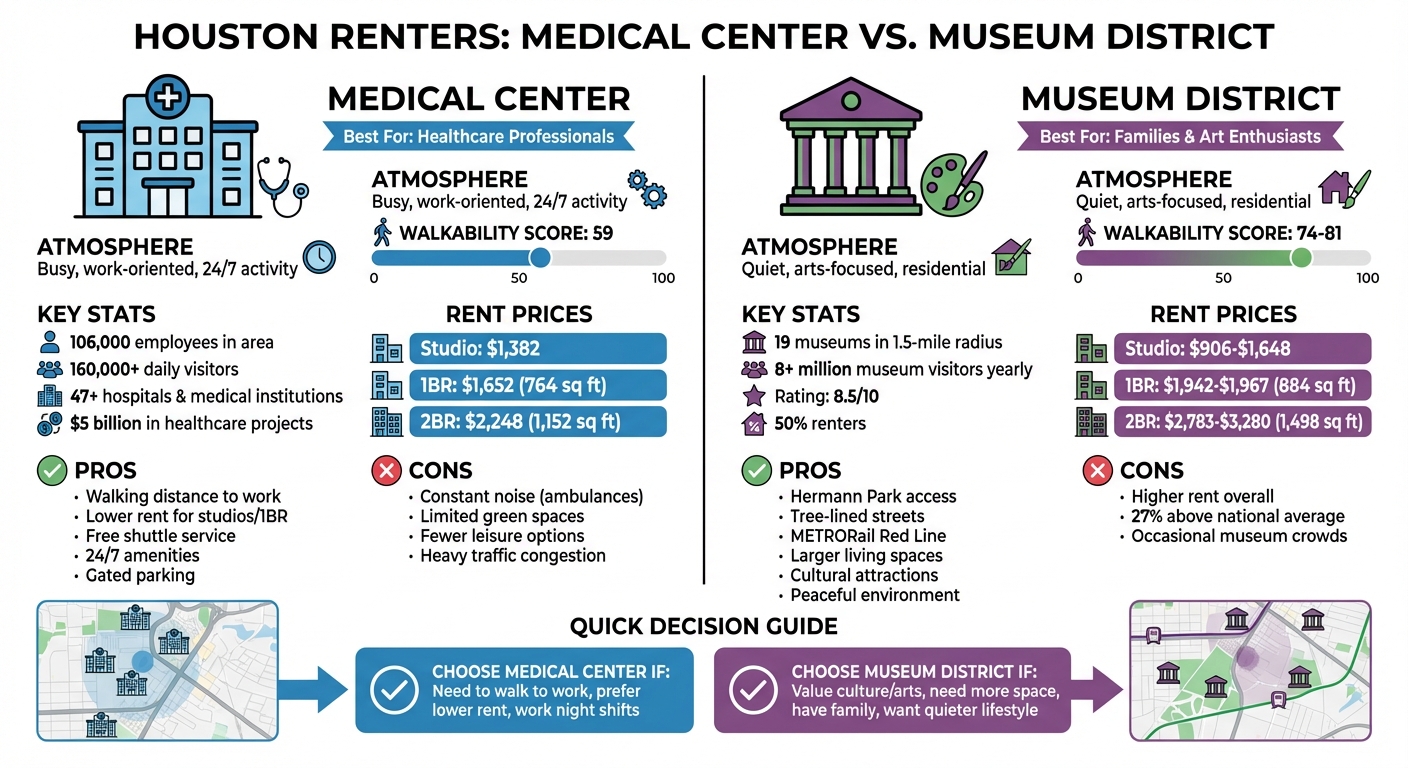
Medical Center vs Museum District Houston Rental Comparison
Daily Life and Neighborhood Character
Medical Center: Fast-Paced and Work-Oriented
The Medical Center buzzes with activity around the clock, embodying a professional and high-energy atmosphere. Here, early mornings belong to medical professionals, late nights to dedicated researchers, and the constant hum of ambulances serves as a backdrop. Everything about this neighborhood is built for efficiency. With healthcare projects valued at approximately $5 billion, the area continues to grow, reinforcing its reputation as a hub of innovation and productivity.
Museum District: A Blend of Arts and Community
On the other hand, the Museum District offers a completely different vibe – peaceful and culturally rich. It’s a neighborhood where life revolves around art, green spaces, and a strong sense of community. Residents enjoy free concerts, leisurely park activities, and visits to local art galleries, all of which contribute to its relaxed and inviting character. The area earns high praise, with an 8.5/10 rating from local reviews, and about half of its residents are renters. With a walkability score of 81, the district seamlessly combines historic early 20th-century homes with sleek modern high-rises, creating a dynamic yet welcoming environment for its diverse community.
sbb-itb-b58f532
Commute Times and Transit Options
Medical Workers: Walking Distance to Hospitals
If you’re a healthcare professional, living in the Medical Center neighborhood can practically erase your commute. With more than 106,000 people working within the Texas Medical Center‘s 2.1-square-mile area, this neighborhood is tailor-made for those who prefer walking to work. Many apartments are within a 15-minute stroll of major hospitals, and a free shuttle service makes it even easier to get around. This setup helps you avoid the daily grind of Houston’s infamous traffic jams.
Driving in peak hours around the Medical Center can be frustrating, with heavy congestion on Loop 610 and Highway 288. For this reason, many medical workers opt for apartments close enough to walk, saving themselves time and stress. If you’re new to the city, check out our guide to renting in Houston for more local tips.
On the other hand, the Museum District offers a variety of transit options for those who prioritize easy access to cultural hotspots.
Museum District: METRORail Access
For Museum District residents, commuting to the Medical Center is a breeze thanks to the METRORail Red Line. This rail line runs directly through both neighborhoods, with three stations in each area, including TMC Transit Center, Dryden/TMC, and Memorial Hermann Hospital/Houston Zoo. It’s a hassle-free way to get to work without having to worry about parking.
The METRORail also connects Museum District residents to Downtown Houston and other key destinations along the route. For added convenience, bus routes 005 and 011 serve the area as well. Still, about 72% of residents in the district choose to drive to work. METRORail day passes cost just a few dollars, making it an affordable and flexible option for daily travel.
Noise, Crowds, and Residential Quality
Medical Center: Bustling and Noisy
Living in the Medical Center means being surrounded by constant activity. With over 160,000 people passing through daily – patients, students, and physicians alike – this neighborhood is always alive. The 24/7 hospital operations bring a steady stream of ambulance sirens and background noise.
Shuttles zip by every 5–10 minutes, transporting people between buildings. If tranquility is what you’re after, the next neighborhood offers a much calmer alternative.
Museum District: Peaceful and Family-Friendly
The Museum District, by contrast, provides a quieter and more relaxed environment. Its tree-lined streets, charming historic architecture, and small-town feel create a walkable and serene atmosphere. While the area does see occasional crowds during "Free Thursdays" at museums or weekend events at Hermann Park, these are predictable and short-lived.
This neighborhood has a strong residential charm, with a mix of vintage cottages, historic bungalows, and upscale homes alongside luxury apartments. Nearby spots like Southampton even add an extra layer of security with 24-hour private patrols, enhancing the peaceful vibe. For families or anyone who values a quieter home life, the Museum District offers a traditional residential feel that’s hard to find in the Medical Center. These contrasts in noise and living conditions make it easier for renters to pick the neighborhood that best fits their lifestyle.
Dining, Parks, and Nearby Attractions
Dining options and green spaces play a big role in shaping the character of each neighborhood.
Medical Center: Quick Eats and Minimal Parks
The dining scene in the Medical Center is all about convenience. With 106,000 employees in the area, most eateries focus on serving quick meals to busy workers. As Apartments.com explains:
TMC visitors and patrons [are served] by offering quick and tasty meals… for family members of hospital patients taking a break or employees looking to eat and grab a coffee before heading home.
You’ll find plenty of hospital cafeterias, fast-service cafes, and a handful of sit-down spots like Pasha, Safina, and The Med Lounge. Many of these places stay open 24/7, catering to night-shift workers. But if you’re hoping for a lively brunch scene on weekends, you may be out of luck.
When it comes to green spaces, the Medical Center doesn’t offer much. Schweppe Park is the only park within its boundaries, and it’s mainly designed for quick breathers. However, Hermann Park is just a short walk or shuttle ride away, providing a more expansive outdoor retreat. Overall, the Medical Center prioritizes practicality over leisurely charm.
Museum District: Diverse Dining and Hermann Park‘s Appeal
The Museum District offers a completely different vibe. Dining here is more varied, with upscale restaurants, boutique cafes, and easy access to Rice Village‘s 300+ shops and eateries. Local favorites like The Pit Room, Lucille’s, and Bodegas draw crowds, especially on weekends, creating a lively street atmosphere.
Hermann Park serves as the district’s centerpiece, offering plenty of outdoor activities. Highlights include the Houston Zoo, the Japanese Garden, and the Miller Outdoor Theatre, which hosts free performances throughout the year. True to its name, the Museum District is also home to 19 museums, including the Museum of Fine Arts Houston, where visitors can enjoy free general admission every Thursday.
Rent Costs and Apartment Types
Both neighborhoods bring modern living options to the table, but they cater to different lifestyles. The Medical Center leans toward compact, high-rise apartments. Here’s a closer look at rent prices and apartment features that set these two areas apart.
Medical Center: High-Rises Close to Hospitals
The Medical Center is known for its high-rise towers, a favorite among healthcare professionals. These buildings focus on convenience, offering amenities like 24/7 fitness centers and electric vehicle charging stations. Many units provide views of the hospital complex or the downtown skyline, and gated parking is a big draw for night-shift workers. While the cost of living here is about 17% above the Houston average, rents have dropped by 3.6%, making it slightly more affordable. As of January 2026, a one-bedroom apartment costs around $1,652 for 764 square feet.
Museum District: Spacious Luxury Living
Unlike the Medical Center’s compact and practical units, the Museum District offers more spacious, high-end apartments with a residential vibe. A one-bedroom here averages $1,967 per month for 884 square feet – 120 square feet more than the Medical Center. Two-bedroom apartments cost roughly $3,280 for 1,498 square feet, offering nearly 350 square feet more than comparable units in the Medical Center. If you’re looking for three-bedroom options, expect to pay up to $5,011 for an average size of 2,383 square feet. Many buildings feature views of Hermann Park or nearby museums, along with amenities like art collections, wine rooms, and yoga studios. With a median rent of $2,416 – 27% above the national average – the Museum District attracts renters who appreciate extra space and a culturally rich environment.
Rent Comparison Table
Here’s a breakdown comparing rent and apartment features in both neighborhoods:
| Feature | Medical Center | Museum District |
|---|---|---|
| Studio Rent | $1,382 | $906–$1,648 |
| 1BR Rent | $1,652 | $1,942–$1,967 |
| 2BR Rent | $2,248 | $2,783–$3,280 |
| 1BR Size | 764 sq ft | 884 sq ft |
| 2BR Size | 1,152 sq ft | 1,498 sq ft |
| Building Type | High-rise, gated | Luxury towers, mid-rise |
| Key Amenities | Hospital shuttles, 24/7 gyms | Wine rooms, art collections |
Data as of January 2026
These details paint a clear picture of the rental landscape in both neighborhoods, helping you weigh the options based on lifestyle and budget priorities.
Who Should Live Where
Building on the lifestyle, transit, and cost comparisons above, here’s a closer look at which neighborhood might be the best fit for different types of renters.
Medical Center: Ideal for Medical Professionals
For anyone working at one of the 47+ hospitals and medical institutions in the Texas Medical Center – which employs over 106,000 professionals and serves more than 10 million patients each year – living nearby is a smart choice. The short distance often means you can walk to work, which is a huge relief for those with unpredictable schedules or night shifts. Many luxury apartments in Houston high-rises come with gated parking, catering to healthcare workers who value convenience and security. If your top priorities are functionality and cutting down your commute to practically nothing, this neighborhood is hard to beat.
On the other hand, the Museum District offers a completely different vibe.
Museum District: Perfect for Arts Enthusiasts and Families
If you’re drawn to culture, green spaces, and a more residential feel, the Museum District might be your sweet spot. With 19 museums packed into a 1.5-mile radius and Hermann Park just around the corner, this area is a haven for art lovers and nature enthusiasts alike. For example, the Museum of Fine Arts Houston offers free general admission every Thursday, making it easy to dive into the arts scene. Families especially enjoy the tree-lined streets, higher walkability, and quieter atmosphere. While it does come at a premium, the neighborhood offers larger living spaces and easy access to parks.
Conclusion
Deciding between the Medical Center and the Museum District comes down to what matters most in your daily life. The Medical Center is all about convenience and practicality. If you work at a nearby hospital and value a short, stress-free walk to your shift, this neighborhood is designed to make your commute as easy as possible. With more affordable rents and modern luxury apartments, it offers modern living at a reasonable price.
The Museum District, in contrast, emphasizes a richer quality of life and cultural experiences. Boasting a walk score between 74 and 81 compared to the Medical Center’s 59, it’s a pedestrian-friendly haven with tree-lined streets, Hermann Park, and access to 19 museums that attract over 8 million visitors a year. While rents are higher, the trade-off is worth it for more spacious homes, peaceful surroundings, and a welcoming residential atmosphere.
These differences highlight the choice between a work-focused setting and a lifestyle steeped in culture and relaxation. For medical professionals with tight schedules, the Medical Center offers unmatched convenience. Meanwhile, families, art lovers, and those seeking a more balanced lifestyle may find the Museum District a better fit.
Ultimately, the best neighborhood is the one that aligns with your routine – whether that’s a quick walk to work or a vibrant, culture-filled community.
FAQs
What’s the difference in lifestyle between Houston’s Medical Center and the Museum District?
The Medical Center neighborhood is a hub of energy, making it a prime choice for medical professionals, students, and researchers. With 47 medical institutions in the vicinity, the area is always buzzing, especially during hospital shift changes. High-rise apartments dominate the skyline, often equipped with modern perks like shuttles, EV charging stations, and pools. Rent is relatively budget-friendly, with studios and one-bedroom apartments starting at around $875. However, the constant activity comes with its downsides – traffic, ambulance sirens, and delivery trucks can make the area quite noisy.
In contrast, the Museum District offers a more tranquil and culturally enriched lifestyle. This neighborhood boasts 19 museums, Hermann Park, and various family-friendly attractions, creating a relaxed, community-oriented vibe. It feels more residential, with lighter traffic and lush green spaces adding to its charm. Rent is higher here, averaging about $2,013 for a one-bedroom, but many apartments provide scenic views of parks and tree-lined streets instead of urban skylines. Residents can enjoy easy access to local cafés, art events, and the METRORail for convenient public transit.
Bottom line: If you’re looking for a fast-paced, work-centric environment close to medical institutions, the Medical Center is the way to go. For a quieter, more culturally rich neighborhood with green spaces and a sense of community, the Museum District is your ideal match.
How do rent prices and apartment sizes differ between the Medical Center and Museum District in Houston?
Renting in the Museum District generally comes at a higher price compared to the Medical Center, thanks to its walkable streets and access to cultural landmarks. On average, monthly rent in the Medical Center is about $1,917, while in the Museum District, it climbs to approximately $2,070 – a difference of around 7%. For studio apartments, prices in the Medical Center start at roughly $875, with one-bedroom units averaging $1,762. Over in the Museum District, one-bedroom apartments hover closer to $2,013.
Both neighborhoods offer a similar variety of layouts, from studios to three-bedroom apartments, and unit sizes are generally in line with the city-wide average of 882 sq ft. If affordability is a priority, the Medical Center offers more budget-conscious choices. On the other hand, the Museum District justifies its higher prices with its proximity to museums, Hermann Park, and a lively cultural atmosphere.
Which neighborhood in Houston offers better commuting options for renters?
The Museum District takes the lead when it comes to commuting ease. With three METRORail Red Line stations and quick access to I-45 and Highway 59, it’s often regarded as one of the most accessible neighborhoods in Houston.
While the Medical Center also benefits from METRORail service and good highway connections, it falls just a bit short in overall transit convenience. The Museum District tends to be the smarter pick.
Want help finding your Houston apartment? It’s free.
Taco Street Locating is a free apartment locating service in Houston. We’ve helped hundreds of renters find a home, and we have 200+ 5-star Google reviews. I’m personally involved in every apartment search: I’ll learn what you need, build your shortlist, and tour with you. Prefer to talk it through? I’m available for phone calls and in-person meet ups. I’m Alexander Concepcion, and I’ll be your point of contact. Free for renters. Apartment communities pay us, so it doesn’t change your lease or your specials. You can also search with AI and hand the shortlist to Alexander.
Start My Free Houston Apartment Search Call or meet up with Alexander
What happens next: fill out the short form, Alexander personally reviews your answers and sends you options, and it costs you nothing.