
Deciding between Montrose and Midtown in Houston boils down to lifestyle preferences: Montrose offers a laid-back, artistic vibe with historic homes, while Midtown delivers a fast-paced urban experience with modern high-rises and vibrant nightlife. Both are among Houston’s most walkable neighborhoods but differ in character, housing styles, and cost of living. For families or roommates, there are even luxury 3-bedroom apartments in Midtown and Montrose available.
- Montrose: Known for its eclectic personality, tree-lined streets, and historic bungalows. Average rent for a 1-bedroom is $1,199. Ideal for creatives and those seeking a relaxed environment.
- Midtown: A hub for young professionals with sleek high-rises, rooftop pools, and nightlife. Average rent for a 1-bedroom is $2,012. Perfect for those who enjoy a dynamic, city-centered lifestyle.
Quick Comparison
| Feature | Montrose | Midtown |
|---|---|---|
| Vibe | Artsy, historic, relaxed | Modern, high-energy, urban |
| Average Rent (1BR) | $1,199 | $2,012 |
| Housing Styles | Historic bungalows, boutique mid-rises | High-rises, luxury apartments |
| Walk Score | 82–85 | 90 |
| Transit Options | Car-focused, limited public transit | METRORail, strong public transit |
| Nightlife | Indie bars, LGBTQ+ venues | Trendy bars, dance clubs |
Choose Montrose if you value charm and individuality. Opt for Midtown if you prioritize convenience and energy.
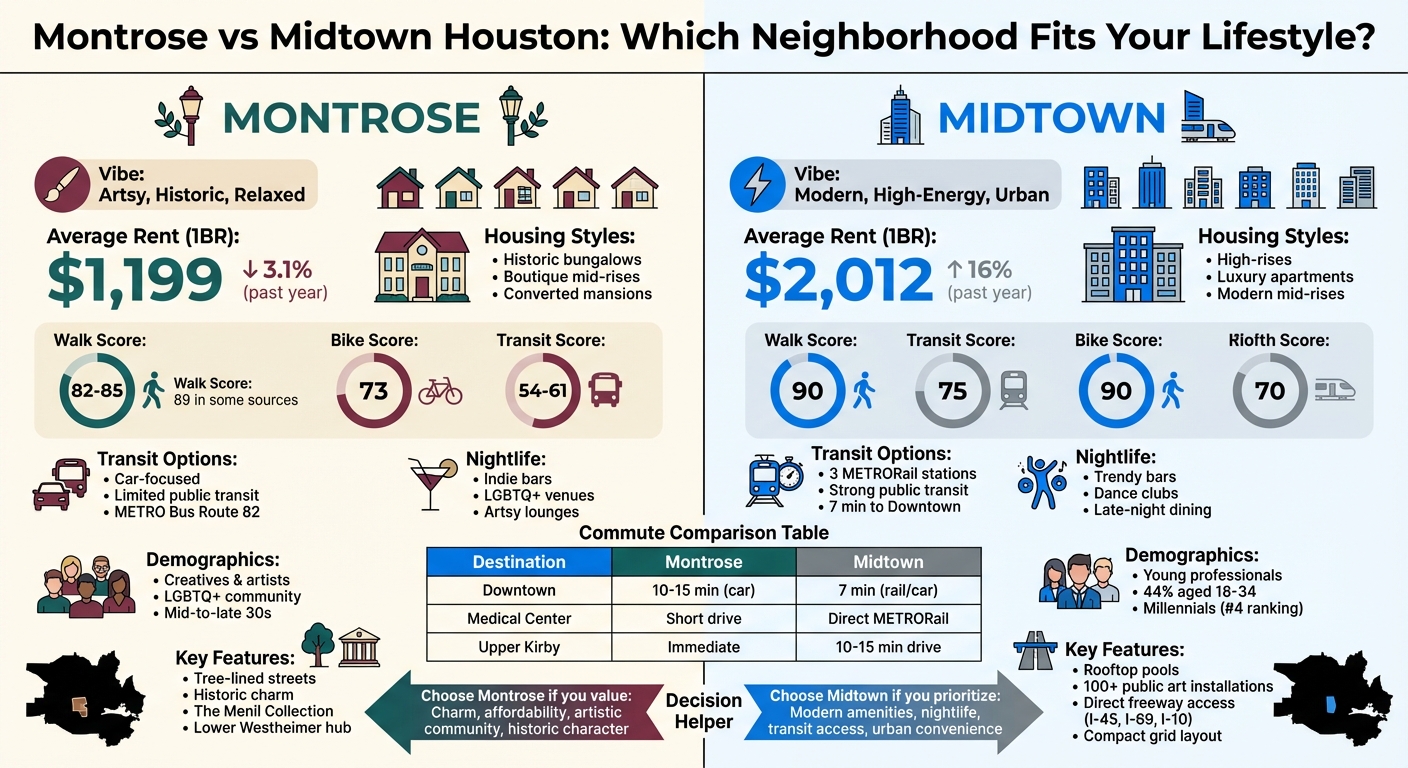
Montrose vs Midtown Houston Neighborhood Comparison Guide
sbb-itb-b58f532
Neighborhood Character and Daily Life
Getting a feel for each neighborhood’s unique vibe is essential when deciding on the right Houston lifestyle.
Montrose: A Creative and Historic Hub
Montrose is where Houston’s artistic soul shines. Condé Nast Traveler perfectly captures its essence, calling it "a pocket of eccentricity: a flamboyantly jagged jigsaw piece that lends the greater Houston picture a vivid splash of multi-chromatic verve". Life here is all about strolling down tree-shaded streets, exploring quirky local boutiques, and soaking in the culture at landmarks like the Menil Collection and Rothko Chapel. The area’s historic charm, with its 1920s-era homes and bungalows, fosters a laid-back, community-centered vibe that feels worlds apart from the hustle of downtown.
This offbeat neighborhood naturally draws in artists, creatives, and members of the LGBTQ+ community, giving it a distinctive bohemian flair. Picture residents browsing vintage shops, sipping coffee at cozy cafés, or unwinding in the expansive 30-acre Menil Park. Montrose also scores high in walkability, with 69% of locals feeling safe walking alone at night and a Walk Score of 89. It’s a perfect balance of artistic energy and everyday comfort.
While Montrose thrives on its relaxed, artsy atmosphere, Midtown offers a completely different pace, featuring some of Midtown Houston’s top luxury apartments.
Midtown: Fast-Paced and Modern
If Montrose is Houston’s creative retreat, Midtown is its buzzing core. Known as the city’s nightlife hotspot, it’s a magnet for millennials and young professionals. With 44% of its residents aged 18 to 34, Midtown has earned a reputation as one of the top neighborhoods for young professionals in Houston, ranking No. 4 on recent lists.
Daily life in Midtown revolves around sleek, modern conveniences. Think rooftop lounges, infinity pools, and easy access to the METRORail for quicker commutes. The neighborhood’s skyline reflects its modernity, with 26% of housing built in the last 15 years and over 100 public art installations adding a creative touch. Midtown is perfect for those who crave a dynamic, fast-moving lifestyle right in the heart of the action.
Walkability and Street Activity
Both neighborhoods boast a Walk Score of 86, but the way their streets come to life tells two very different stories. Let’s take a closer look at how their layouts influence daily street life.
Montrose: Shady Streets and Local Charm
Montrose is a walkable haven, where tree-lined streets and independent shops create a cozy, neighborhood vibe. You can wander from vintage stores like Pavement to inviting coffee spots, all without the looming presence of high-rises or the chaos of large crowds. As UNITi Montrose aptly describes it:
Walkability here is less about never using a car again and more about having options.
The heart of Montrose’s street life is Lower Westheimer, a hub of creativity and community. Here, you’ll find vibrant murals, pride crosswalks, and local gems like Basket Books & Art, which often hosts poetry readings. With a Bike Score of 73, Montrose is also bike-friendly, though its Transit Score of 54 suggests that cars are still necessary for longer trips.
Midtown: Dense and Well-Connected
Midtown matches Montrose’s Walk Score but offers a more compact and urban experience. Its grid layout puts everything – Whole Foods, rooftop bars, and more – within easy reach. For those who dread the hassle of downtown traffic, Midtown’s direct METRORail access is a game-changer.
The Transit Score of 75 highlights Midtown’s strong public transportation options, with METRORail stations providing quick connections to Downtown and the Medical Center. However, this convenience comes with a trade-off: a busier, more fast-paced environment. With 41% of its buildings housing 50 or more units, Midtown’s streets often hum with the energy of bar crawls and commuter traffic rather than relaxed strolls. For anyone aiming to rely less on a car, Midtown’s rail access makes it a practical choice.
Ultimately, the differences in street activity and connectivity shape the unique lifestyle each neighborhood offers. Montrose feels like a quiet retreat, while Midtown buzzes with urban energy.
Restaurants, Bars, and Nightlife
The neighborhoods’ unique daytime personalities carry over seamlessly into their nightlife, with restaurants and bars that reflect each area’s distinct character. Montrose and Midtown, in particular, serve up two very different yet equally vibrant scenes.
Montrose: Indie Eateries and Artsy Nightlife
Montrose is all about individuality, and its dining and nightlife options reflect that spirit. You’ll find a mix of chef-led independent restaurants like Uchi and Hugo’s, alongside laid-back neighborhood spots like Poison Girl. The nightlife scene here is just as diverse, with a rich LGBTQ+ history celebrated at iconic venues like Numbers.
Lower Westheimer acts as the heartbeat of Montrose’s nightlife, offering everything from artsy lounges to chill bars without the high-energy club vibe. For an added twist, you can explore The Menil Collection, which offers free admission to world-renowned art. It’s the perfect way to blend culture with an evening out, fitting right in with Montrose’s creative and eclectic atmosphere.
Midtown: High-Paced Social Scene
Midtown takes a completely different approach, buzzing with energy and urban flair. This compact neighborhood is packed with trendy bars, vibrant dance clubs, and late-night dining spots. Favorites like Piola, Brennan’s of Houston, Axelrad, and Wooster’s Garden draw a crowd of young professionals eager to mingle and make connections.
As the VeryApt Guide describes it:
Midtown is a jam-packed area that hosts a lot of young professionals looking to enjoy the city’s best nightlife options.
The lively vibe does come with a downside – residents often point out that the dense concentration of bars can make noise an issue. On the bright side, three METRORail stops in the area make getting to and from your night out a breeze. Whether you’re looking to dance the night away or enjoy a casual drink, Midtown delivers.
Commute Times and Transit Options
Your daily commute plays a huge role in choosing where to live, and Montrose and Midtown each offer a distinct approach to navigating Houston. Whether you’re a car enthusiast or prefer public transit, these neighborhoods cater to different commuting preferences. Let’s break down how transit options align with each area’s unique vibe.
Montrose: Central Location, Car-Focused
Montrose sits in a prime location, nestled between Downtown and Upper Kirby. Despite its centrality, most residents here rely heavily on their cars. Upper Kirby is practically next door, and driving to Downtown or the Texas Medical Center is a breeze thanks to well-connected roads. While METRO Bus Route 82 runs through the area, it’s not the go-to option for most locals. Montrose’s layout and lifestyle lean toward a car-centric way of getting around.
Midtown: METRORail Access and Convenience
Midtown, on the other hand, is a haven for those who favor public transit. With three METRORail stations along the Red Line, getting to Downtown takes about 7 minutes, and you can reach the Texas Medical Center for just $1.25. Plus, Midtown’s proximity to Downtown’s Central Business District – just across the highway – means freeway access is a snap, with I-45, I-69 (US-59), and I-10 all within five minutes. Interestingly, despite these transit perks, 71% of Midtown residents still drive. This mix of options reflects the neighborhood’s fast-paced, urban energy, contrasting with Montrose’s more laid-back, car-friendly character.
| Destination | Midtown Commute | Montrose Commute |
|---|---|---|
| Downtown | ~7 minutes (rail/car) | 10–15 minutes by car |
| Medical Center | Direct via METRORail | Short drive through Museum District |
| Upper Kirby | ~10–15 minute drive | Immediate (shares border) |
Apartment Types and Building Styles
The housing options in these two neighborhoods couldn’t be more different, offering unique lifestyles depending on your preferences. Montrose boasts a mix of historic bungalows, converted mansions, boutique mid-rises, and sleek high-rises. Many of the older buildings come with quirky floor plans and a lot of personality, while newer developments like UNITi Montrose on Richmond Ave bring modern conveniences. These include co-living layouts and fully furnished spaces, complete with pool decks, coworking lounges, and rooftop areas. Whether you’re drawn to a charming, repurposed house or a cutting-edge apartment, Montrose has something for you.
Montrose: Historic Charm and Boutique Living
Montrose reflects its creative and artistic vibe through its housing options. Here, you’ll find everything from quaint historic bungalows – some converted into duplexes – to stylish lofts in smaller, low-rise buildings. The neighborhood prioritizes a more intimate, "human-scale" environment, with tree-lined streets and architectural details that stand out. However, many of these older properties come with limited parking, often requiring an additional $50–$100 monthly fee. What they lack in parking, though, they make up for in charm and efficient design.
Midtown: Modern High-Rises and Luxe Amenities
On the other hand, Midtown offers a polished, contemporary living experience. Over the past 15–20 years, this area has become a hub for modern, high-density developments. High-rises like Skyhouse Houston feature floor-to-ceiling windows, private balconies, and spa-inspired bathtubs, with retail options conveniently located on the ground floor. Camden City Centre ups the ante with 10-foot ceilings, custom cabinetry, resort-style pools, a gaming lounge, and even an on-site movie theater. Across the board, Midtown apartments deliver full-service living, with features like infinity pools, private cabanas, and entertainment spaces. Even Midtown Arbor Place, which leans more traditional with its garden-style townhomes, includes modern touches like gourmet kitchens and a waterfall pool.
Montrose vs Midtown Apartment Comparison
A quick comparison highlights the key differences between Montrose and Midtown living:
| Feature | Montrose Apartments | Midtown Apartments |
|---|---|---|
| Primary Styles | Historic bungalows, boutique mid-rises, lofts | Modern high-rises, compact mid-rises |
| Common Amenities | Coworking lounges, rooftop decks, pet-friendly spaces | Infinity pools, movie theaters, gaming lounges |
| Unit Features | Unique layouts, some furnished/co-living options | Floor-to-ceiling windows, spa-style tubs |
| Vibe | Artsy, historic, eclectic | High-energy, modern, central |
| Parking | Often limited; $50–$100 monthly fees | Typically includes integrated garage parking |
As of January 2026, the average rent for a one-bedroom apartment in Midtown is $2,012, compared to $1,199 in Montrose. This price difference reflects Midtown’s focus on new construction and luxury amenities versus Montrose’s older buildings with distinctive character. Midtown appeals to those seeking a modern urban lifestyle, as ApartmentSearch describes:
Midtown is the epitome of luxury apartment living, an ‘urban oasis in the heart of the city’
Meanwhile, Montrose continues to attract renters who value creativity and individuality over polished perfection.
Rent Prices and What You Get
When comparing Montrose and Midtown, rent prices highlight key differences in what you can expect from each neighborhood.
Montrose: Flexible Price Points
Montrose offers a broader range of rent prices, making it a more budget-friendly choice for many. As of January 2026, the average rent for a one-bedroom apartment is $1,199, while two-bedroom units typically cost around $2,199. Studio apartments start at $1,423, and one-bedroom options can climb to $1,824, depending on factors like the building’s age and location. Interestingly, Montrose has seen a 3.1% drop in rent over the past year, which adds to its appeal for renters looking for value.
The neighborhood provides a mix of housing styles at various price points. For $1,199, you might find yourself in a charming converted bungalow featuring hardwood floors and unique architectural details, or perhaps a boutique mid-rise with amenities like a rooftop deck. On average, one-bedroom units in Montrose offer about 785 square feet of living space. Many buildings in the area boast character and design elements that newer constructions often lack. This variety in pricing and housing styles reflects the eclectic lifestyles that Montrose caters to, offering a distinct contrast to Midtown’s more modern and upscale vibe.
Midtown: Premium Living at a Higher Cost
Midtown, on the other hand, commands higher rents, reflecting its focus on modernity and convenience. A one-bedroom apartment in Midtown averages $2,012 – about 68% more than in Montrose – while two-bedroom units come in at approximately $2,739. These prices have risen significantly, with one-bedroom rents increasing by 16% and two-bedroom rents by 17% over the past year. The median rent across all property types in Midtown is $1,913, slightly above the national average by 1%.
Midtown’s higher rents are tied to its emphasis on contemporary living and upscale amenities. Nearly half of all rental properties in Midtown fall within the $1,501 to $2,250 range. In return, renters get access to features like floor-to-ceiling windows, integrated garage parking, infinity pools with cabanas, and smart-home technology. Midtown attracts those who are willing to pay a premium for the convenience of modern amenities and the vibrant energy of an urban lifestyle, making it a clear choice for those who prioritize sleek, new construction over the historic charm and affordability found in Montrose.
Which Neighborhood Is Right for You?
Deciding between Montrose and Midtown comes down to what suits your vibe: the artsy charm of Montrose or the modern buzz of Midtown. Here’s a quick breakdown to help you renting apartments in Houston based on your lifestyle.
Choose Montrose If You Want
Montrose is the go-to spot for creatives and the LGBTQ+ community, thanks to its bohemian flair, leafy streets, quirky coffee shops, and historic bungalows. With a population that skews toward unmarried residents in their mid-to-late thirties, the neighborhood fosters a laid-back, community-oriented feel.
Housing in Montrose is more varied and tends to be slightly more affordable. The average rent for a one-bedroom apartment is about $1,824, and rents have even dipped by 3.1% over the past year. Its location near Upper Kirby and the Museum District makes it easy to pop into art galleries or enjoy a run at Buffalo Bayou Park. Keep in mind, though, that while Montrose is walkable, a car might be handy for longer trips.
Choose Midtown If You Want
Midtown is all about modern living, nightlife, and easy access to public transit. It’s a hotspot for young professionals, ranking in the top 3% of Niche’s "Best Neighborhoods for Millennials in America". The area boasts sleek high-rises with upscale perks like floor-to-ceiling windows, rooftop pools, and smart-home tech. Expect to pay a bit more here, with one-bedroom apartments averaging $2,012.
"Midtown is adored for its youthful atmosphere, urban energy, and seemingly unlimited ways to have fun." – ApartmentSearch
If you thrive on energy and convenience, Midtown has you covered with buzzing bars, late-night eats, and a dense urban feel. Its walk score of 90 makes it easy to get around, and freeway access to I-69, I-45, and I-10 is just minutes away. Plus, the METRORail connects you to the rest of Houston without the need for a car.
Comparison Checklist
Here’s a quick way to weigh your options:
- Budget: Midtown is about 10% pricier, with average rents of $2,012 compared to Montrose’s $1,824.
- Commute: Midtown wins for transit access, thanks to its METRORail hub.
- Lifestyle: Prefer artsy and historic? Go for Montrose. Crave modern high-rises and nightlife? Midtown is your spot.
- Transportation: Montrose has a transit score of 61.4, so you might need a car. Midtown offers better public transit options.
Both neighborhoods share a similar safety perception, with about 69% of residents feeling comfortable walking alone at night. Ultimately, the choice boils down to whether you’re drawn to Montrose’s eclectic charm or Midtown’s sleek, urban energy.
FAQs
What’s the difference between living in Montrose and Midtown Houston?
Montrose exudes a relaxed, artsy atmosphere with a touch of historic charm. It’s the kind of neighborhood where creative souls thrive, offering independent shops, cozy bungalows, and a calendar filled with gallery tours and festivals. There’s a strong sense of community here, making it a haven for those who appreciate individuality and artistic expression.
Midtown, by contrast, buzzes with energy and urban flair. Known for its walkable streets and dynamic nightlife, it’s a hotspot for young professionals who crave being at the heart of the action. Packed with restaurants, bars, and coffee shops, Midtown caters to those who love a fast-paced, city-focused lifestyle.
Bottom line: Montrose is your go-to if you’re all about artistic charm and a more laid-back vibe. Midtown is the place to be if you’re after a bustling, centrally located scene with endless dining and nightlife options.
How do rent prices in Montrose compare to Midtown Houston?
In Montrose, the average rent sits at roughly $1,938 per month as of 2025. If you’re looking for a studio, prices typically begin around $938. For a bit more space, one-bedroom apartments average $1,600, while two-bedroom units are around $2,452. Need even more room? Three-bedroom apartments can go up to $3,500.
Midtown Houston rental prices, on the other hand, aren’t as clearly defined. However, the area is known for its mix of modern apartments and high-rise options. Depending on the property’s location and amenities, you might find prices slightly higher than Montrose.
Tip: To get the most up-to-date Midtown pricing, browse current listings. This will help you find a place that aligns with your budget and lifestyle.
Which neighborhood has better public transit options, Montrose or Midtown?
Midtown Houston stands out with stronger public transit options when compared to Montrose. Thanks to the METRORail Red Line and an array of bus routes, Midtown offers seamless connections to major destinations like Downtown, the Medical Center, and Upper Kirby. This makes it a great pick for renters who value frequent and straightforward transit access.
Montrose, on the other hand, is highly walkable and does have METRO bus service, but it doesn’t feature a rail stop in its central area. Instead, it primarily relies on surface bus routes. For those who depend on public transit for daily commutes, Midtown’s mix of rail and bus services generally offers broader coverage.