
Inside this guide
- Why this matters
- At a glance
- Personalized locating wins for a renter who needs local help
- Trulia wins for a search that extends beyond these Texas metros
- Personalized research wins when your requirements need explanation
- Both support neighborhood research, but the work differs
- Trulia wins when rental houses remain part of the search
- Trulia wins for direct browsing control
- Both require property-level confirmation before you apply
- Pricing models: free locating versus self-service browsing
- Final verdict: choose the workflow that solves your problem
- FAQ
- One last thing
- Related guides
Choose Taco Street Locating if you want personalized apartment research in Austin, Dallas–Fort Worth, or Houston; choose Trulia if you want to browse rental listings independently across a broader geography. This 2026 comparison separates local apartment-locating help from a self-service property search so you can choose the approach that fits your move.
- Taco Street Locating vs Trulia comes down to personalized apartment locating versus independent rental listings research.
- Choose the local service for neighborhood guidance in Austin, Dallas–Fort Worth, and Houston.
- Choose Trulia for broader geographic browsing and a search that includes rental houses.
- Neither a locator recommendation nor a listing replaces written confirmation from the property.
Why this matters
Taco Street Locating is best for renters who want personalized apartment research in its Texas service areas. Trulia is the better starting point when you want to explore listings yourself, especially before deciding which city or property type suits you.
The distinction matters because finding a listing and deciding where to live are different jobs. A search result gives you a candidate; a useful apartment search also accounts for your commute, neighborhood preferences, lease requirements, and daily routine.
For a 2026 relocation to Austin, start by identifying the decision you need help making. If you already know your neighborhood and enjoy researching properties, independent browsing fits. If you need help turning unfamiliar neighborhoods into a workable shortlist, personalized locating fits better.
At a glance
| Dimension | Taco Street Locating | Trulia |
|---|---|---|
| Best for | Renters wanting personalized help in the supported Texas metros | Renters wanting independent listing research |
| Geographic reach | Austin, Dallas–Fort Worth, and Houston | Broader U.S. property search |
| Standout feature | Personalized apartment research and local neighborhood knowledge | Self-service property browsing with map-based search |
| Neighborhood decisions | Discussing neighborhood trade-offs against your needs | Exploring locations independently |
| Property scope | Apartment locating | Rental apartments and houses, alongside home-sale search |
| Search control | A guided search shaped by your brief | Direct control over browsing and filtering |
| Lease verification | Confirm property-specific terms before applying | Confirm property-specific terms before applying |
| Pricing model | Free apartment locating service | Self-service listing portal; verify terms for any service you use |
Personalized locating wins for a renter who needs local help
A local apartment locator serves a different purpose from a listing portal. Personalized research starts with what you need from the move, rather than leaving you to interpret every candidate yourself.
For an Austin relocation, a useful brief goes beyond bedroom count. Include your work destination, whether you drive, your preferred surroundings, your pet requirements, and anything that would rule out a building. Ask the locator to explain why each recommendation fits that brief.
The advantage is help making distinctions. Hyde Park, Downtown Austin, and the Domain area are separate search choices; they should not become interchangeable just because listings show similar apartment features. Your daily destinations should shape the comparison.
The limitation: a guided search still needs your input. A locator cannot resolve priorities you have not shared, and a recommendation does not establish that a particular apartment meets every requirement. Tell the service what would make you reject an otherwise attractive property.
Trulia wins for a search that extends beyond these Texas metros
Trulia is the more appropriate starting point when your search spans locations outside Austin, Dallas–Fort Worth, and Houston. Its broader U.S. scope fits a renter comparing cities or researching a move before choosing a destination.
That is a genuine difference, not a small feature gap. A renter considering both Texas and another state needs a search resource that covers those locations. A service focused on specified Texas metros is not a substitute for that broader search.
For your 2026 move, separate city selection from apartment selection. Use broad browsing to investigate destinations, then decide whether local locating help would improve the apartment search in your chosen city.
The limitation: geographic breadth does not itself provide a personalized neighborhood recommendation. You still need to translate listings into a practical decision about where you want to live.
Personalized research wins when your requirements need explanation
Some apartment requirements fit neatly into filters. Others need a conversation: you work from home but dislike enclosed office spaces, you want neighborhood activity without living beside it, or your commute changes between different destinations.
Personalized apartment research gives you a way to explain those trade-offs. Ask for the reasoning behind the shortlist, not simply more names. A useful recommendation identifies both the fit and the compromise.
Build your brief around these questions:
- Daily destinations: Where do you need to go regularly?
- Non-negotiables: Which requirements would eliminate an apartment?
- Acceptable compromises: What can you give up for a better location?
- Unanswered questions: What must the property confirm directly?
For commute-led searches, use this guide to choosing an Austin apartment around your commute. Compare actual destinations rather than treating a neighborhood name as a travel-time guarantee.
The limitation: personalized research does not remove the need to check the apartment itself. A promising neighborhood match can still fail on layout, building access, or lease terms.
Both support neighborhood research, but the work differs
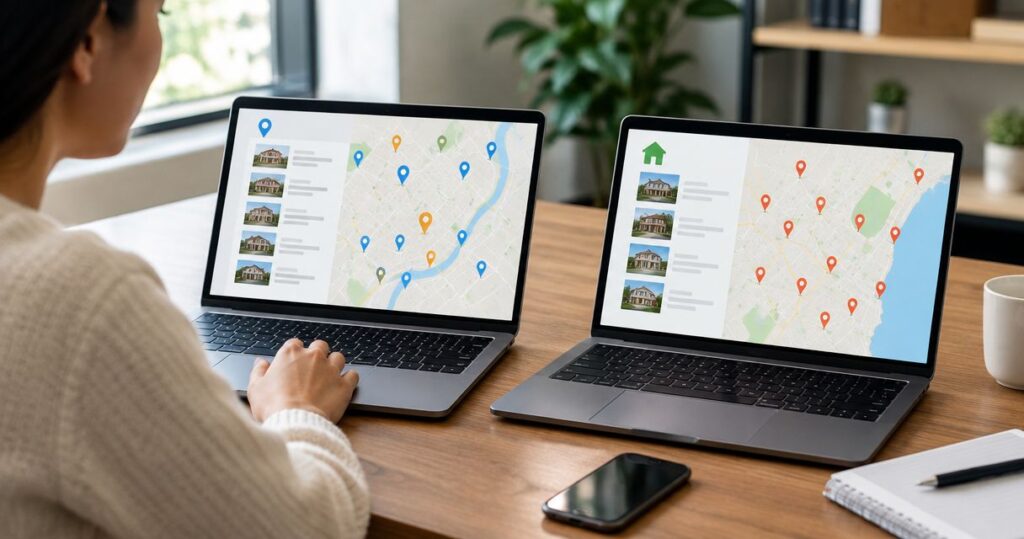
Trulia supports independent location research through its property search and map-based browsing. Local locating adds a conversation about how neighborhood choices relate to your needs. Both approaches are useful; they put different amounts of interpretation on you.
Start with 3 neighborhoods as a working shortlist, not a rule about how many places you must consider. For Austin, those might be Hyde Park, Downtown Austin, and the Domain area. Compare each against the same destinations and preferences before evaluating individual buildings.
In Dallas, use specific areas such as Trinity Groves and Victory Park rather than treating Dallas as a single apartment market. In Houston, anchor the search to your actual destination, such as Rice University, rather than relying on a citywide label.
Check your route in 2 commute windows that reflect when you expect to travel. These are planning recommendations, not promised travel times. Neither a map pin nor a neighborhood description guarantees how a particular trip will feel.
Verdict: both approaches help with neighborhood research; personalized help fits interpretation, while Trulia fits independent exploration.
Trulia wins when rental houses remain part of the search
Trulia's property scope makes it the stronger choice when you are still comparing apartments with rental houses. You can keep those housing types in the same research process instead of committing to an apartment-only search immediately.
That matters when your central question is about the type of home, not the apartment community. Outdoor space, maintenance responsibilities, parking arrangements, and building amenities deserve separate investigation for each candidate. Do not assume a housing type guarantees any of them.
The local service's stated focus is apartment locating. That makes it relevant after you decide an apartment is the right direction, but it does not establish a rental-house search service.
The limitation: a broader property selection creates more comparison work. Before pursuing both houses and apartments, write down what each would need to offer to remain on your shortlist. Otherwise, you are comparing different homes against different standards.
Trulia wins for direct browsing control
Choose Trulia when you want to browse, filter, and revisit listings on your own terms. Independent search suits renters who already understand their target area and prefer to make the initial shortlist themselves.
You do not have to explain every change in preference before exploring it. That is useful during early research, when you are learning what matters to you rather than asking someone to act on a settled brief.
The trade-off is responsibility for the research. You decide which listings deserve follow-up, keep track of your questions, and reconcile differences between properties.
A guided search reverses that balance: you provide context and ask for personalized research, then evaluate the recommendations. Neither approach wins on personal preference. Choose direct browsing if you enjoy the work; choose locating help if you want assistance interpreting the choices.
Both require property-level confirmation before you apply
Neither an online listing nor a locator recommendation replaces the property's written terms. Treat the shortlist as a research result, not a completed lease decision.
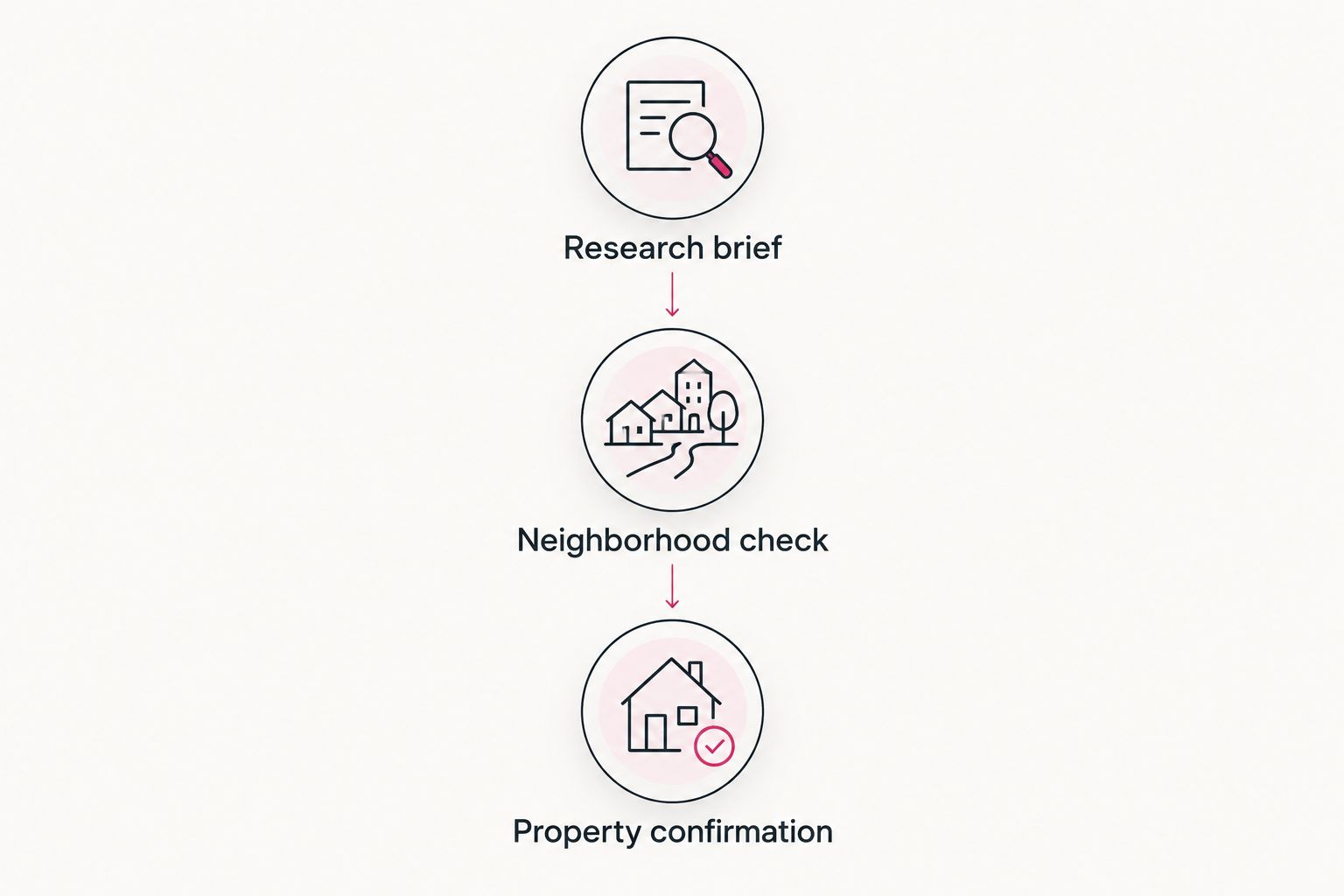
For a 2026 search, use the same verification process regardless of where you found the apartment:
- Research brief: Record your requirements so you can evaluate each property consistently.
- Neighborhood check: Review the location against your destinations and daily routine.
- Property confirmation: Ask the leasing office to confirm the exact apartment's terms, features, and application requirements.
Compare 3 candidate properties using the same questions before choosing where to apply. Ask about required charges, lease length, parking terms, pet rules, and the exact unit's features. Request written answers for anything that affects your decision.
Verdict: this is a tie. The source of a recommendation does not remove your responsibility to read the application terms and lease.
Pricing models: free locating versus self-service browsing
Taco Street Locating describes its offer as a free apartment locating service. That describes the locating service, not the financial terms of an apartment lease.
Trulia is a self-service listing portal rather than a personalized apartment-locating service. Evaluate it as a place to research properties and make inquiries, and check the terms of any separate service or application you use.
The useful comparison in 2026 is the work involved. With personalized locating, you explain your needs and assess recommendations. With independent browsing, you build and maintain the shortlist yourself.
Keep service terms separate from property terms. Ask the property for its written charges and application conditions; do not infer them from either search method. No search platform or locator recommendation makes two leases financially equivalent.
Final verdict: choose the workflow that solves your problem
Choose Taco Street Locating if you are relocating to a supported Texas metro
Best for: an Austin newcomer who wants neighborhood context and personalized apartment research. The same service focus applies to renters seeking help in Dallas–Fort Worth or Houston.
Choose this approach when your obstacle is interpreting the choices, not finding another page of listings. Bring a clear brief, ask why each apartment fits, and request the compromises alongside the positives. Local help is most useful when it addresses your actual routine.
Choose Trulia if you want a broad, independent property search
Best for: a self-directed renter comparing locations or considering both apartments and rental houses. Trulia wins when you want control over browsing and do not need a Texas apartment locator to shape the initial shortlist.
Choose this approach when you enjoy research and can keep track of follow-ups yourself. For either approach in 2026, finish with direct property confirmation before applying.
| Dimension | Winner |
|---|---|
| Personalized help for a Texas apartment search | Local locating service |
| Geographic reach | Trulia |
| Research shaped by a detailed renter brief | Local locating service |
| Neighborhood research | Tie: guided interpretation versus independent exploration |
| Property-type breadth | Trulia |
| Direct browsing control | Trulia |
| Lease verification | Tie: direct confirmation required |
| Pricing model | No price-based winner; compare service terms and research effort |
FAQ
Is Taco Street Locating better than Trulia for moving to Austin?
Taco Street Locating is the better fit when you want personalized apartment research and local neighborhood guidance for an Austin move. Trulia is the better fit when you prefer to build your own shortlist through independent browsing.
Should I use Trulia if I am considering a rental house?
Yes, Trulia fits a search that includes rental houses as well as apartments. The local locating service described here focuses on apartments, so do not assume it provides a rental-house search.
Can I use a listing portal and an apartment locator together?
Yes, independent browsing and personalized locating can serve different parts of the same search. Share the properties you have found and explain what appeals to you so the discussion stays focused on your requirements.
Which option is better if I have not chosen a city?
Trulia is the stronger starting point for browsing across a broader U.S. geography. Personalized locating becomes relevant once your apartment search falls within the local service’s stated coverage.
Does an apartment recommendation guarantee that I will qualify?
No, an apartment recommendation does not establish application approval. Ask the property about its screening criteria and required documents before applying.
What should I tell an apartment locator before the search starts?
Give the locator your target area, daily destinations, move requirements, and non-negotiables. Explain your acceptable compromises so recommendations reflect how you intend to live, not just a list of amenities.
Do I still need to contact the property after finding a listing?
Yes, confirm the exact apartment’s features, lease terms, required charges, and application requirements with the property. Apply the same checks whether you found the apartment through Trulia or a locator.
One last thing
Ask every shortlisted property the same question: What about this exact apartment differs from the model or marketing photos? Then follow up on the details that matter to you, such as layout, outlook, finishes, and access.
A good search method gets you to a useful shortlist. Your final decision should concern the apartment you would actually lease—not just the building name, neighborhood reputation, or best-looking photograph. Save the taco debate for after that part is settled.
Related guides
- Trulia alternatives for renters
- Apartments in Hyde Park, Austin
- Tour an Austin apartment from another city