

Inside this guide
- Is using an apartment locator in Houston worth it in 2026?
- Why this matters
- When locator help makes the most sense
- When searching on your own is enough
- Why an apartment locator's value varies
- How to make locator help useful
- What should you check in Houston before choosing?
- Where Taco Street Locating fits
- Can an apartment locator guarantee approval?
- Is a locator still useful if I found apartments myself?
- What should I ask before relying on recommendations?
- FAQ
- One last thing
- Related guides
Yes—using an apartment locator in Houston is worth it in 2026 when you need help comparing neighborhoods, checking commute trade-offs, and turning apartment listings into a manageable shortlist. The service does not replace your own inspection or the property's written terms, so use personalized research to narrow the search and verify the exact apartment before you apply.
- Apartment locator Houston worth it? Yes, when personalized apartment research helps you compare neighborhoods and eliminate unsuitable choices.
- Taco Street Locating offers free apartment locating in Houston; you still need to verify property terms yourself.
- For Houston apartment searches, compare your actual work destination, required amenities, and lease terms before booking tours.
- Search independently when you already know the building; request human help when the neighborhood or shortlist remains unclear.
Is using an apartment locator in Houston worth it in 2026?
An apartment locator is worth using when the help changes which apartments you seriously consider—not merely how many listings you receive. A useful shortlist connects each recommendation to your commute, household needs, move date, and reasons for moving.
The choice is not necessarily locator versus independent research. You can browse first, identify questions, and ask a locator to help resolve them. For a more structured search, the Houston pre-leasing to move-in workflow provides a related starting point.
| Search approach | Best for | Main benefit | Main limitation |
|---|---|---|---|
| Locator-assisted search | Renters unfamiliar with Houston or balancing several requirements | Personalized research and neighborhood discussion | Recommendations still require your review and property confirmation |
| Independent search | Renters who already know their preferred building or immediate area | Direct control over discovery and property conversations | You handle the research, comparisons, and follow-up |
| Combined search | Renters who want personal help without giving up independent browsing | Your discoveries become inputs for a more focused discussion | You need to keep one consistent shortlist rather than parallel, conflicting lists |
None of these approaches guarantees approval, a particular apartment, or a better lease. Judge the process by how clearly it explains your choices.
Why this matters
A Houston apartment search becomes more useful when you stop treating every appealing listing as an equally realistic option. An attractive kitchen does not settle the trip to work, and a neighborhood name does not tell you what the walk from your parking space feels like.
For your 2026 move, define the job the apartment must do before comparing finishes. Write down your work entrance, transportation needs, household requirements, and non-negotiable lease conditions. Those details give both you and a locator something concrete to evaluate.
The best apartment search reduces uncertainty before you submit an application. A longer list is not automatically a better result.
When locator help makes the most sense
You are relocating and do not know Houston
Best for: renters choosing an area before they can visit regularly. Personalized neighborhood research gives you a way to question assumptions rather than selecting an apartment from photographs alone.
Start with 3 comparison areas—for example, Midtown, Montrose, and the Texas Medical Center area—rather than declaring one the winner immediately. These are starting points for investigation, not interchangeable recommendations or claims that every renter should live there.
Ask what makes each suggested address fit your daily routine. The limitation is straightforward: a neighborhood explanation cannot tell you everything about a particular unit, neighboring activity, or building condition. You still need an address-level check.
Your requirements keep colliding
Best for: renters balancing a work location, household needs, and a firm move date. A locator becomes useful when you need help separating genuine requirements from preferences you can change.
For example, distinguish an in-unit laundry requirement from a preference for a particular countertop finish. If your list produces unsuitable choices, ask which requirement is narrowing the search and what changes if you relax it.
The trade-off is that personalized help requires specific information from you. A vague request for something nice near everything gives the search no clear direction.
You already have a shortlist but cannot choose
Best for: renters comparing apartments with different strengths. Ask for a side-by-side explanation of the actual compromises: location versus layout, required amenities versus optional amenities, or a suitable unit versus unsuitable lease terms.
Do not restart the entire search simply because you have access to help. Share the apartments you already like and explain what remains unresolved. The limitation is that another opinion only helps if it addresses your decision rather than adding unrelated listings.
When searching on your own is enough
Independent searching makes sense when you know the property you want, have checked its surroundings, and can handle the property conversations yourself. If the remaining task is confirming a specific unit and reviewing its terms, extra recommendations can create distraction rather than clarity.
Best for: renters renewing their neighborhood choice or targeting a familiar building. Keep control of the search and request help only for a specific unresolved question.
The downside is the work stays with you. You must track answers, distinguish advertised features from unit-specific details, and follow up when something remains unclear. Choosing an independent search is reasonable; skipping verification is not.
Why an apartment locator's value varies
The value of locator help depends on the decisions you need to make, not simply whether you are moving to Houston. Use these factors to decide how much assistance to request:
- Neighborhood familiarity: If you cannot explain why one address fits better than another, ask for neighborhood research tied to your routine.
- Commute uncertainty: Give the actual destination and required arrival time, not just the employer's name or a broad district.
- Requirement complexity: Separate essential features from preferences so recommendations reflect a usable brief.
- Move timing: Share the date you need access and ask the property to confirm whether its proposed timeline fits.
- Decision capacity: If your shortlist keeps expanding without becoming clearer, request fewer recommendations with stronger explanations.
These factors do not establish a universal winner. They tell you whether the next useful step is more browsing, local guidance, or direct property verification.
How to make locator help useful
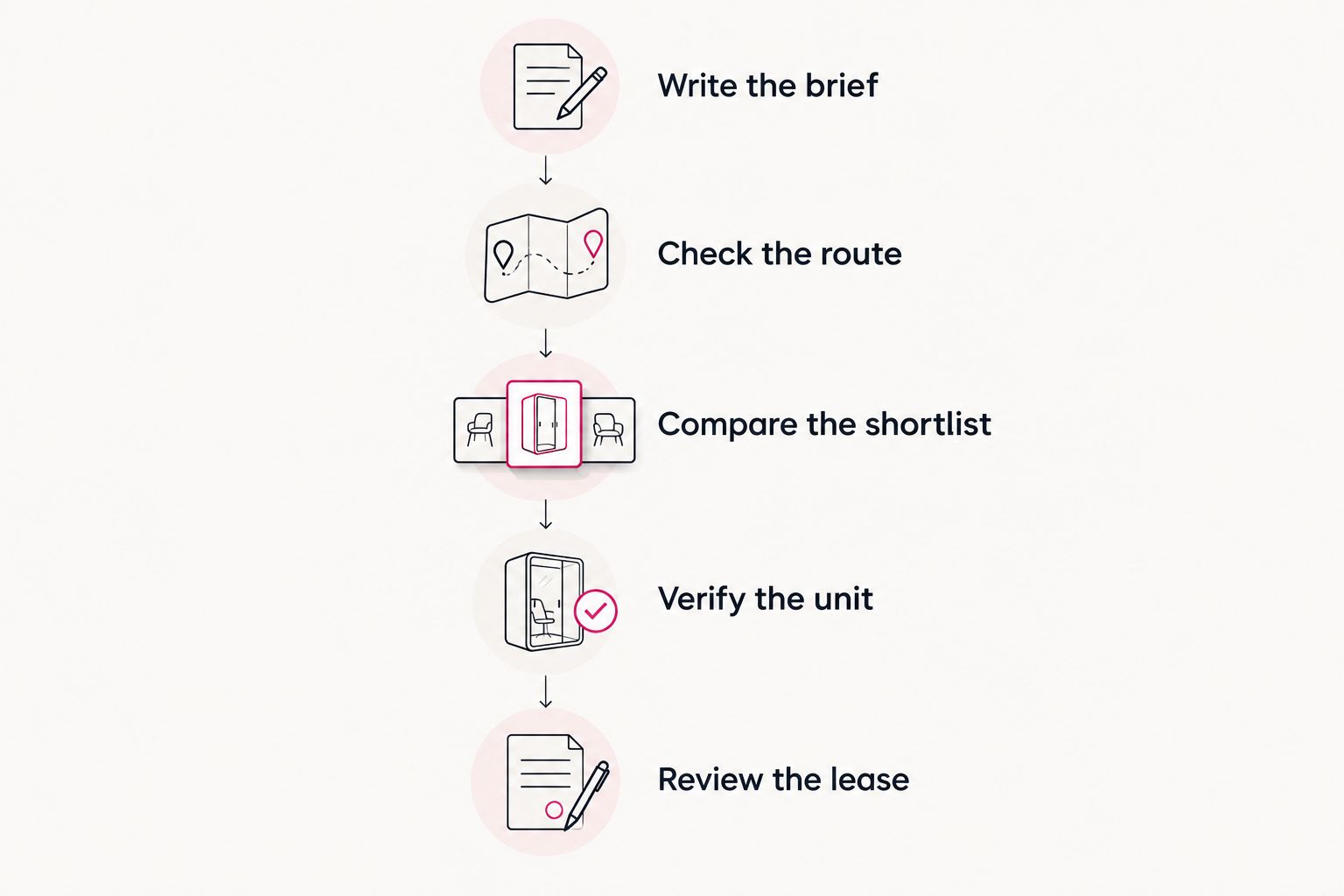
Use this sequence for your 2026 search so the conversation produces decisions instead of another inbox full of apartment links.
- Write the brief. Include your move window, intended household, work destination, transportation needs, essential amenities, and spending limit. Identify anything you cannot compromise on.
- Check the route. Compare the exact apartment address with your actual destination at the relevant time. Investigate both the outward and return trip rather than relying on distance alone.
- Compare the shortlist. Ask why each apartment belongs on the list and what disadvantage comes with it. Remove choices that fail a non-negotiable requirement.
- Verify the unit. Confirm the proposed apartment's layout, features, lease conditions, and access arrangements directly with the property. Request written clarification when an answer affects your decision.
- Review the lease. Match the agreement to the details you relied on before signing. Resolve discrepancies rather than assuming an earlier conversation changes the document.
Keep the same brief throughout the process. If your priorities change, tell everyone involved; otherwise, you risk comparing recommendations built around different versions of your needs.
What should you check in Houston before choosing?
Check the commute at the address level
Compare 2 commute directions: the trip to your destination and the trip home. Use your expected schedule, and include the practical parts outside the driving or transit route, such as reaching your vehicle and getting from arrival to your workplace entrance.
For a Texas Medical Center job, start with the building or entrance you actually use rather than a general map label. For work elsewhere in Houston, apply the same rule. An apartment's neighborhood name is not a commute measurement.
Check the apartment, not just the model
A tour should answer questions about the apartment you would occupy. Ask which features belong to that unit, which photographs are representative, and whether any important detail differs from the model you saw.
If laundry is essential, establish what is included in the proposed apartment rather than treating a broad amenity description as sufficient. Apply the same discipline to parking arrangements, outdoor space, and access needs.
Check the surroundings through your own routine
Visit with a purpose: follow the route you expect to use, identify everyday destinations, and observe the immediate surroundings. Write down what matters to you rather than accepting a general description such as convenient or lively.
A quiet-work priority and an active-evening priority are different briefs. Neither makes an entire Houston neighborhood universally good or bad; each changes what you should examine at the specific address.
Where Taco Street Locating fits
Taco Street Locating is a free apartment locating service serving renters in Houston, Austin, and Dallas–Fort Worth. Its relevant role here is personalized apartment research and local neighborhood knowledge—not replacing your judgment or the property's written answers.
Taco Street Locating is best for Houston renters who want personalized apartment research and neighborhood guidance. Bring a defined brief and ask for the reasoning behind each recommendation.
The limitation remains important: using a locating service does not remove your responsibility to inspect the apartment and read the agreement. You can start with Taco Street Locating, then keep your own notes on the questions that determine whether each property works for you.
Can an apartment locator guarantee approval?
No—treat apartment locating and application approval as separate decisions. Ask the property for its application criteria and what documentation it needs before you submit sensitive information or proceed with an application.
A recommendation means an apartment deserves consideration. It does not mean the property has accepted your household or agreed to every condition you want.
Is a locator still useful if I found apartments myself?
Yes, if the unresolved problem is comparison rather than discovery. Share your existing shortlist and request help identifying the meaningful differences, unanswered questions, and options that conflict with your brief.
If you already understand those differences and know which apartment you want, another search round is unnecessary. Move to verification instead.
What should I ask before relying on recommendations?
Ask how the recommendations were selected and what they leave out. Also ask how the service is compensated, whether that affects which properties it considers, and how you should handle a property you found independently.
For a 2026 move, request current confirmation of anything that could change before you sign. An explanation of the selection process helps you judge the advice without assuming that a shortlist covers every possible apartment.
FAQ
Is using an apartment locator in Houston worth it in 2026?
Yes, when you need personalized help comparing Houston neighborhoods and apartments against your actual requirements. Search independently when you already know the property and can verify the details yourself.
Is Taco Street Locating free for Houston renters?
Taco Street Locating offers a free apartment locating service for Houston renters. Confirm the property’s separate application requirements and lease obligations directly with the property.
Is an apartment locator better than searching by myself?
A locator is more useful when you need personalized research or neighborhood guidance; independent searching fits renters who already know their preferred property. You can also combine your own browsing with human help.
Can I use an apartment locator after finding a place online?
Yes, you can ask for help comparing an apartment you found with other suitable choices. Explain what remains unresolved so the conversation stays focused on your decision.
Will an apartment locator guarantee that I get approved?
No, you should not treat a locator’s recommendation as application approval. Confirm the property’s criteria and required documents directly before applying.
What should I send an apartment locator before starting?
Send your move window, work destination, household needs, spending limit, and essential amenities. Separate non-negotiable requirements from preferences so the research has a clear purpose.
What should I verify before signing a Houston apartment lease?
Verify the specific unit, written lease terms, required charges, and any features that determined your choice. Resolve differences between the agreement and earlier conversations before signing.
One last thing
Before choosing, write a rejection reason for every apartment on your shortlist. If you cannot identify a drawback, you probably still have a question to ask—not a flawless apartment.
For your 2026 move, choose the compromise you understand rather than the listing you have questioned least. Save the taco debate for after the lease review.
Related guides
- Apartment locating for Houston Med Center staff
- Apartments with in-unit washer and dryer in Houston
- Job offer letter to signed Houston lease workflow