

Instead of chasing pre-leasing emails for new construction apartments Houston 2026, use one tracker to connect your signup, unit confirmation, application, lease, and move-in tasks. Taco Street Locating helps Houston renters compare apartments; this workflow keeps your search organized without treating a projected opening as a confirmed move-in date.
- For new construction apartments Houston 2026, separate pre-leasing signup, application approval, lease signing, and move-in confirmation.
- Taco Street Locating suits Houston renters who want apartment research and personalized neighborhood guidance.
- Confirm your specific unit and building timeline in writing before coordinating movers.
- Keep a backup housing plan until your move-in arrangements are confirmed.
Why this matters
A signup records interest. An application requests approval. A signed lease sets out contractual obligations. None should be used as a substitute for checking the others.
For your 2026 Houston search, track two separate questions: does the apartment meet your needs, and does its delivery schedule match your deadline? A promising floor plan does not solve a gap between your current housing and your next home.
Taco Street Locating is best for Houston apartment renters who want personalized research and neighborhood guidance. The service helps you compare apartments; the property's written documents remain the source for your lease terms and move-in arrangements.
Before you start
- Gather your materials. Keep identification, employment or income documents, rental history, and household requirements ready. Ask each property which documents it accepts before submitting sensitive information through its designated application channel.
- Create your workspace. Use an email account you check, a calendar, and one private folder for correspondence. Create a spreadsheet with your own labels: Property, Unit, Target date, Confirmed date, Status, and Next action. These are tracker labels, not instructions for a particular leasing portal.
- Catch the timing trap. Ask whether the date discussed refers to the community, your building, or your specific apartment. Also ask what the lease says about delayed delivery. Do not assume a community opening date applies to your unit.
Set aside 20 minutes to build this tracker before signing up anywhere. That is a planning recommendation, not a property processing estimate. Keep identity documents out of broadly shared spreadsheets.
Your Houston search brief
Define the move before collecting leads
- Write your latest acceptable move-in date and the reason it matters. Separate a firm work start from a preferred moving weekend.
- Record your household's non-negotiables: bedrooms, pets, accessibility needs, parking, laundry, and work-from-home requirements. Mark preferences separately so an attractive rendering does not rewrite your priorities.
- Choose neighborhoods by actual destinations. Compare Midtown or the Museum District if those locations fit your routine; investigate the Energy Corridor if your workplace is there. Test the route rather than relying on a neighborhood name.
- Check 2 commute routes for each serious candidate at the times you expect to travel. Record the route and observation date; do not turn a single drive into a permanent travel-time claim.
- Write your complete housing budget privately, including recurring charges you need the property to explain. Request an itemized written breakdown rather than comparing advertised headlines alone.
Expected result: You have a search brief that lets you reject unsuitable apartments before spending time on applications.
Separate the stages of commitment
Use the following comparison to label each property correctly. These are process stages, not promises about any community's policies.
| Stage | Best for | What it establishes | Benefit | Limitation |
|---|---|---|---|---|
| Interest signup | Early research | You have requested updates | Keeps the property in your search | Does not establish application approval or lease terms |
| Application | Screening for a selected apartment | You have submitted a request for tenancy | Moves the process toward a decision | Approval does not replace reviewing the lease |
| Signed lease | Documenting the agreement | The parties have executed lease terms | Gives you written obligations to review | Requires attention to delivery and delay provisions |
| Move-in confirmation | Coordinating arrival | Written instructions for your scheduled handover | Supports practical moving arrangements | Still requires checking access and outstanding tasks |
Keep the property's exact wording alongside your tracker status. If an email says your application is approved, record that—not “ready to move.”
Your pre-leasing signup and verification record
Register without losing the paper trail
- Confirm that you are using the property's designated signup or application channel. If a message directs you somewhere unfamiliar, verify the destination with the leasing office before sending documents.
- Submit the requested interest information. Save the confirmation message and record when you signed up.
- Ask whether signup creates only an update subscription or starts another process. Request a written explanation of any next step before agreeing to it.
- Ask for the exact floor plan, unit identifier if assigned, building, floor, and projected handover date. Mark unassigned details as unconfirmed instead of filling them with assumptions.
- Record the leasing contact and the next agreed update date. Put that date in your calendar so follow-up does not depend on remembering an email thread.
Expected result: Every signup has a named contact, a documented stage, and a next action. You can distinguish an early lead from an apartment ready for an application.
Ask questions that reveal the actual trade-offs
For a 2026 new-construction search, ask what will be finished when your apartment is handed over. Separate the apartment itself from shared amenities, parking areas, neighboring buildings, and access routes.
A model tour does not establish the condition of your future unit. Ask which features match the apartment you would lease and request written clarification of differences that affect your decision.
Use these questions in one concise message:
- Does the projected date apply to my specific apartment?
- Which shared spaces will be usable at handover?
- Will construction continue near the apartment or its access route?
- Can I inspect the actual apartment before accepting possession?
- Which document explains the process if delivery changes?
New construction gives you a chance to evaluate a newly built apartment, but unfinished surroundings introduce questions that a completed building does not. Compare what you can verify, not the atmosphere of a rendering.
Your application and lease checkpoint
Submit a complete, traceable application
- Request the property's current screening requirements and accepted documentation. If you are relocating for work, confirm whether your employment documents satisfy those requirements before submitting.
- Check that the application identifies the intended apartment or explains how assignment works. Resolve a missing unit identifier with the leasing team rather than assuming a particular apartment is reserved.
- Submit through the verified channel. Save the submission confirmation, document list, and correspondence without copying sensitive records into your general tracker.
- Record the decision exactly as received, including any stated conditions. Ask what remains outstanding and who must complete it.
- Use the credit-check-to-approved-application workflow if screening becomes a separate task within your move.
Expected result: You know whether the application is submitted, awaiting information, conditionally approved, or approved. Your tracker reflects a documented decision rather than an optimistic guess.
Review the agreement before planning the handover
Read the unit description, lease dates, required obligations, and delivery provisions together. If the leasing conversation and lease differ, request clarification before signing; save the resulting written response with the agreement.
Ask specifically how delayed possession is addressed and what notice the property provides. Do not assume you can cancel, extend temporary housing, or recover moving expenses under terms you have not read. Seek qualified legal advice for disputed or unclear contract language.
Taco Street Locating's apartment research helps narrow your search, but a locator's guidance does not replace reviewing your lease. Keep the comparison work and the contractual decision connected without confusing their roles.
For your 2026 records, save the executed agreement separately from drafts. Label files clearly enough that you will not send a mover an outdated date pulled from an earlier email.
Your move-in handover plan
Confirm the apartment before coordinating arrival
- Request written confirmation of the specific apartment, scheduled handover date, key collection process, and any remaining requirements. Ask who will notify you if those arrangements change.
- Confirm move logistics directly: vehicle access, parking instructions, elevator arrangements where relevant, and permitted unloading locations. Share the confirmed instructions with your mover or helpers.
- Arrange utilities and internet using the actual service address and the property's instructions. Ask providers to confirm address recognition before relying on an installation appointment.
- Prepare your inspection notes. At handover, document the apartment's condition and report issues through the property's stated process, keeping copies of what you submit.
- Check keys, access credentials, locks, water, and the equipment included with your apartment. Report urgent safety or access problems immediately through the appropriate property contact.
Expected result: You arrive with confirmed instructions, know how to document defects, and can distinguish outstanding tasks from completed ones.
Reserve 30 minutes in your arrival schedule for documentation, then allow more time if needed. This is a suggested planning buffer, not a promise about inspection length or property procedures. Photograph conditions before boxes obscure them.
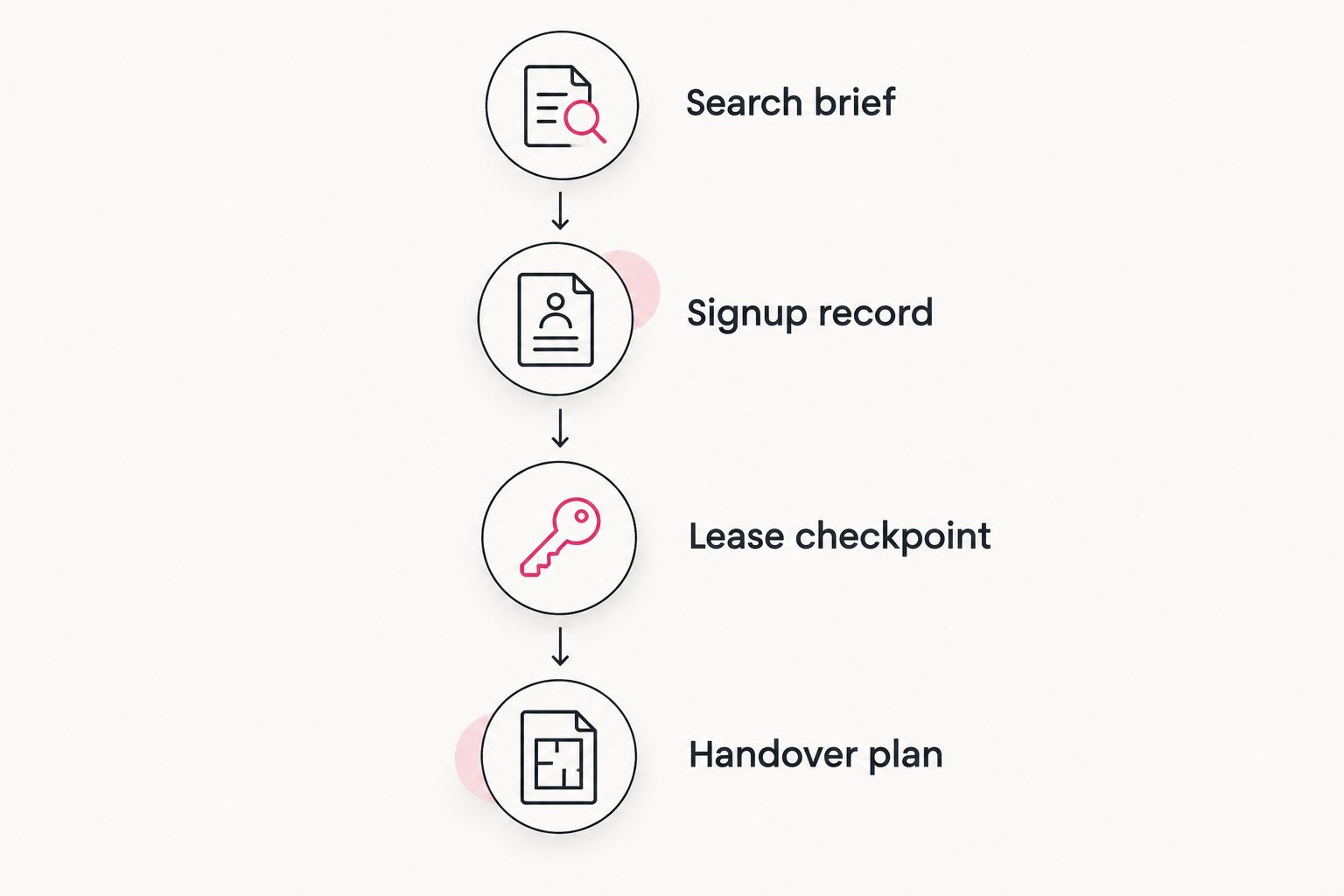
The final checkpoint is practical, not ceremonial. Having a signed document and knowing how to enter your apartment are different tasks; complete both before directing everyone to the building.
When a construction update changes your plan
Use this second workflow whenever the property revises your unit, building, or projected delivery date. Keep the original correspondence so the change remains traceable.
- Record the change. Save the new message and identify exactly what changed. A delayed shared space and a delayed apartment require different decisions.
- Check your deadline. Compare the update against your latest acceptable move-in date, employer requirements, current housing arrangements, and booked services.
- Review the agreement. Find the relevant delivery language and ask the property to explain the next steps in writing. Do not infer a contractual remedy from a general update.
- Reset the plan. Update your calendar, contact affected providers, and investigate backup housing if needed. Obtain fresh handover instructions before restarting moving arrangements.
Expected result: One changed date does not silently leave the rest of your move attached to an obsolete schedule. In 2026, keep the latest written confirmation visible at the top of your tracker.
Troubleshooting
Your signup produced no clear next step
Contact the designated leasing office with your signup date and confirmation message. Ask whether you are on an interest list, need to apply, or should wait for another documented milestone. Do not submit duplicate applications simply to prompt a response.
The model apartment differs from your assigned unit
Request the assigned unit's floor plan and written explanation of relevant differences. Recheck layout, included equipment, and features you considered essential. Decide from the assigned apartment's documented details, not the model's presentation.
Your address is not recognized by a service provider
Verify the full service address, building designation, and unit format with the property. Then ask the provider what information it needs to investigate. Do not substitute another apartment's address to force an order through.
The opening date changed after you booked movers
Request the revised unit-specific schedule and review your agreement. Contact the moving company and other affected providers directly about changing arrangements; keep their responses together with the property's update.
Customize your workflow
Add columns only when they answer a real decision: commute observations, pet requirements, laundry setup, or a household member's accessibility needs. A spreadsheet with fewer useful fields beats a detailed tracker nobody updates.
Taco Street Locating's Houston apartment locating service fits the research stage: use personalized help to compare neighborhoods and apartments against your brief. Keep direct property confirmation for screening requirements, lease terms, and handover instructions.
Set a 15-minute review after each meaningful property update. Close completed tasks, identify the next action, and check whether the apartment still fits your deadline. More messages are not progress if the central timing question remains unanswered.
FAQ
How do I start searching for new construction apartments in Houston in 2026?
Start with your move-in deadline, commute destinations, and household requirements, then track each property’s pre-leasing stage. Request unit-specific timing in writing before coordinating your move.
Does joining a pre-leasing list mean I have an apartment?
No, an interest signup does not establish application approval or an executed lease. Ask the property exactly what your signup creates and what step comes next.
Can I apply before touring the actual apartment?
Ask the property about its application and touring process before deciding. If you cannot inspect the assigned apartment, request its floor plan and written clarification of differences from the model.
What should I ask if construction delays my move-in?
Ask which apartment or building is affected, what date has changed, and which lease provision addresses delayed delivery. Save the response and review affected moving arrangements separately.
Should I book movers based on the community opening date?
Use unit-specific written handover arrangements rather than a general community opening date. Confirm access instructions and review your moving provider’s change terms before committing.
What should I inspect on move-in day?
Document the apartment’s condition, check access credentials, and report problems through the property’s designated process. Keep photographs and copies of submitted reports.
Can Taco Street Locating help with a Houston apartment search?
Yes, Taco Street Locating is a free apartment locating service that helps renters find and compare Houston apartments. Personalized research and neighborhood guidance support your shortlist; confirm contractual details directly with the property.
One last thing
Track the date's meaning, not just the date. “Community opening,” “application deadline,” “lease start,” and “key collection” belong in separate fields. That small distinction is more useful than another screenshot of a rooftop rendering—and easier to discuss over tacos.
Related guides
- Job offer letter to a signed Houston lease
- Apartment locating for Houston energy workers
- Apartment locating for Houston Med Center staff