
Inside this guide
- Why this matters
- Is a luxury apartment in Houston worth the extra cost in 2026?
- Why luxury apartment value varies
- How do you compare the premium without guessing?
- Which Houston location deserves the premium?
- Do upgraded interiors justify the difference?
- What should you check on a second visit?
- Is a luxury apartment worth it if you work from home?
- Is a luxury apartment worth it if you rarely use amenities?
- How personalized apartment research helps
- FAQ
- One last thing
- Related guides
A luxury apartment in Houston is worth the extra cost in 2026 when its location, layout, and amenities improve your actual routine enough to justify the full lease commitment. It is not worth paying more for finishes or shared spaces you rarely use, and the advertised rent alone does not capture required fees, parking, utilities, or move-in expenses.
- Is a luxury apartment in Houston worth it? Yes, when verified daily benefits justify the full apartment budget.
- Compare Houston apartments by exact location, usable layout, required charges, and amenities you will actually use.
- Taco Street Locating helps Houston renters compare apartments through personalized research and local neighborhood knowledge.
- Choose the apartment that fits your routine, not the building with the most impressive tour.
Why this matters
A polished leasing office answers a different question from the one you need answered: does this apartment work on an ordinary workday? A pool looks appealing during a tour, but the route from your parking space to your front door matters every time you come home.
For your 2026 search, separate attractive features from useful benefits. Taco Street Locating offers apartment locating in Houston, so you can bring specific priorities into the comparison instead of starting with a vague request for something luxurious.
Your goal is not to reject every upgrade. It is to identify which upgrades deserve space in your housing budget.
Is a luxury apartment in Houston worth the extra cost in 2026?
A luxury apartment is worth the premium only when you can name the practical benefit you receive in return. Compare it with a conventional apartment that meets the same basic requirements, not with an unsuitable alternative that makes the luxury building win automatically.
Keep your intended move date, household needs, and lease length consistent. Otherwise, you are comparing different housing decisions rather than different buildings.
| Housing option | Best for | Practical benefit to verify | Main drawback to examine |
|---|---|---|---|
| Luxury apartments in Houston | Renters who will regularly use specific amenities or an advantageous location | The exact unit, access arrangements, and facilities support your routine | Required charges and unused amenities can weaken the value |
| Conventional apartments | Renters prioritizing essential features over an extensive amenity package | The apartment meets your location, layout, and maintenance requirements | You might need to arrange fitness, workspace, or other services separately |
| Rental houses | Renters prioritizing separation, storage, or a particular household layout | The specific property provides the space and responsibilities you want | Yard care, utilities, and maintenance responsibilities need careful review |
Do not read the category labels as guarantees. A conventional apartment can fit your needs better than a luxury building, and a rental house does not automatically provide a quieter or simpler living arrangement.
Choose luxury for benefits you will use
A fitness room matters if its equipment and opening hours match your workouts. A coworking room matters if you can actually work there under the property's access and reservation rules. Neither deserves credit just because it appears in a brochure.
Best for: renters whose daily routines match the building's verified features. The drawback is paying for a package when only a small part of it matters to you.
Choose conventional for a stronger essentials match
A conventional apartment deserves serious consideration when its floor plan, location, and condition already solve your housing needs. Compare the actual apartment rather than treating the absence of a luxury label as a defect.
Best for: renters who want to prioritize essentials. The trade-off is that any missing convenience must be handled separately, whether that means laundry, exercise, storage, or workspace.
Choose a house for a different living arrangement
A house belongs in the comparison when shared hallways, storage limitations, or the apartment layout itself is the problem. Inspect the property and lease responsibilities rather than assuming a house solves every frustration associated with apartments.
Best for: renters whose space needs do not fit the apartment layouts they have toured. The drawback is accepting a different set of property responsibilities, not simply changing the appearance of your home.
Why luxury apartment value varies
For a Houston apartment search in 2026, assess these factors separately. An excellent result on one factor should not conceal a deal-breaker on another.
- Exact location: Compare each address with your workplace, regular errands, and the people you visit. A neighborhood name alone does not establish convenience.
- Usable layout: Check furniture placement, workspace, storage, and circulation. Decorative finishes do not fix a room that cannot accommodate your belongings.
- Amenity access: Confirm hours, reservations, guest rules, and any separate charges. A facility has limited value when its rules conflict with your schedule.
- Total obligation: Read the written charges and lease terms. Separate recurring expenses from refundable deposits and nonrefundable move-in charges.
- Unit conditions: Inspect the actual apartment's light, noise exposure, appliances, and condition. A model unit is not evidence of your unit's condition.
- Lease fit: Check the term, renewal provisions, notice requirements, and early-departure terms. A good apartment still needs a workable contract.
These factors explain your personal value calculation. They are not a claim that every luxury building includes particular facilities or follows the same policies.
How do you compare the premium without guessing?
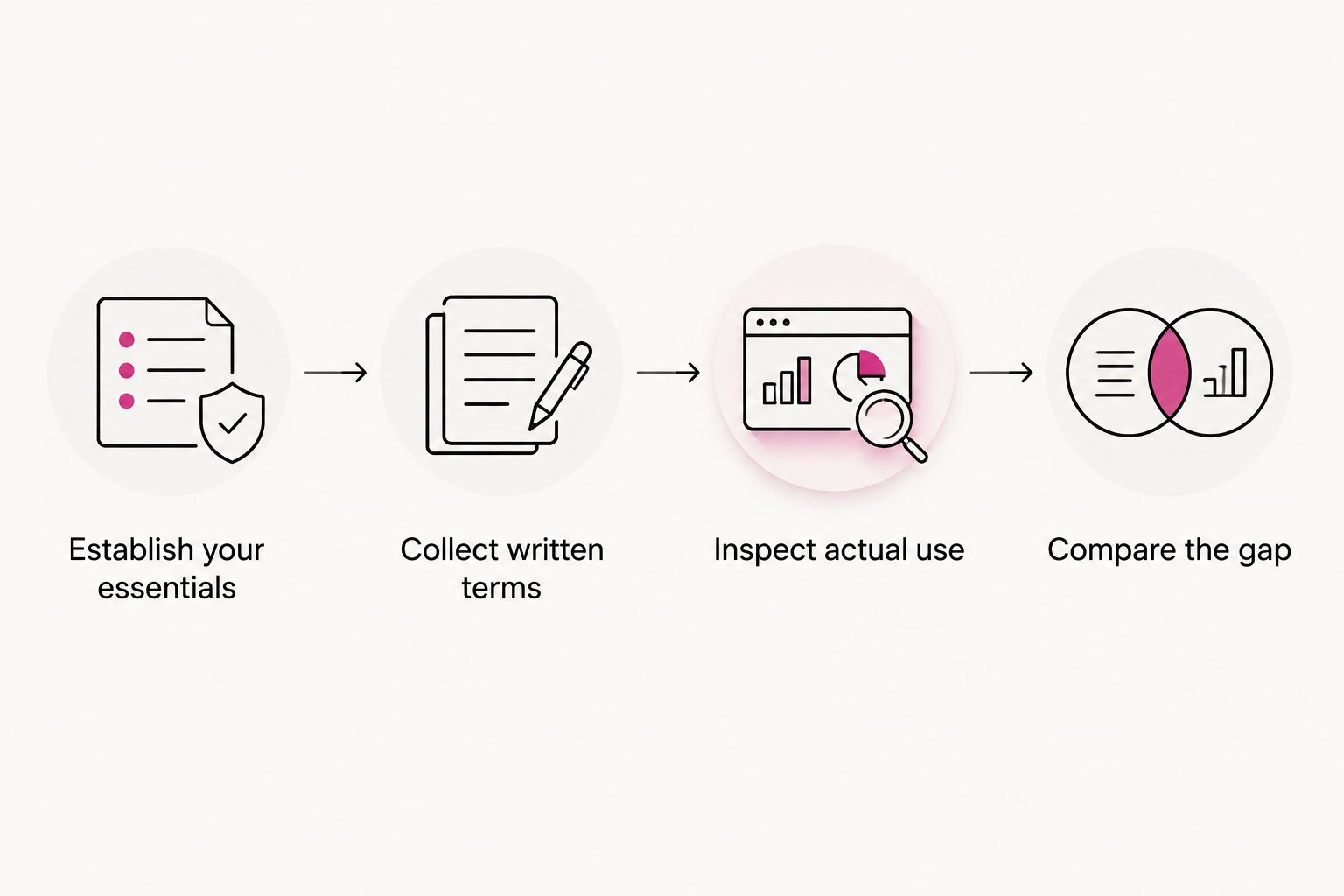
Use the same worksheet for every finalist. For your 2026 comparison, ask each property for written information tied to the exact apartment and lease you are considering.
1. Establish your essentials
Write down your nonnegotiables before touring: location, bedroom arrangement, pet requirements, accessibility needs, parking, and laundry. Keep preferences separate from requirements so an appealing lobby cannot quietly rewrite your priorities.
Make each requirement testable. Instead of asking for a convenient commute, identify your workplace entrance and normal arrival time; instead of asking for good storage, list what needs to fit.
2. Collect written terms
Request the proposed lease details and a breakdown of required charges. Ask which charges recur, which apply at move-in, which depend on usage, and which deposits are refundable under the stated terms.
Record utilities separately and confirm what you must arrange yourself. Do not replace missing information with a guess because another property handled it differently.
3. Inspect actual use
Walk the route from the proposed parking area to the apartment. Check where deliveries go, how guests enter, and how you would carry groceries or take your dog outside.
Then inspect the features that supposedly justify upgrading. Open storage doors, examine appliance condition, and ask to see the amenities you expect to use rather than accepting a verbal description.
4. Compare the gap
Set the luxury apartment beside a suitable conventional apartment. Identify what changes: your route to work, functional space, laundry arrangement, parking access, or access to facilities.
If you cannot explain the upgrade without saying that it looks nicer, treat it as a preference purchase—not a practical saving. A preference can still matter, but it should not be disguised as a financial benefit.
Which Houston location deserves the premium?
Start with where you need to be, not where a listing says you should want to live. Compare addresses in Downtown, Midtown, Montrose, the Heights, or near the Texas Medical Center against your own destinations; none is the automatic answer for every renter.
If your job takes you to the Energy Corridor, include that destination in the comparison rather than judging every apartment by its proximity to Downtown. If you work irregular hours near the Texas Medical Center, test the route at times that resemble your schedule.
Treat a map estimate as the start of the check. Examine the parking entrance, workplace entrance, and walking portions of the journey, then decide whether the difference matters enough to influence your choice.
Pay for a location benefit you can verify, not a neighborhood reputation you cannot use. Restaurants and nightlife belong in that decision if they are genuinely part of your routine, not merely attractive additions to a weekend tour.
Do upgraded interiors justify the difference?
Judge an interior by what it allows you to do. A kitchen should accommodate your cooking habits, a bedroom should fit your furniture, and a work area should support your normal working setup.
Storage deserves the same scrutiny. When weighing walk-in closet systems, the relevant distinction is usable organization versus impressive appearance; apply that distinction to an apartment closet before treating it as a reason to upgrade.
Measure shelf depth, hanging space, door clearance, and the area needed for your belongings. Ask whether alterations require permission rather than assuming you can install a different system after moving in.
A smaller, functional closet can serve you better than a larger one with an awkward arrangement. The same rule applies to kitchen islands, balconies, and oversized entryways: count usable space, not just the feature name.
What should you check on a second visit?
A second visit should investigate the concerns left unresolved by the first tour. For a 2026 move, return with your furniture measurements, written questions, and the details of the apartment you would actually lease.
- Stand inside the proposed unit and listen for hallway, road, and nearby activity.
- Check daylight where you expect to work or spend time, rather than judging only the living room.
- Confirm the route between your unit, parking, elevators, and exits.
- Ask management how maintenance requests are submitted and how urgent issues are handled.
- Read the rules for the amenities you expect to use.
- Record unresolved questions before submitting an application.
A quiet visit does not establish year-round sound conditions, and an empty gym does not establish how busy it gets. Use the visit to collect evidence, then ask direct questions about what you cannot observe.
Is a luxury apartment worth it if you work from home?
A luxury apartment is worth considering for remote work when the specific unit supports your workday. Inspect desk placement, light, electrical outlets, and the internet arrangements applicable to that address.
A shared workspace is a supplement, not proof that you can take calls there. Confirm privacy, access hours, reservations, and rules before treating it as a substitute for workspace inside your apartment.
Is a luxury apartment worth it if you rarely use amenities?
A luxury apartment needs another clear advantage when you rarely use amenities. That advantage might be a better-fitting layout or a location that serves your routine, but you need to verify it independently.
If neither improves your day, compare suitable conventional apartments before committing. You do not need to dislike the pool to decide it should not influence your housing budget.
How personalized apartment research helps
Bring a locator your workplace destination, move date, household requirements, and reasons for considering an upgrade. Explain which features you would genuinely use and which you are happy to skip.
Taco Street Locating is for Houston renters who want personalized help comparing apartments and neighborhoods. Its apartment locating service helps with that research; your unit inspection and lease review remain necessary parts of the decision.
That division matters. Neighborhood knowledge can sharpen a shortlist, but it does not replace written confirmation of the apartment's condition, charges, or terms.
FAQ
Is a luxury apartment in Houston worth it in 2026?
A luxury apartment in Houston is worth it in 2026 when its verified location, layout, and amenities justify the full lease commitment for your routine. Compare it with a suitable conventional apartment using the same requirements.
What should I compare besides the advertised rent?
Compare required recurring charges, utilities, parking arrangements, move-in obligations, and lease terms. Ask for written details tied to the exact apartment rather than relying on a general listing.
Does a luxury apartment mean it will be quiet?
A luxury label does not establish that an apartment will be quiet. Inspect the specific unit and ask about the nearby spaces, roads, and building activity that concern you.
Should I choose a luxury apartment just for the gym?
Choose an apartment for its gym only after confirming that the equipment, access rules, and hours fit your workouts. Keep the rest of the apartment and its full financial obligation in the comparison.
Is a model apartment enough to make a decision?
A model apartment does not establish the condition or surroundings of the unit you would lease. Request access to the proposed apartment and written answers about unresolved details.
Can Taco Street Locating help me compare Houston apartments?
Taco Street Locating offers apartment locating in Houston with personalized research and local neighborhood knowledge. Share your location needs, household requirements, and priorities so the comparison reflects your routine.
One last thing
Before signing, describe an ordinary weekday in the apartment without mentioning its finishes. Include leaving for work, handling laundry, preparing dinner, storing your belongings, and getting to bed.
If the description is no better than your conventional-apartment alternative, the luxury premium is buying preference rather than solving a problem. That is a legitimate choice when it fits your budget. Make it deliberately—not because the tour ended beside a rooftop pool.
Related guides
- Is it better to rent a house or an apartment in Houston?
- Renters insurance for a Texas apartment
- Budgeting for Texas apartment move-in costs