
Inside this guide
- Which Austin apartments list EV charging? (checked Oct 7, 2026)
- Austin EV charging: quick answers
- Why charging access matters more than an amenity label
- What makes the best Austin apartment with EV charging?
- Austin apartment charging options at a glance
- 1. Assigned resident charging: best for predictable home access
- 2. Shared resident charging: best for flexible schedules
- 3. Nearby public charging: best for an existing charging routine
- 4. Approved outlet charging: best for modest charging needs
- Match the charging setup to your Austin neighborhood search
- Check the charging arrangement before signing
- Read charging specifications without getting distracted
- How these charging options are ranked
- Which Austin charging setup should you choose?
- FAQ
- One last thing
- Want help finding your Austin apartment? It’s free.
- Related guides
Free Austin apartment locating from Alexander. 200+ 5-star Google reviews.
Start My Free Austin Apartment Search
What happens next: fill out the short form, Alexander personally reviews your answers and sends you options, and it costs you nothing.
Best overall: assigned resident charging. Best for flexible schedules: shared resident charging. Best for occasional charging: nearby public charging. If you’re searching for apartments with ev charging near me in Austin in 2026, rank charging access before amenities; these recommendations compare charging arrangements, not unverified apartment buildings.
- For apartments with ev charging near me, prioritize assigned resident charging with documented access and vehicle compatibility.
- Shared resident charging suits flexible schedules, but ask about queues, parking restrictions, and maintenance.
- Nearby public charging is a backup, not the same as charging where you live.
- Taco Street Locating offers free apartment locating help for renters comparing Austin neighborhoods and apartments.
For Austin renters comparing apartments with EV charging, Taco Street Locating offers free apartment locating help. Start with your workplace, vehicle, and charging habits, then compare neighborhoods such as Mueller, South Lamar, North Burnet, and East Riverside.
Updated by Alexander Concepcion, Taco Street Locating. Checked Oct 7, 2026 against each property’s own website (linked in the table).
As of Oct 7, 2026, Residences at 6G lists electric car charging stations, Hanover Brazos Street offers optional EV charging for an added fee, and Alexan Braker Pointe lists EV charge ports billed per kWh. Seven more Austin communities, including The Bowen, FLATIRON Domain and The Quincy, list EV or electric vehicle charging stations.
Which Austin apartments list EV charging? (checked Oct 7, 2026)
| Community | Area (address from the property site) | EV charging, as the site words it | Parking or fee detail listed |
|---|---|---|---|
| Residences at 6G (website) | Downtown (600 Guadalupe Street) | “Electric car charging stations” | “EV charging stations” listed with the community amenities |
| Hanover Brazos Street (website) | Downtown (215 Brazos Street) | “EV charging stations” | “Optional reserved and EV charging are available for an additional fee” |
| Sienna at The Thompson (website) | Downtown (501 Brazos St) | “Private Resident Garage with EV Charging Stations” | “Bike Storage” |
| The Waller (website) | Rainey Street area (1104 Sabine St) | “EV charging stations available” | “bike room, rideshare lounge” |
| The Quincy (website) | Rainey Street area (91 Red River St.) | “electric vehicle charging stations” | “A bike room” is listed alongside |
| Encore Lakeside (website) | East Riverside (1120 Town Creek Dr) | “Limited-access Parking Garage with EV Charging stations” | “These spaces are fee-based, may be reserved”; “Usage fees apply” |
| The Bowen (website) | North Burnet (3000 Gracie Kiltz Ln) | “Electric vehicle charging stations” | FAQ: “on-site multi-level controlled access parking and electric vehicle charging stations” |
| FLATIRON Domain (website) | Domain (10727 Domain Dr.) | “Electric vehicle charging stations” | “Valet dry cleaning” listed alongside |
| Alexan Braker Pointe (website) | Northwest Austin (10801 N. Mopac) | “Plug in at one of the electric vehicle charge ports*” | “*Electricity charged per kWh at EV charging ports.” |
| AMLI Branch Park (website) | Mueller (1911 Philomena St) | “Electric car charging stations available” | “Controlled access parking garage” |
Wording is copied from each property’s own website on Oct 7, 2026. Most sites do not publish charger counts, connector types or per-kWh rates, so ask the leasing office for written charging and parking terms before you sign.
Start My Free Austin Apartment Search
Free for renters. I’m personally involved in every search. What happens next: fill out the short form, I review your answers and send you options, and it costs you nothing.
Austin EV charging: quick answers
Which Austin apartments have EV charging?
As of Oct 7, 2026, Residences at 6G, Hanover Brazos Street, Sienna at The Thompson, The Waller, The Quincy, Encore Lakeside, The Bowen, FLATIRON Domain, Alexan Braker Pointe and AMLI Branch Park list EV or electric car charging on their own websites.
Which downtown Austin apartments have electric car charging?
Residences at 6G, Hanover Brazos Street and Sienna at The Thompson downtown, plus The Waller and The Quincy near Rainey Street, list EV or electric car charging stations.
Do Austin apartments charge extra for EV charging?
Some do. Hanover Brazos Street says EV charging is available for an additional fee, Encore Lakeside says its EV spaces are fee-based with usage fees, and Alexan Braker Pointe says electricity is charged per kWh.
Which Domain-area apartments have EV charging?
The Bowen and FLATIRON Domain list electric vehicle charging stations, and Alexan Braker Pointe lists EV charge ports.
Can I reserve an EV charging spot at an Austin apartment?
Encore Lakeside says its EV charging spaces may be reserved through the office. Ask each property how spots are assigned.
Does Taco Street Locating charge to help me find an apartment with EV charging?
No. The service is free for renters. Apartment communities pay us, so it does not change your lease or your specials. I’m Alexander Concepcion, and I’ll be your point of contact.
Why charging access matters more than an amenity label
An apartment can advertise EV charging without giving you a dependable place to plug in. A shared station, an assigned charging space, and a public charger down the street solve different problems. Treat them as different amenities.
Your apartment search should answer a practical question: Can you charge when your routine requires it? A charger beside the leasing office does not settle who can use it, whether it works with your vehicle, or whether you can leave your car there overnight.
For a 2026 move, request current written details rather than relying on an old listing or a photograph. Charging equipment, access rules, and parking assignments need separate confirmation.
What makes the best Austin apartment with EV charging?
Use these criteria before you compare pools, package rooms, or rooftop lounges:
- Resident access: Confirm whether charging is reserved for residents, shared with visitors, or accessible to the public.
- Vehicle compatibility: Identify the connector and any adapter your vehicle requires. Follow vehicle and charging-equipment instructions.
- Parking rights: Separate permission to charge from permission to park. Ask whether you receive an assigned space or must find an open charging stall.
- Charging capacity: Request the equipment’s rated output and whether power is shared between connected vehicles.
- Operating rules: Check session limits, overnight rules, account requirements, and what happens when charging finishes.
- Maintenance accountability: Identify who handles faults and how residents report a station that stops working.
An attractive amenity description is not a substitute for these answers. Choose an apartment only after its charging arrangement fits your actual parking routine.
Austin apartment charging options at a glance
| Rank and option | Best for | Standout feature | Key limitation |
|---|---|---|---|
| Assigned resident charging | Renters who need predictable home charging | A designated charging space tied to your parking arrangement | Assignment does not establish connector compatibility or operating reliability |
| Shared resident charging | Renters with flexible charging schedules | On-property charging without a dedicated charging space | Access depends on other residents and station rules |
| Nearby public charging | Renters who already charge during errands or work | Charging can fit an existing off-property routine | Public access is separate from apartment management |
| Approved outlet charging | Renters whose driving needs suit slower charging | Uses an explicitly approved electrical connection | Requires written permission and a suitable electrical setup |
The ranking favors predictable access, not a particular neighborhood or building style. The right choice changes when your vehicle, daily driving, or parking requirements change.
1. Assigned resident charging: best for predictable home access
Assigned resident charging pairs a designated parking space with access to charging equipment. It is the strongest starting point when you want charging to happen at home rather than become another errand.
Ask whether the assignment applies to your lease, a separate parking agreement, or a changeable resident arrangement. Also confirm whether the space has dedicated equipment or shares equipment with another stall.
Assigned resident charging pros:
- A designated space reduces uncertainty about where you can charge.
- Home charging can fit the time your vehicle already spends parked.
- Written parking terms give you a clear basis for comparing properties.
Assigned resident charging cons:
- An assigned space does not prove that the charger suits your vehicle.
- Equipment faults still interrupt charging.
- The arrangement can restrict where you park within the property.
Best for: Renters whose daily routine depends on dependable access at home.
Before signing in 2026, ask management to identify the actual space and equipment associated with your agreement. See the route from that space to your apartment, especially if you regularly carry groceries, work equipment, or a child’s car seat.
Verdict: Hold until the charging space, vehicle compatibility, and access terms are documented. Once those checks pass, assigned resident charging is the default choice for predictable home access.
2. Shared resident charging: best for flexible schedules
Shared resident charging gives residents access to communal charging stalls. You do not control a particular stall, so the parking rules matter as much as the equipment.
Ask how residents handle completed sessions, whether reservations exist, and what happens when someone leaves a vehicle plugged in. A tour during a quiet afternoon cannot answer what access looks like when residents return home.
Shared resident charging pros:
- Charging takes place on the apartment property.
- Flexible users can fit sessions around other residents’ use.
- Communal equipment avoids tying your search to a dedicated charging space.
Shared resident charging cons:
- Another resident can occupy the space when you need it.
- Session limits can require you to move your vehicle.
- A working station does not guarantee an open stall.
Best for: Renters who can charge at different times and have another charging option.
During a tour, inspect the charging area rather than stopping at the amenity sign. Look for blocked spaces, posted rules, and the process for reporting problems. Ask management to distinguish resident charging from visitor charging.
Verdict: Hold until the shared-use rules fit your schedule. Skip shared resident charging if your routine requires immediate access and you have no workable alternative.
3. Nearby public charging: best for an existing charging routine
Nearby public charging means your apartment choice depends partly on charging outside the property. That can fit a routine built around work, shopping, or another regular stop, but it is not an apartment amenity.
Evaluate the actual route and access rules. A charger that appears close on a map can still require a separate trip, parking arrangement, or account.
Nearby public charging pros:
- You can consider apartments without on-property charging.
- Charging can overlap with an errand you already make.
- An off-property option provides a backup when home equipment fails.
Nearby public charging cons:
- Apartment management does not control the station.
- Access depends on the operator’s rules and the charging location.
- You must account for time spent reaching the charger and retrieving your car.
Best for: Renters who already have a dependable public or workplace charging routine.
For your 2026 shortlist, verify the specific station through its operator rather than treating a map pin as proof. Check connector compatibility, access restrictions, and operating status before making that location central to your housing decision.
Verdict: Hold until you have checked the charging routine in practice. Skip an apartment that works only because an unverified nearby charger looks convenient.
4. Approved outlet charging: best for modest charging needs
Approved outlet charging uses an electrical connection that property management explicitly permits for vehicle charging. A visible outlet in a garage is not permission to use it.
In North America, Level 1 charging commonly uses 120 volts, while residential Level 2 charging commonly uses 240 volts. Voltage alone does not establish charging speed: current, equipment limits, and the vehicle also matter.
Approved outlet charging pros:
- Charging can happen while the vehicle is parked at home.
- A permitted connection can suit a routine with limited daily driving.
- Written approval clarifies where and how you can connect.
Approved outlet charging cons:
- Slower charging does not suit every driving pattern.
- The electrical setup requires confirmation, not assumptions.
- Cable placement must not obstruct walkways or parking access.
Best for: Renters whose vehicle and driving routine suit slower, explicitly approved charging.
Do not plan to run a cable across a sidewalk or improvise with an extension cord. Follow the vehicle manufacturer’s instructions and ask management to confirm the permitted equipment and electrical arrangement.
Verdict: Wait for written permission and confirmation that the setup is suitable. Skip unauthorized outlet charging, even if the outlet appears convenient.
Match the charging setup to your Austin neighborhood search
Choose your destination first, then compare charging arrangements inside the neighborhoods that fit it. Mueller, South Lamar, North Burnet, and East Riverside are useful search areas to discuss, not promises of charging access at every property.
For each neighborhood, trace your actual trips: work, groceries, regular appointments, and the route home after an evening out. Evaluate the apartment’s garage access separately from the neighborhood’s location. A suitable neighborhood cannot fix an unsuitable charging arrangement.
Give Taco Street Locating your workplace location, move date, vehicle model, and parking requirements. Add whether assigned charging is essential or shared charging is acceptable. That makes your apartment brief more useful than simply asking for a modern building with EV chargers.
Keep neighborhood preferences and charging requirements in separate columns. You can compromise on a lounge or a view; do not quietly downgrade essential charging access because the model apartment looks good.
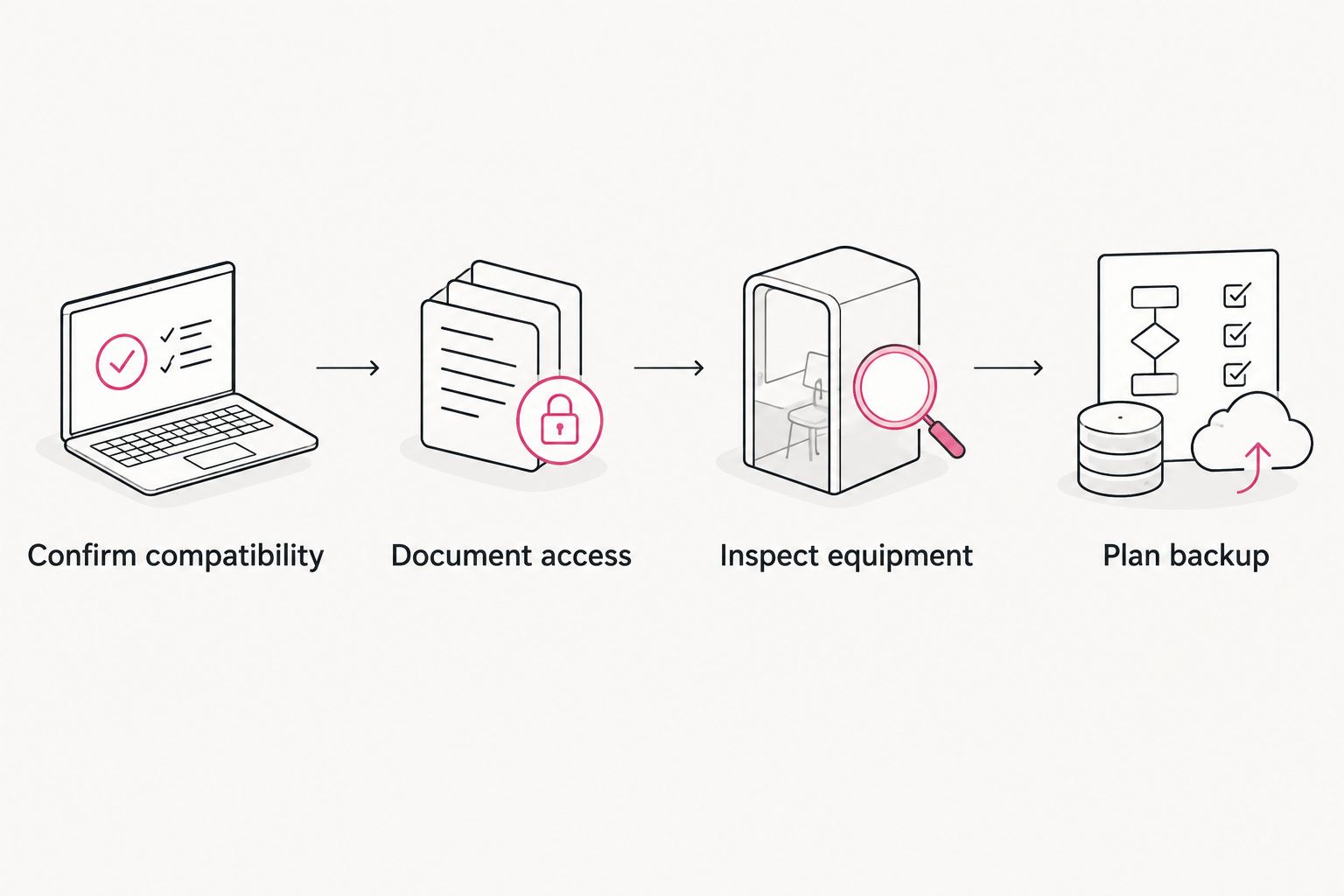
Check the charging arrangement before signing
Use this sequence for every property on your 2026 shortlist. It separates an advertised amenity from a charging setup you can actually evaluate.
Confirm compatibility
Request the connector type, equipment details, and any adapter requirements. Check those details against your vehicle’s instructions instead of assuming that all EV chargers work the same way.
Document access
Ask who can use the equipment, which spaces are covered, and whether charging permission appears in your parking agreement. Get the overnight and completed-session rules in writing.
Inspect equipment
Visit the actual charging area. Check whether you can reach it using the access credentials residents receive and identify how faults are reported. A staged apartment tour should not replace this inspection.
Plan backup
Identify another charging option before you need it. Confirm its access rules independently; the apartment’s description does not establish how an outside charging station operates.
Keep the answers alongside your lease notes. If management gives conflicting explanations, resolve the conflict before you commit rather than assuming the more convenient answer applies.
Build your Austin apartment shortlist
Share your neighborhood preferences, vehicle, and parking needs for personalized apartment locating help.
Read charging specifications without getting distracted
Charging power and battery energy describe different things. Kilowatts describe power; kilowatt-hours describe energy. One kilowatt-hour equals 1,000 watt-hours, but that conversion does not tell you how quickly a particular apartment charger will replenish your battery.
Ask for the charger’s rated output and whether that output is shared. Then check your vehicle’s charging limits. Do not turn a voltage label or an equipment photograph into a charging-time promise.
The useful comparison is whether the permitted charging window suits your routine. Equipment specifications help answer that question, but access restrictions can make technically suitable equipment inconvenient to use.
How these charging options are ranked
Assigned resident charging ranks first because a designated space addresses parking uncertainty. Shared resident charging comes next because it keeps charging on-property but introduces competition for access. Nearby public charging and approved outlet charging serve more specific routines.
This ranking uses resident access, compatibility, parking rights, capacity, operating rules, and maintenance accountability. It is a decision framework, not a claim that any named Austin apartment currently provides a particular charging setup.
Which Austin charging setup should you choose?
Choose assigned resident charging as your starting point if predictable home access is essential. Choose shared resident charging when your schedule is flexible, and treat nearby public charging as a separate routine that needs its own verification.
Taco Street Locating can help you compare Austin apartments and neighborhoods. Keep the final charging decision tied to property-specific written terms, your vehicle’s requirements, and an inspection of the actual charging area.
FAQ
What’s the best way to find apartments with EV charging near me in Austin?
Start with neighborhoods that fit your commute, then ask each property for written charging and parking details. Prioritize assigned resident charging when predictable home access matters, and verify compatibility with your vehicle.
Is assigned EV charging better than shared apartment charging?
Assigned charging is the stronger choice for predictable parking access. Shared charging suits flexible schedules, but you need to understand occupancy, session limits, and when vehicles must move.
Does an apartment listing with EV charging guarantee I can use it?
No, an EV charging amenity label does not establish your access rights. Confirm resident eligibility, parking assignments, connector compatibility, and operating rules before signing.
Can I charge my electric car from an apartment garage outlet?
Use a garage outlet only with explicit property approval and a suitable electrical setup. Follow your vehicle manufacturer’s instructions and do not assume that a visible outlet is approved for charging.
Is a public charger near my apartment enough?
A nearby public charger is enough only when its access and location fit your charging routine. Verify the specific station independently and keep a backup option rather than relying on proximity alone.
What should I ask about apartment EV charging before a 2026 move?
Ask about vehicle compatibility, parking rights, resident access, equipment output, session rules, and maintenance reporting. Request current written answers and inspect the actual charging area.
Can Taco Street Locating help with my Austin apartment search?
Taco Street Locating offers free apartment locating help for Austin renters. Share your preferred neighborhoods, vehicle, move date, and charging requirements so those needs are part of your apartment brief.
One last thing
Ask where your car must go after charging finishes. That answer can change your choice more than the charger’s specifications: a setup that requires moving the vehicle during your normal sleeping hours does not fit an overnight charging routine.
For a 2026 lease, make that question part of your written parking checklist. Your apartment should fit the life you already lead, not require a new hobby in garage logistics.
Want help finding your Austin apartment? It’s free.
Taco Street Locating is a free apartment locating service in Austin. We’ve helped hundreds of renters find a home, and we have 200+ 5-star Google reviews. I’m personally involved in every apartment search: I’ll learn what you need, build your shortlist, and tour with you. Prefer to talk it through? I’m available for phone calls and in-person meet ups. I’m Alexander Concepcion, and I’ll be your point of contact. Free for renters. Apartment communities pay us, so it doesn’t change your lease or your specials. You can also search with AI and hand the shortlist to Alexander.
Start My Free Austin Apartment Search Call or meet up with Alexander
What happens next: fill out the short form, Alexander personally reviews your answers and sends you options, and it costs you nothing.